
Catalogue Search | MBRL


Are you sure you want to remove the book from the shelf?

{{itemTitle}}
10
result(s) for
"Prohibited books Fiction."
Sort by:

Suggested reading
After her principal bans a number of books from the school library, bibliophile student Clara joins forces with her friends to start an underground library.
Book
Romans à Lire et Romans à Proscrire
Extrait : \"Cet ouvrage n'a plus besoin d'etre presente au public. Il est connu dans toutes les parties du monde (...) il a obtenu aupres du clerge, des familles et des A uvres, un succes considerable ; pour beaucoup, il est devenu classique. (...) C'est une A uvre utile et necessaire, disait la lettre pontificale adressee a l'auteur le 7 mars 1919.\"
eBook

Better Left Unsaid
Better Left Unsaid is in the unseemly position of defending censorship from the central allegations that are traditionally leveled against it. Taking two genres generally presumed to have been stymied by the censor's knife-the Victorian novel and classical Hollywood film-this book reveals the varied ways in which censorship, for all its blustery self-righteousness, can actually be good for sex, politics, feminism, and art.
As much as Victorianism is equated with such cultural impulses as repression and prudery, few scholars have explored the Victorian novel as a \"censored\" commodity-thanks, in large part, to the indirectness and intangibility of England's literary censorship process. This indirection stands in sharp contrast to the explicit, detailed formality of Hollywood's infamous Production Code of 1930. In comparing these two versions of censorship, Nora Gilbert explores the paradoxical effects of prohibitive practices. Rather than being ruined by censorship, Victorian novels and Hays Code films were stirred and stimulated by the very forces meant to restrain them.
eBook

The Censorship Files
Drawing on extensive research in the Spanish National Archive, Alejandro Herrero-Olaizola examines the role played by the censorship apparatus of Franco's Spain in bringing about the Latin American literary Boom of the 1960s and 1970s. He reveals the negotiations and behind-the-scenes maneuvering among those involved in the Spanish publishing industry. Converging interests made strange bedfellows of the often left-wing authors and the staid officials appointed to stand guard over Francoist morality and to defend the supposed purity of Castilian Spanish. Between these two uneasily allied groups circulated larger-than-life real-world characters like the Barcelona publisher Carlos Barral and the all-powerful literary agent Carmen Balcells. The author details the fascinating story of how novels by Mario Vargas Llosa, Guillermo Cabrera Infante, Gabriel García Márquez, and Manuel Puig achieved publication in Spain, and in doing so reached a worldwide market. This colorful account underpins a compelling claim that even the most innovative and aesthetically challenging literature has its roots in the economics of the book trade, as well as the institutions of government and the exigencies of everyday politics and ideology.
eBook

Defending frequently challenged young adult books
A Day No Pigs Would Die, Speak, Thirteen Reasons Why These are some of the most beloved, and most challenged, books. Leaving controversial titles such as these out of your collection or limiting their access is not the answer to challenges. While ALA's Office for Intellectual Freedom reports more than 4,500 challenges to young adult literature from 2000 through 2009. This authoritative handbook gives you the information you need to defend challenged books with an informed response and ensure free access to young book lovers. With a profile of each book that includes its plot and characters, related materials and published reviews, awards and prizes, and Web and audiovisual resources, you will be prepared to answer even the toughest attacks.
eBook
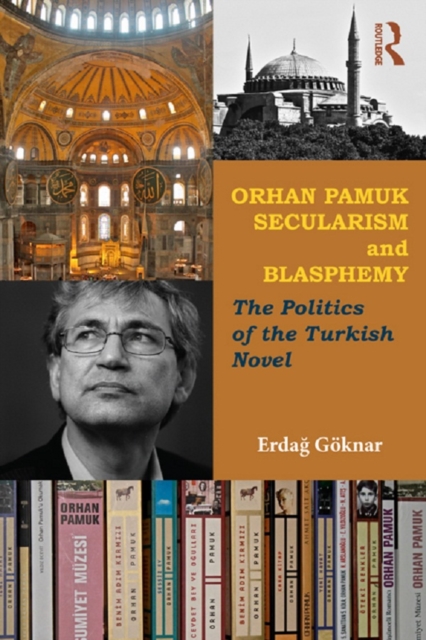
Orhan Pamuk, Secularism and Blasphemy
Orhan Pamuk, Secularism and Blasphemy is the first critical study of all of Pamuk's novels, including the early untranslated work.
In 2005 Orhan Pamuk was charged with \"insulting Turkishness\" under Article 301 of the Turkish penal code. Eighteen months later he was awarded the Nobel Prize. After decades of criticism for wielding a depoliticized pen, Pamuk was cast as a dissident through his trial, an event that underscored his transformation from national literateur to global author. By contextualizing Pamuk's fiction into the Turkish tradition and by defining the literary and political intersections of his work, Orhan Pamuk, Secularism and Blasphemy rereads Pamuk's dissidence as a factor of the form of his novels.
This is not a traditional study of literature, but a book that turns to literature to ask larger questions about recent transformations in Turkish history, identity, modernity, and collective memory. As a corrective to common misreadings of Pamuk's work in its international reception, Orhan Pamuk, Secularism and Blasphemy applies various analytical lenses to the politics of the Turkish novel, including gender studies, cultural translation, historiography, and Islam. The book argues that modern literature that confronts representations of the nation-state, or devlet, with those of Ottoman, Islamic, and Sufi contexts, or din, constitute \"secular blasphemies\" that redefine the politics of the Turkish novel.
Concluding with a meditation on conditions of \"untranslatability\" in Turkish literature, this study provides a comprehensive and critical analysis of Pamuk's novels to date.
eBook

Rewriting the Italian Novella in Counter-Reformation Spain
As they reshaped the Italian novella under the inquisitorial atmosphere of the Counter-Reformation, Spanish narrators labelled their texts as exemplary. However, critics have usually agreed that there is a contradiction between the morals preached in the narrative frames, prologues and sententiae of Spanish novellas and the content of the plots. Rabell sees this ambiguity as a result of the use of the rhetoric of the fictitious case: Spanish novellas rewrite the Italian genre with the specific purpose of either challenging or validating the rules regarding marriage introduced by the Council of Trent. Since civil, canonical and family hierarchies were based on the same metaphor that conceives power as one body in which, by analogy, the husband is the head of his family, as the monarch is the head of the state and the Pope is the head of the church, Spanish novellas explore the contradictions between civil and canon laws regarding the private context of marriage in order to suggest further contradictions within the public sphere of state and church. The fictitious case provides a rhetoric to test the validity of the legal grounds of Counter-Reformation Spain. CARMEN R. RABELL is associate professor, department of comparative literature, University of Puerto Rica - Rio Piedras.
eBook
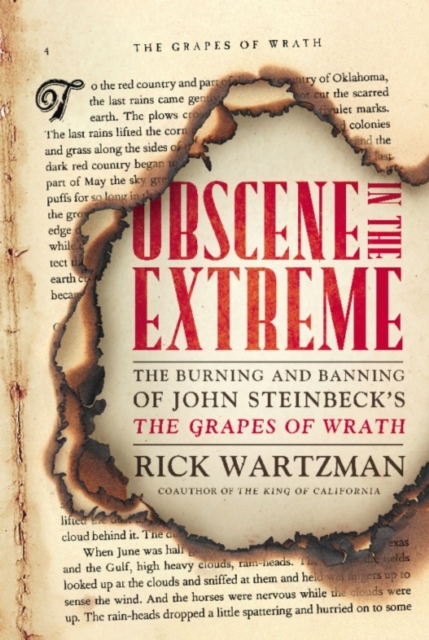
Obscene in the extreme : the burning and banning of John Steinbeck's The grapes of wrath
Few books have caused as big a stir as John Steinbeck's The Grapes of Wrath, when it was published in April 1939. By May, it was the nation's No. 1 bestseller, flying off store shelves at a rate of 10,000 copies a week. But in Kern County, Californiathe Joads' newfound homethe book was burned publicly and banned from library shelves. Obscene in the Extreme tells the remarkable story behind that fit of censorship, a moment when several lives collided as part of a larger class struggle roiling the nation. It is a superb historical narrative that serves as an engaging window into an extraordinary time of upheaval in America, when as Steinbeck put it, A revolution is going on.\".
eBook
Censorship in Canadian Literature
Cohen critiques Timothy Findley's broad anti-censorship position; he traces Margaret Atwood's evolution from implicit support for the censorship of pornography in Bodily Harm to the rejection of censorship in The Handmaid's Tale; and he provides the first detailed study of the draft of Margaret Laurence's unfinished novel, showing the degree to which her final silence was a result of her censorship ordeal. Finally, an analysis of the writing of Beatrice Culleton and Marlene Nourbese Philip shows how different kinds of socio-cultural censorship - from gate-keepers to self-censorship - silence Native and black Canadian voices.
eBook

Forbidden Fictions
‘Phillips discusses texts by Apollinaire, Pierre Loüys, Georges Bataille, Pauline Réage, Alain Robbe-Grillet, Tony Duvert, Elizabeth Barillé and Marie Darrieussecq, engaging in different levels of critical analysis so as to emphasize intertextual and parodic elements in one case, or points of possible identification in another.’ TLS
French culture has long been perceived by the English-speaking reader as somehow more ‘erotic’ than its Anglo-Saxon equivalent. Forbidden Fictions is the first English-language study devoted exclusively to the wide spectrum of French literary pornography in the twentieth century.
John Phillips provides a broad history of the genre and the associated moral and political issues. Among the texts examined in detail – all selected for their literary or sociopolitical importance – are landmark works by Apollinaire, Louÿs, Bataille, Réage, Robbe-Grillet, Arsan, and Duvert. Phillips challenges current politically correct trends in literary criticism and stereotyped censoring discourses about pornography to provide a new reading of each text and to illustrate the genre’s potential for social subversion. Forbidden Fictions addresses the most controversial issues of contemporary sexual politics, such as objectification, sadomasochism, homoeroticism and paedophilia, with particular emphasis on the feminist debate on pornography. In the light of current controversy over the control of pornography, this is a timely and scholarly review of the ethical, moral and social arguments surrounding the censorship of sexually explicit material.
eBook