
Catalogue Search | MBRL


Are you sure you want to remove the book from the shelf?

{{itemTitle}}
3,578
result(s) for
"Proof theory"
Sort by:


Abstract cyclic proofs
Cyclic proof systems permit derivations that are finite graphs in contrast to conventional derivation trees. The soundness of such proofs is ensured by imposing a soundness condition on derivations. The most common such condition is the global trace condition (GTC), a condition on the infinite paths through the derivation graph. To give a uniform treatment of such cyclic proof systems, Brotherston proposed an abstract notion of trace. We extend Brotherston’s approach into a category theoretical rendition of cyclic derivations, advancing the framework in two ways: first, we introduce activation algebras which allow for a more natural formalisation of trace conditions in extant cyclic proof systems. Second, accounting for the composition of trace information allows us to derive novel results about cyclic proofs, such as introducing a Ramsey-style trace condition. Furthermore, we connect our notion of trace to automata theory and prove that verifying the GTC for abstract cyclic proofs with certain trace conditions is PSPACE-complete.
Journal Article


Herd Behavior and Harm: How Negative Online Reviews Affect Independent Music Venues
The influence of Yelp reviews on independent music venues is acknowledged, though the exact nature of this impact remains unclear. As negative reviews increase, they can shape public perception, leading even those with neutral or positive experiences to avoid the venue. This behavior, known as the bandwagon effect or herd behavior, reinforces the venue’s negative reputation and further influences potential patrons. The study examines 1,423 independent venues and their Yelp reviews, dating back to the venues’ opening or as far as 2004, the year Yelp was founded. Subsequently, the study leverages a meticulous extraction methodology involving 30,486 keywords derived from an extensive dataset of 2,305,734 mostly negative or neutral Yelp reviews that were rated 1, 2, or 3 out of 5 stars. These keywords have been systematically categorized into seven codified groups: (1) Noise/Music, (2) Food/Drink, (3) Service, (4) Place/Atmosphere, (5) Transactions, (6) Positive words, and (7) Negative words. Moreover, a devised sentence extraction mechanism has been coded and implemented to capture contextually relevant information for each distinct word category. Subsequently, a sentiment analysis was performed on the extracted sentences to evaluate the overall impressions associated with music/noise-related topics. The significance of this study is underscored by its potential to augment our comprehension of the impact of Yelp reviews on independent music venues, offering actionable insights for venue management, and contributing substantively to the broader discourse surrounding the intersection of online reviews, big data, live music, noise studies, and hospitality.
Journal Article


Reciprocal Influences Between Proof Theory and Logic Programming
The topics of structural proof theory and logic programming have influenced each other for more than three decades. Proof theory has contributed the notion of sequent calculus, linear logic, and higher-order quantification. Logic programming has introduced new normal forms of proofs and forced the examination of logic-based approaches to the treatment of bindings. As a result, proof theory has responded by developing an approach to proof search based on focused proof systems in which introduction rules are organized into two alternating phases of rule application. Since the logic programming community can generate many examples and many design goals (e.g., modularity of specifications and higher-order programming), the close connections with proof theory have helped to keep proof theory relevant to the general topic of computational logic.
Journal Article


Atomic ontology
The aim of this article is to offer a method for determining the ontological commitments of a formalized theory. The second section shows that determining the consequence relation of a language model-theoretically entails that the ontology of a theory is tied very closely to the variables that feature in that theory. The third section develops an alternative way of determining the ontological commitments of a theory given a proof-theoretic account of the consequence relation for the language that theory is in. It is shown that the proof-theoretic account of ontological commitment does not entail that the ontological commitments of a theory depend on the variables of that theory. The last section of the article discusses how this account of ontological commitment can be used in other philosophical projects such as Wright’s (Frege’s conception of numbers as objects, Aberdeen University Press, Aberdeen,
1983
) abstractionism. The article concludes with a discussion of the upshots of adopting the proof-theoretic account of ontological commitment for ontology generally.
Journal Article

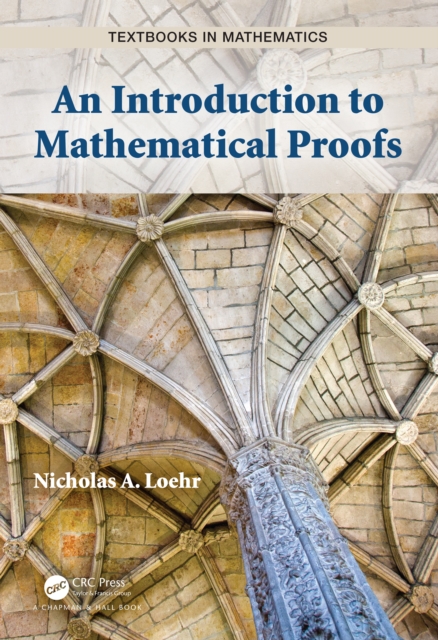
An Introduction to Mathematical Proofs
An Introduction to Mathematical Proofs presents fundamental material on logic, proof methods, set theory, number theory, relations, functions, cardinality, and the real number system. The text uses a methodical, detailed, and highly structured approach to proof techniques and related topics. No prerequisites are needed beyond high-school algebra.
New material is presented in small chunks that are easy for beginners to digest. The author offers a friendly style without sacrificing mathematical rigor. Ideas are developed through motivating examples, precise definitions, carefully stated theorems, clear proofs, and a continual review of preceding topics.
Features
Study aids including section summaries and over 1100 exercises
Careful coverage of individual proof-writing skills
Proof annotations and structural outlines clarify tricky steps in proofs
Thorough treatment of multiple quantifiers and their role in proofs
Unified explanation of recursive definitions and induction proofs, with applications to greatest common divisors and prime factorizations
About the Author:
Nicholas A. Loehr is an associate professor of mathematics at Virginia Technical University. He has taught at College of William and Mary, United States Naval Academy, and University of Pennsylvania. He has won many teaching awards at three different schools. He has published over 50 journal articles. He also authored three other books for CRC Press, including Combinatorics, Second Edition, and Advanced Linear Algebra.
Logic
Propositions; Logical Connectives; Truth Tables
Logical Equivalence; IF-Statements
IF, IFF, Tautologies, and Contradictions
Tautologies; Quantifiers; Universes
Properties of Quantifiers: Useful Denials
Denial Practice; Uniqueness
Proofs
Definitions, Axioms, Theorems, and Proofs
Proving Existence Statements and IF Statements
Contrapositive Proofs; IFF Proofs
Proofs by Contradiction; OR Proofs
Proof by Cases; Disproofs
Proving Universal Statements; Multiple Quantifiers
More Quantifier Properties and Proofs (Optional)
Sets
Set Operations; Subset Proofs
More Subset Proofs; Set Equality Proofs
More Set Quality Proofs; Circle Proofs; Chain Proofs
Small Sets; Power Sets; Contrasting ∈ and ⊆
Ordered Pairs; Product Sets
General Unions and Intersections
Axiomatic Set Theory (Optional)
Integers
Recursive Definitions; Proofs by Induction
Induction Starting Anywhere: Backwards Induction
Strong Induction
Prime Numbers; Division with Remainder
Greatest Common Divisors; Euclid’s GCD Algorithm
More on GCDs; Uniqueness of Prime Factorizations
Consequences of Prime Factorization (Optional)
Relations and Functions
Relations; Images of Sets under Relations
Inverses, Identity, and Composition of Relations
Properties of Relations
Definition of Functions
Examples of Functions; Proving Equality of Functions
Composition, Restriction, and Gluing
Direct Images and Preimages
Injective, Surjective, and Bijective Functions
Inverse Functions
Equivalence Relations and Partial Orders
Reflexive, Symmetric, and Transitive Relations
Equivalence Relations
Equivalence Classes
Set Partitions
Partially Ordered Sets
Equivalence Relations and Algebraic Structures (Optional)
Cardinality
Finite Sets
Countably Infinite Sets
Countable Sets
Uncountable Sets
Real Numbers (Optional)
Axioms for R; Properties of Addition
Algebraic Properties of Real Numbers
Natural Numbers, Integers, and Rational Numbers
Ordering, Absolute Value, and Distance
Greatest Elements, Least Upper Bounds, and Completeness
Suggestions for Further Reading
Nicholas A. Loehr is an associate professor of mathematics at Virginia Technical University. He has taught at College of William and Mary, United States Naval Academy, and University of Pennsylvania. He has won many teaching awards at three different schools. He has published over 50 journal articles. He also authored three other books for CRC Press, including Combinatorics, Second Edition, and Advanced Linear Algebra.
eBook