
Catalogue Search | MBRL


Are you sure you want to remove the book from the shelf?

{{itemTitle}}
17,336
result(s) for
"Prospecting."
Sort by:


The Self-Potential Method
The self-potential method enables non-intrusive assessment and imaging of disturbances in electrical currents of conductive subsurface materials. It has an increasing number of applications, from mapping fluid flow in the subsurface of the Earth to detecting preferential flow paths in earth dams and embankments. This book provides the first full overview of the fundamental concepts of this method and its applications in the field. It discusses a historical perspective, laboratory investigations undertaken, the inverse problem and seismoelectric coupling, and concludes with the application of the self-potential method to geohazards, water resources and hydrothermal systems. Chapter exercises, online datasets and analytical software enable the reader to put the theory into practice. This book is a key reference for academic researchers and professionals working in the areas of geophysics, environmental science, hydrology and geotechnical engineering. It will also be valuable reading for related graduate courses.
eBook


Oil and Gas Exploration - Methods and Application
This book presents a summary of new results related to oil and gas prospecting that are useful for theoreticians and practical professionals. The study of oil and gas complexes and intrusions occurring in sedimentary basins is crucial for identifying the location of oil and gas fields and for making accurate predictions on oil findings. This book is a valuable resource for exploration geophysicists, petroleum engineers, geoengineers, petrologists, mining engineers, and economic geologists, who will gain insights into exploring new methods involved in finding natural resources from our Earth.
eBook

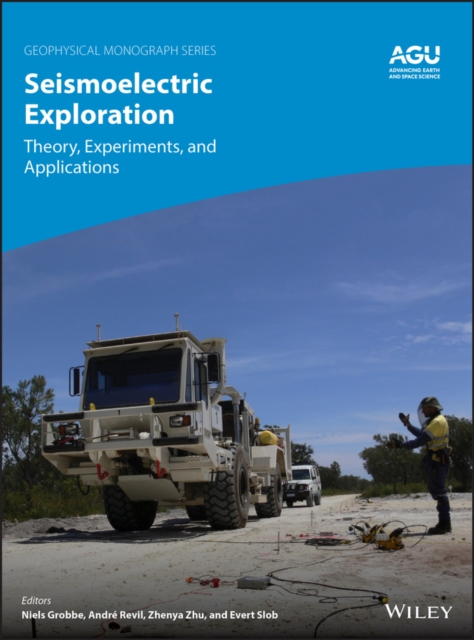
The seismoelectric effect: theory, numerical modeling, laboratory and field experiments
Seismoelectric coupling and its current and?potential future applications The seismoelectric method-the naturally-occurring?coupling of seismic waves to electromagnetic fields-can provide insight into important properties of porous media. With a variety of potential environmental and engineering uses, as well as larger scale?applications?such as earthquake detection and oil and gas exploration, it offers a number of advantages over conventional geophysical methods. Seismoelectric Exploration: Theory, Experiments, and Applications?explores the coupling between poroelastic and electromagnetic disturbances,?discussing?laboratory experiments, numerical?modeling techniques, recent theoretical developments, and field studies.? Volume highlights include: Physics of the seismoelectric effect at the microscale Governing equations describing coupled seismo-electromagnetic fields Examples of successful seismoelectric field experiments in different geological settings Current and potential applications of seismoelectric coupling Noise removal techniques for seismoelectric field measurements The American Geophysical Union promotes discovery in Earth and space science for the benefit of humanity. Its publications disseminate scientific knowledge and provide resources for researchers, students, and professionals.
eBook

Mineral deposits, exploration and ore-reserve estimation
\"This third volume of the Business of Mining set commences with \"Our Earth, its Minerals and Ore Bodies\", followed by a review of mineral exploration and sampling of mineral deposits. It continues with detailed sections covering the reporting of mineral resources and reserves in Australia, and concludes with the basic principles and application of the various methods of estimating the in-situ mineral resources and ore reserves. The books were written primarily for undergraduate applied geologists, mining engineers and extractive metallurgists and those pursuing course-based postgraduate programs in mineral economics\"-- Provided by publisher.
Book

Seeing Beneath the Soil
Scientific soil prospecting methods can give dramatic pictures of buried archaeological sites, and sometimes information on what occurred within them, before any earth has ben removed. Dr Clark, who was one of the earliest to work in this field, has written the first general survey of an increasingly important area of practical archaeology. The emphasis is on the principles and practical application of the well established techniques of resistivity, magnetometry and magnetic susceptibility, with shorter sections on emerging and less common techniques such as ground-penetrating radar, electromagnetic methods and phosphate survey. This paperback edition updates and enhances the earlier book, adding new material such as the large-scale evaluation exercises now required as a precondition of planning consent for major developments.
eBook


Factors Influencing Resistivity Inversion for COsub.2 Geological Storage Zones: A Quantitative Study
This study establishes a homogeneous half-space and a horizontally layered two-layer background stratigraphy model using cross-borehole electrical resistivity tomography (ERT) based on an incomplete Gauss–Newton (IGN) method to investigate the resistivity inversion characteristics of CO[sub.2] storage zones. The effects of storage zone volume (V[sub.CO2] ), storage zone resistivity (ρ[sub.CO2] ), background formation resistivity (ρ[sub.f] ), and CO[sub.2] diffusion on inversion results were systematically analyzed, and the mechanisms underlying the influence of different parameters on inversion imaging were explored. The results indicate that an increase in the V[sub.CO2] significantly affects the inverted resistivity. The ρ[sub.CO2] can be well inverted within a certain range, but inversion accuracy decreases once the resistivity exceeds a threshold. The ρ[sub.f] is a critical factor influencing inversion results; as the ρ[sub.f] increases, the inverted resistivity values rise markedly, although this effect exhibits an upper limit. The study also uncovers the exponential nature of CO[sub.2] diffusion in the storage zone, where diffusion leads to exponential changes in resistivity and the delineation of the diffusion zone is enhanced by comparing pre- and post-injection resistivity differences. These findings offer valuable insights for CO[sub.2] storage monitoring, contributing to both safety assessments and the evaluation of storage stability in geological sequestration.
Journal Article