
Catalogue Search | MBRL


Are you sure you want to remove the book from the shelf?

{{itemTitle}}
21
result(s) for
"Prostitutes Asia."
Sort by:

Asian women and intimate work
\"Asian women are often labelled with biased stereotypical images, ranging from \"subordinate housewife\" to \"migrant domestic maid,\" and \"overseas bride.\" Asian women, in fact, are being constructed as \"women among women.\" These feminine roles are related to the various activities that women perform for others in intimate relationships both within and outside the family. This book comprises contributions from a distinguished group of international researchers who examine the historical development of \"new women\" and \"good wife, wise mother,\" women's roles in socialist and transitional modernity and the transnational migration of domestic and sex workers as well as wives\"-- Provided by publisher.
Book

Asian Women and Intimate Work
Winner of the 2014 Choice Outstanding Academic Title Award This book comprises contributions from a distinguished group of international researchers who examine the historical development of \"new women\" and \"good wife, wise mother,\" women's roles in socialist and transitional modernity and the transnational migration of both domestic and sex workers as well as wives.
eBook
Sexual Cultures in East Asia
Using case-studies from East and Southeast Asia, this book examines sexuality and AIDS-related sexual risk in the context of Asian cultures. It offers a complementary perspective, documented with sociological and anthropological data, to historical studies and looks at commercial sex work, kinship systems, matrimonial strategies, gender, power relations, and the relevance of cultural constructs such as Confucianism and Taoism for the analysis of sexual cultures in Asia.
eBook

Selling women
This book traces the social history of early modern Japan's sex trade, from its beginnings in seventeenth-century cities to its apotheosis in the nineteenth-century countryside. Drawing on legal codes, diaries, town registers, petitions, and criminal records, it describes how the work of \"selling women\" transformed communities across the archipelago. By focusing on the social implications of prostitutes' economic behavior, this study offers a new understanding of how and why women who work in the sex trade are marginalized. It also demonstrates how the patriarchal order of the early modern state was undermined by the emergence of the market economy, which changed the places of women in their households and the realm at large.
eBook

Geisha, Harlot, Strangler, Star
In May 1936, Abe Sada committed the most notorious crime in twentieth-century Japan—the murder and emasculation of her lover. What made her do it? And why was she found guilty of murder yet sentenced to only six years in prison? Why have this woman and her crime remained so famous for so long, and what does her fame have to say about attitudes toward sex and sexuality in modern Japan? Despite Abe Sada’s notoriety and the depictions of her in film and fiction (notably in the classic In the Realm of the Senses), until now, there have been no books written in English that examine her life and the forces that pushed her to commit the crime. Along with a detailed account of Sada’s personal history, the events leading up to the murder, and its aftermath, this book contains transcripts of the police interrogations after her arrest—one of the few existing first-person records of a woman who worked in the Japanese sex industry during the 1920s and 1930s—as well as a memoir by the judge and police records. Geisha, Harlot, Strangler, Star steps beyond the simplistic view of Abe Sada as a sexual deviate or hysterical woman to reveal a survivor of rape, a career as a geisha and a prostitute, and a prison sentence for murder. Sada endured discrimination and hounding by paparazzi until her disappearance in 1970. Her story illustrates a historical collision of social and sexual values—those of the samurai class and imported from Victorian Europe against those of urban and rural Japanese peasants.
eBook

Associations between transactional sex and intimate and non-intimate partner violence: findings from project WINGS of Hope
Women who engage in transactional sex experience disproportionately high rates of intimate partner violence (IPV) and non-intimate partner violence (nIPV); However little research has examined whether these risks vary by recency of transactional sex. Drawing on baseline data from a GBV pilot intervention among 213 women with a history of substance use in Kyrgyzstan, we used descriptive, bivariate, and multivariate logistic regression analyses to examine the associations between history of transactional sex (never, former, recent-past 90 days) and IPV and nIPV. 108 (50.7%) participants reported a history of transactional sex: 65 of whom reported former transactional sex (FTS) and 43 of whom reported recent transactional sex (RTS). The prevalence of recent IPV (n = 163, 76.5%) and nIPV (n = 141, 66.2%) were high for the overall sample. Adjusted multivariate models indicated that women who reported RTS were significantly more likely to report recent physical, sexual, emotional, and any type of IPV, compared to women who reported FTS and no transactional sex (NTS). No significant differences were observed between women who reported NTS and FTS. Examining nIPV, women who reported RTS were significantly more likely to report deprivation of resources, injurious, physical, sexual, emotional, and any recent nIPV compared to women who reported FTS and NTS. Women who reported FTS were significantly more likely to report recent physical and sexual nIPV compared to women who reported NTS. Findings suggest that GBV risks shift over time with active engagement in transactional sex and by perpetrator, and that interventions should attune closely to these patterns.
Journal Article
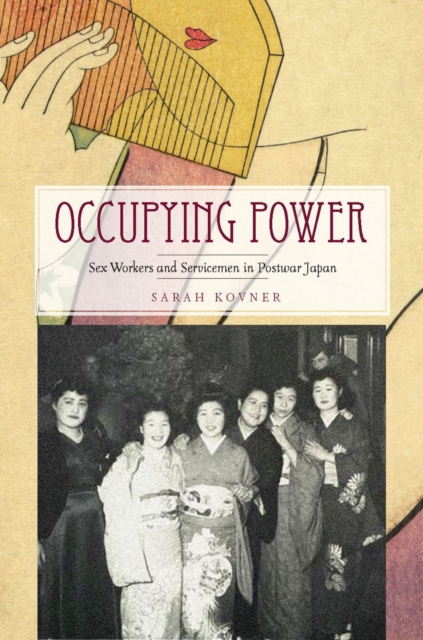
Occupying Power
The year was 1945. Hundreds of thousands of Allied troops poured into war-torn Japan and spread throughout the country. The effect of this influx on the local population did not lessen in the years following the war's end. In fact, the presence of foreign servicemen also heightened the visibility of certain others, particularlypanpan-streetwalkers-who were objects of their desire.
Occupying Power shows how intimate histories and international relations are interconnected in ways scholars have only begun to explore. Sex workers who catered to servicemen were integral to the postwar economic recovery, yet they were nonetheless blamed for increases in venereal disease and charged with diluting the Japanese race by producing mixed-race offspring. In 1956, Japan passed its first national law against prostitution, which produced an unanticipated effect. By ending a centuries-old tradition of sex work regulation, it made sex workers less visible and more vulnerable. This probing history reveals an important but underexplored aspect of the Japanese occupation and its effect on gender and society. It shifts the terms of debate on a number of controversies, including Japan's history of forced sexual slavery, rape accusations against U.S. servicemen, opposition to U.S. overseas bases, and sexual trafficking.
eBook

Policing and Regulating Commercial Sex in Taiwan: A Review from Gender, Culture and Legal Perspectives
Commercial sex has been a complex and controversial issue in Taiwan. It was banned several times and finally partially legalized in law when the Congress finally amended Article 80 of the Social Order Maintenance Law and authorized local governments to establish red-light districts. Unfortunately, in reality, until now, no local government has established a red-light district. Therefore, all commercial sex is still illegal in Taiwan. By reviewing this issue from gender, culture, and legal perspectives, this paper discusses the regulation of commercial sex in Taiwan in three parts. In the first part, this paper provides a historical view of the development of commercial sex and how the government regulated it in different periods. In the second part, this paper introduces the debate and various perspectives of feminist legal theories on this issue. Finally, compared with the regulation models of Japan and Singapore, this paper proposes an empowerment approach in response to the current Social Order Maintenance Law. Focusing on sex workers’ autonomy and subjectivity, the new approach hopes to balance the interests between the rights of sex workers and the needs of social order and public health.
Journal Article

A community-based qualitative study on the experience and understandings of intimate partner violence and HIV vulnerability from the perspectives of female sex workers and male intimate partners in North Karnataka state, India
Background
Research has increasingly documented the important role that violence by clients and the police play in exacerbating HIV vulnerability for women in sex work. However few studies have examined violence in the intimate relationships of women in sex work, or drawn on community partnerships to explore the social dynamics involved. A community-based participatory research study was undertaken by community and academic partners leading intimate partner violence (IPV) and HIV prevention programs in Bagalkot district, Karnataka state, India. The purpose was to explore the experience and understandings of intimate partner violence and HIV/AIDS among women in sex work and their intimate partners in Bagalkot that would inform both theory and practice.
Methods
A community-based, interpretive qualitative methodology was used. Data was collected between July and October 2014 through in-depth interviews with 38 participants, including 10 couples, 13 individual female sex workers, and 5 individual male intimate partners. Purposive sampling was done to maximize variation on socio-demographic characteristics. Thematic content analysis was conducted through coding and categorization for each interview question in NVivo 10.0, followed by collaborative analysis to answer the research questions.
Results
The results showed that an array of interrelated, multi-level factors underlay the widespread acceptance and perpetuation of violence and lack of condom use in participants’ intimate relationships. These included individual expectations that justified violence and reflected societal gender norms, compounded by stigma, legal and economic constraints relating to sex work. The results demonstrate that structural vulnerability to IPV and HIV must be addressed not only on the individual and relationship levels to resolve relevant triggers of violence and lack of condom use, but also the societal-level to address gender norms and socio-economic constraints among women in sex work and their partners.
Conclusion
The study contributes to a better understanding on the interplay of individual agency and structural forces at a time when researchers and program planners are increasingly pondering how best to address complex and intersecting social and health issues. Ongoing research should assess the generalizability of the results and the effectiveness of structural interventions aiming to reduce IPV and HIV vulnerability in other contexts.
Journal Article

The impact of a microsavings intervention on reducing violence against women engaged in sex work: a randomized controlled study
Background
Women who engage in sex work are at risk for experiencing violence from numerous perpetrators, including paying partners. Empirical evidence has shown mixed results regarding the impact of participation in microfinance interventions on women’s experiences of violence, with some studies demonstrating reductions in intimate partner violence (IPV) and others showing heightened risk for IPV. The current study reports on the impact of participation in a microsavings intervention on experiences of paying partner violence among women engaged in sex work in Mongolia.
Methods
Between 2011 and 2013, we conducted a two-arm, non-blinded randomized controlled trial (RCT) comparing an HIV/STI risk reduction intervention (HIVSRR) (control condition) to a combined microsavings and HIVSRR intervention (treatment condition). Eligible women (aged 18 or older, reported having engaged in unprotected sex with paying partner in past 90 days, expressed interest in microsavings intervention) were invited to participate. One hundred seven were randomized, including 50 in the control and 57 in the treatment condition. Participants completed assessments at baseline, immediate post-test following HIVSRR, and at 3-months and 6-months after completion of the treatment group intervention. Outcomes for the current study include any violence (physical and/or sexual), sexual violence, and physical violence from paying partners in the past 90 days.
Results
An intention-to-treat approach was utilized. Linear growth models revealed significant reductions over time in both conditions for any violence (β = −0.867,
p
< 0.001), physical violence (β = −0.0923,
p
< 0.001), and sexual violence (β = −1.639,
p
= 0.001) from paying partners. No significant differences between groups were found for any violence (β = 0.118,
p
= 0.389), physical violence (β = 0.091,
p
= 0.792), or sexual violence (β = 0.379,
p
= 0.114) from paying partners.
Conclusions
Microsavings participation did not significantly impact women’s risk for paying partner violence. Qualitative research is recommended to understand the cause for reductions in paying partner violence in both study conditions.
Trial registration
Evaluating a Microfinance Intervention for High Risk Women in Mongolia;
NCT01861431
; May 20, 2013.
Journal Article