
Catalogue Search | MBRL


Are you sure you want to remove the book from the shelf?

{{itemTitle}}
79
result(s) for
"Protest movements Syria."
Sort by:

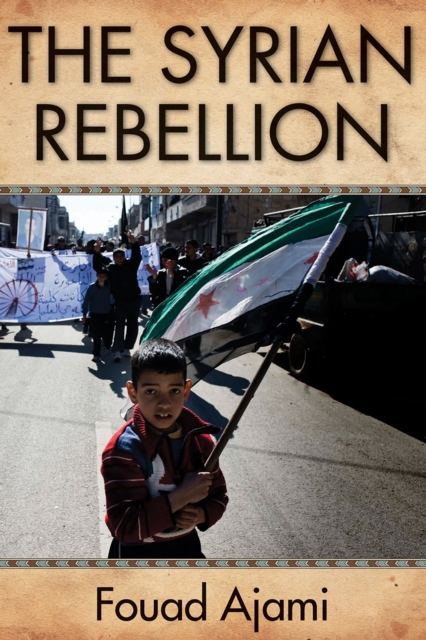
The Syrian rebellion
Fouad Ajami offers a detailed historical perspective on the current rebellion in Syria. Focusing on the similarities and differences in skills between former dictator Hafez al-Assad and his successor son, Bashar, Ajami explains how an irresistible force clashed with an immovable object: the regime versus people who conquered fear to challenge a despot of unspeakable cruelty.
eBook


Revolt in Syria : eye-witness to the uprising
In January 2011 President Bashar al-Assad told the Wall Street Journal that Syria was \"stable\" and immune from revolt. In the months that followed, and as regimes fell in Egypt and Tunisia, thousands of Syrians took to the streets calling for freedom, with many dying at the hands of the regime. In Revolt in Syria: Eye-Witness to the Uprising, Stephen Starr delves deep into the lives of Syrians whose destiny has been shaped by the state for almost fifty years. In conversations with people from all strata of Syrian society, Starr draws together and makes sense of perspectives illustrating why Syria, with its numerous sects and religions, was so prone to violence and civil strife. Through his unique access to a country largely cut off from the international media during the unrest, Starr delivers compelling first hand testimony from both those who suffered and benefited most at the hands of the regime. Revolt details why many Syrians wanted Assad's government to stay as the threat of civil war loomed large, the long-standing gap between the state apparatus and its people and why the country's youth stood up decisively for freedom. Starr also sets out the positions adhered to by the country's minorities and explains why many Syrians believe that enforced regime change might precipitate a region-wide conflict.
eBook

A woman in the crossfire : diaries of the Syrian revolution
A devastating and personal account of the ongoing uprising in Syria from a prominent Syrian journalist now in hiding.
Book

A Woman in the Crossfire
A well-known novelist and journalist from the coastal city of Jableh, Samar Yazbek witnessed the beginning four months of the uprising first-hand and actively participated in a variety of public actions and budding social movements. Throughout this period she kept a diary of personal reflections on, and observations of, this historic time. Because of the outspoken views she published in print and online, Yazbek quickly attracted the attention and fury of the regime, vicious rumours started to spread about her disloyalty to the homeland and the Alawite community to which she belongs. The lyrical narrative describes her struggle to protect herself and her young daughter, even as her activism propels her into a horrifying labyrinth of insecurity after she is forced into living on the run and detained multiple times, excluded from the Alawite community and renounced by her family, her hometown and even her childhood friends. With rare empathy and journalistic prowess Samar Yazbek compiled oral testimonies from ordinary Syrians all over the country. Filled with snapshots of exhilarating hope and horrifying atrocities, she offers us a wholly unique perspective on the Syrian uprising. Hers is a modest yet powerful testament to the strength and commitment of countless unnamed Syrians who have united to fight for their freedom. These diaries will inspire all those who read them, and challenge the world to look anew at the trials and tribulations of the Syrian uprising.
eBook


Moral Identity and Protest Cascades in Syria
Cascade models explain the roles of the intrepid few who initiate protest and the masses who join when the expected utility of dissent flips from negative to positive. Yet questions remain about what motivates participation between those points on the causal chain, or under any conditions of high risk. To explain these anomalies, this article employs theories of moral identity to explore the interdependence of a facet of decision making that rationalist models typically regard as fixed: individuals’ awareness of and need to express values central to their sense of self. Three mechanisms describe ways that individuals’ responses to early risers trigger moral identity-based motivations for protest. First, by conjuring normative ideals, first movers can activate bystanders’ urge to follow their example in order to earn their own self-respect. Secondly, by demonstrating the joy of agency, early risers can inspire bystanders’ desire to experience the same gratification. Thirdly, by absorbing punishments, early risers can activate onlookers’ sense of moral obligation to contribute to collective efforts. These mechanisms redouble bystanders’ sense of the inherent value of protest, apart from its instrumental utility, and intensify their acceptance of risks, independent of the actual risks anticipated. Original interviews with displaced Syrians about their participation in demonstrations illustrate these processes.
Journal Article

Urban Subalterns in the Arab Revolutions: Cairo and Damascus in Comparative Perspective
This paper investigates the role of urban subalterns both as participatory agents in the Arab revolutions and as mediating forces against revolutionary action. It argues that during revolutionary periods the positioning of subalterns as a political force should be understood in relation to their socio-spatial location in the urban political configuration. Looking at the protest movements in Cairo and Damascus, the paper examines the differentiated locations of subaltern actors in each to demonstrate how their positioning in relation to state and government has shaped their engagement in the revolutions. In Cairo, the mobilization of subaltern forces was anchored in spatialized forms of everyday interaction between popular forces and agents of government. These interactions were formative of urban subjectivities that entered into the making of “the people” as the subject of the Revolution. In Damascus, the configuration of the urban space and the Syrian regime's modes of control made it difficult for subaltern forces to mobilize on the same scale as in Cairo or to form a unified opposition. The regime instrumentalized socio-spatial fragmentation among subalterns, in effect turning some segments, as buffers for the regime, against others. In analytical terms, the paper underscores the common conceptual ground between the categories of “urban popular forces” and “urban subalterns.” This ground covers their socio-spatial positionality, their bases of action, and the factors shaping their political subjectivities.
Journal Article

Mutiny and nonviolence in the Arab Spring: Exploring military defections and loyalty in Egypt, Bahrain, and Syria
Recent studies of civil resistance indicate that security force defections can heavily influence the outcome of nonviolent uprisings against authoritarian regimes. Yet we know little about why, when, and how mutiny occurs. In this article, I ask: what factors influence the likelihood of military defections during a nonviolent conflict? In reviewing various literatures, I identify ten factors that facilitate or obstruct mutiny. I propose that two of these are particularly influential: (1) whether troops receive economic or political benefits from the regime; and (2) whether troops perceive the regime as fragile, based on the international community's response to the conflict. Specifically, I argue that troops who receive benefits from a regime are more likely to remain loyal while those who receive no such benefits are more likely to defect. However, even the most underprivileged troops are unlikely to defect if they believe that the state is strong enough to withstand a major civilian uprising. Soldiers' perception of regime strength is partly shaped by whether outside nations support the opposition, thereby weakening the state, or send troops to reinforce the regime's control. Using a qualitative comparative method, I illustrate these dynamics through an examination of several Arab Spring uprisings: Egypt, where the military sided with civil resisters; Bahrain, where troops remained loyal to the state; and Syria, where the military split. Then, to encourage more research on this topic, I use these three cases to generate additional hypotheses about defections that others can test against a wider set of cases. I conclude with a discussion of the questions that future researchers should explore and the types of methodological approaches that are needed in this field of study.
Journal Article