
Catalogue Search | MBRL


Are you sure you want to remove the book from the shelf?

{{itemTitle}}
949
result(s) for
"Proto languages"
Sort by:
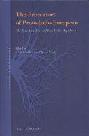
The precursors of Proto-Indo-European : the Indo-Anatolian and Indo-Uralic hypotheses
\"In The Precursors of Proto-Indo-European some of the world's leading experts in historical linguistics shed new light on two hypotheses about the prehistory of the Indo-European language family, the so-called Indo-Anatolian and Indo-Uralic hypotheses. The Indo-Anatolian hypothesis states that the Anatolian branch of the Indo-European family should be viewed as a sister language of 'classical' Proto-Indo-European, the ancestor of all the other, non-Anatolian branches. The common ancestor of all Indo-European languages, including Anatolian, can then be called Proto-Indo-Anatolian. The Indo-Uralic hypothesis states that the closest genetic relative of Indo-European is the Uralic language family, and that both derive from a common ancestor called Proto-Indo-Uralic. The book unravels the history of these hypotheses and scrutinizes the evidence for and against them. Contributors are Stefan H. Bauhaus, Rasmus G. Bj²rn, Dag Haug, Petri Kallio, Simona Klemenéciéc, Alwin Kloekhorst, Frederik Kortlandt, Guus Kroonen, Martin J. Kèummel, Milan Lopuhaèa-Zwakenberg, Alexander Lubotsky, Rosemarie Lèuhr, Michaèel Peyrot, Tijmen Pronk, Andrei Sideltsev, Michiel de Vaan, Mikhail Zhivlov\"-- Provided by publisher.
Book

Mid-Holocene Language Connections between Asia and North America
This volume presents the up-to-date results of investigations into the Asian origins of the only two languages families of North America, Eskaleut and Na-Dene, that are widely acknowledged as having likely genetic links in northern Asia.
eBook


Sound Symbolism in the Proto-Turkic Language
Studies on the Turkic languages have shown that the difference between related terms concerning male and female, including back and front vowels, is a “separate case” (a special case). In this article, such a phenomenon was studied in more depth and detail, and for the first time, it was associated with sound symbolism. This work aims to show the role of sound symbolism in the classification of kinship terms related to man and woman in the Proto-Turkic language. To achieve this goal, we conducted experimental work with four babies. Our experiment was based on the bouba/kiki effect, which is used in modern linguistics. Besides, in the research work, an associative experiment was conducted with students studying at Karaganda University. Thirty-five students took part in the experiment. The study results showed that infants associated the image of a man, large objects with back vowels, and the image of a woman, small objects with front vowels. According to the results obtained using the associative method, the participants associated the front vowels with the stimulus “female”, and the back vowels were not associated with “male”. However, the participants showed an advantage in associating men with the uvular consonant [q], which is only combined with back vowels. In the Turkic languages, we also found that terms associated with back (thick) vowels have meanings associated with males, and terms associated with front (thin) vowels have meanings associated with females.
Journal Article

Etymological dictionary of Latin and the other Italic languages
This etymological dictionary covers the entire Latin lexicon of Indo-European origin. It consists of nearly 1900 entries, which altogether discuss about 8000 Latin lemmata. All words attested before Cicero are included, together with their first date of attestation in Latin.
Book

Introduction to Proto-Indo-European and Balto-Slavic accentology
This book offers a comprehensive introduction to Proto-Indo-European, Balto-Slavic and Proto-Slavic accentology; a branch of diachronic linguistics dealing with the development of syllable stress, intonation, and quantity at the word level. Of particular interest in the book is its detailed summary of the major approaches and solutions to accentology of the last thirty years. Furthermore, the book provides a comprehensive overview of the current state of research on accentuation of the Indo-.
eBook

Proto-Slavic inflectional morphology : a comparative handbook
In this volume, Thomas Olander offers a historical analysis of the inflectional endings of Proto-Slavic, comparing them with the corresponding endings in related languages and reconstructing the Proto-Indo-European point of departure.
eBook

The precursors of Proto-Indo-European : the Indo-Anatolian and Indo-Uralic hypotheses
The Precursors of Proto-Indo-European contains sixteen contributions that offer the newest insights into the prehistory of Proto-Indo-European, taking the Indo-Anatolian and the Indo-Uralic hypotheses as their point of departure.
eBook

Phonetic and Phonemic Laws in Modern Historical and Phonological Studies (Linguistic Historiographical Aspect)
The problem of phonetic and phonemic laws reconstruction in the works of linguists of the 19th–21st centuries was investigated. The study demonstrated the significance of the concepts of sound changes based on the postulate of the phonetic law by E.D. Polivanov (convergent-divergent theory of sound changes), R.O. Jacobson (phonological mutations), which became the foundation of historical phonology, due to which V.K. Zhuravlev completed the construction of the paradigm of historical (diachronic) phonology. It was shown that the phonetic variability and variability of the sound system of the language were considered as a consequence of the action of certain linguistic laws. Definitions of the terms \"phonetic law\" and \"phonemic law\", the establishment of their main differences proved the thesis about the connection of synchrony and diachrony which allowed us to interpret the phenomena of the history of the sound systems of the Proto-Slavonic and East Slavonic languages. V.K. Zhuravlev and Yu.Ya. Burmistrovich's contribution to the study of these issues in relation to the history of East Slavonic languages were described in detail. The work used an actualistic method which allowed us to consider a particular linguistic concept from the point of view of contribution and significance for linguistics in comparison with previous achievements. A.S. Orel presented the material on phonemic laws in works on the sound system history; A.V. Piskunov – the material on the role of phonetic law and analogy, linguistic reconstruction in the works of Kharkiv, Moscow, Kazan schools scientists of; V.A. Glushchenko – the material on understanding the essence of phonetic law in the works of Kharkiv and Moscow schools scientists.
Journal Article

Reflexes of Proto-Ryukyuan i and u in Miyakoan as a chain shift
The paper examines conditioned changes that occurred in Miyakoan (mostly Proto-Miyakoan) reflexes of Proto-Ryukyuan close vowels *i and *u after the unconditioned raising of Proto-Ryukyuan *e and *o had taken place. These changes in close vowels are interpreted here as chain shifts. The core assumption is that changes in *i and *u occurred in response to the raising of *e and *o in order to avoid or compensate for the functionally damaging merger of *i/*e and *u/*o.
The paper shows that there is a rather wide range of conditions under which *i and *u produced distinct reflexes in Miyakoan. Consequently, these vowels acted differently after stops, after sibilants, after nasals, in an onsetless/standalone position, after the flap, before the flap, and before nasals and other sonorants word-initially. At the same time, reflexes of both proto-vowels have been observed to maintain certain symmetry, meaning that in a similar environment, *i and *u generally underwent similar or analogical changes.
Thus, the conditions for identifying Miyakoan reflexes or *i and *u are listed and specified in this paper. Conversely, it is argued that unless one of these conditions has been met, one should reconstruct a Proto-Ryukyuan mid-vowel rather than a close vowel. Such specification may influence the comparative study of Ryukyuan languages to a significant degree, challenging a number of the so far established reconstructions (most notably Thorpe 1983).
Journal Article