
Catalogue Search | MBRL


Are you sure you want to remove the book from the shelf?

{{itemTitle}}
250
result(s) for
"Protozoa, Pathogenic"
Sort by:
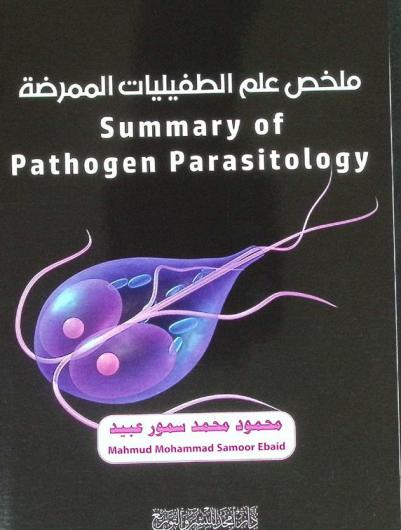
Summary of pathogen parasitology
This scientific summary by Mahmoud Mohammed Samoor Ebaid is a specialized technical reference designed for students and professionals in the fields of medicine, laboratory sciences, and biology. It provides a structured overview of Pathogen Parasitology, focusing on organisms that live at the expense of a human host and cause disease.
BOOK
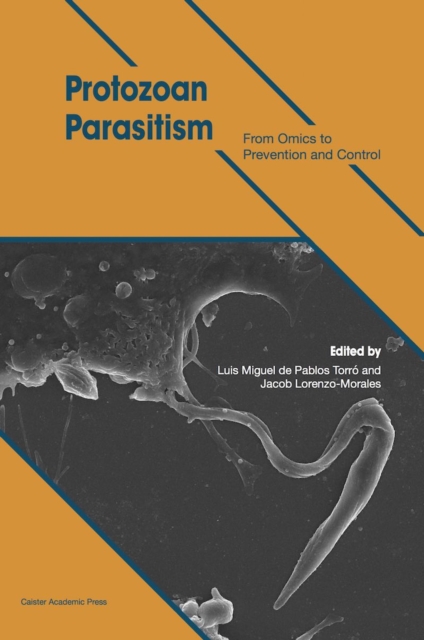
Protozoan Parasitism
In this timely book expert international authors review the current hot-topics in this area to provide an up-to-date overview. The book is divided into two parts. The first part is dedicated to Trypanosoma cruzi, an organism not only responsible for a serious tropical disease but also a good model system for fundamental and applied biology research. Part two of the book is dedicated to four other important protozoa: Leishmania, Naegleria, Entamoeba and Acanthamoeba. Chapters are written from a molecular biology and genomics perspective and focus on a common goal: the development of new strategies for the control and prevention of infection. This volume is essential reading for anyone working on protozoan parasites in academia, government, and biotechnology companies.
eBook

Enhancement of capsular hypermucoviscosity in Klebsiella pneumoniae by Acanthamoeba
Acanthamoeba and Klebsiella pneumoniae are both environmental commensals. Recently, clinical harm caused by hypermucoviscous K. pneumoniae has been observed. However, the interaction between these microbes and the origin of hypermucoviscous K. pneumoniae have not been reported.
Here, we report that the bacterial capsule is enlarged when co-cultured with Acanthamoeba using India ink staining, and this effect depends on the number of parasites present. This interaction results in an enhancement of capsular polysaccharide production in the subsequent generations of K. pneumoniae, even without co-culturing with Acanthamoeba. The hypermucoviscosity of the capsule was examined using the sedimentation assay and string test. We also screened other K. pneumoniae serotypes, including K1, K2, K5, and K20, for interaction with Acanthamoeba using India ink staining, and found the same interaction effect.
These findings suggest that the interaction between Acanthamoeba and K. pneumoniae could lead to harmful consequences in public health and nosocomial disease control, particularly hypermucoviscous K. pneumoniae infections.
Journal Article

In Vitro Studies of Chromone-Tetrazoles against Pathogenic Protozoa, Bacteria, and Fungi
In vitro studies to fourteen previously synthesized chromone-tetrazoles and four novel fluorine-containing analogs were conducted against pathogenic protozoan (Entamoeba histolytica), pathogenic bacteria (Pseudomonas aeruginosa, and Staphylococcus aureus), and human fungal pathogens (Sporothrix schenckii, Candida albicans, and Candida tropicalis), which have become in a serious health problem, mainly in tropical countries.
Journal Article

Burden and epidemiology of human intestinal 'Giardia duodenalis' infection in Colombia: A systematic review
The genus 'Giardia' is a unicellular protozoan able to parasitize both humans and animals. Cysts of 'Giardia' can be found in soil samples, aquatic environments, food, and any surface that gets in contact with the feces of parasitized animals. The aim of this systematic review was to analyze the burden and epidemiology of Giardia infection in Colombia summarizing recent scientific reports and existing knowledge and to identify knowledge gaps that may be addressed in future investigations. This work follows the guidelines established by \"Preferred Reporting Items for Systematic Reviews and Meta-Analyzes\" (PRISMA). Published scientific literature from 1 January 2010 to 18 September 2022 was searched in six electronic scientific databases using the search terms: \"Giardia\" OR \"Giardiasis\" AND \"Colombia\". Twenty-three scientific articles were performed in 22 departments of Colombia at rural, urban, and a combination of rural and urban contexts. The prevalence of 'Giardia' in the Colombian population was between 0.9 and 48.1% when the samples were analyzed with classical microscopy; the range of 'Giardia' prevalence was even bigger (4.2-100%) when qPCR and nested PCR were used. The dominant 'Giardia' assemblages found in Colombia were A and B, and most frequent subassemblages were AII, BIII, and BIV.
Journal Article

Purine and pyrimidine transport in pathogenic protozoa: From biology to therapy
Purine salvage is an essential function for all obligate parasitic protozoa studied to date and most are also capable of efficient uptake of preformed pyrimidines. Much progress has been made in the identification and characterisation of protozoan purine and pyrimidine transporters. While the genes encoding protozoan or metazoan pyrimidine transporters have yet to be identified, numerous purine transporters have now been cloned. All protozoan purine transporter-encoding genes characterised to date have been of the Equilibrative Nucleoside Transporter family conserved in a great variety of eukaryote organisms. However, these protozoan transporters have been shown to be sufficiently different from mammalian transporters to mediate selective uptake of therapeutic agents. Recent studies are increasingly addressing the structure and substrate recognition mechanisms of these vital transport proteins.
Journal Article

Ferric sulphate flocculation as a concentration method for Giardia and Cryptosporidium in filter backwash water
Filter backwash water (FBW) is a prominent residue from water treatment plants (WTPs) that is often disposed into water bodies or recycled within the WTP without due disinfection. FBW usually contains particles within a size range that includes pathogenic protozoa, as the infective forms of Giardia and Cryptosporidium, parasites responsible for waterborne diseases outbreaks. Quantifying (oo)cysts is essential for addressing this matter, as it might assist research on giardiasis and cryptosporidiosis epidemiology, as well as shed light onto disinfection technologies for FBW. However, (oo)cyst recovery from FBW and other complex matrices still lacks a standard protocol and entails specialized professionals and expensive material. Seeking to provide insight in a reduced-cost recovery method, this study analysed the recovery efficiency (RE) obtained by acid flocculation with ferric sulphate, a common coagulant, on bench-scale simulated FBW. Steps included concentration by flocculation, centrifugation, and quantification by immunofluorescence. Although recovery was sufficient for Cryptosporidium parvum (40.59%), Method 1623.1 recommendations were not reached for Giardia muris (1.76%). Coefficients of variation obtained for both organisms were not satisfactory, highlighting the variability to which environmental matrices are subjected and why defining a methodology for (oo)cyst recovery in WTP residues is important.
Journal Article


Prevalence, characteristics and correlates of enteric pathogenic protozoa in drinking water sources in Molyko and Bomaka, Cameroon: a cross-sectional study
Background
Access to potable water remains a major challenge particularly in resource-limited settings. Although the potential contaminants of water are varied, enteric pathogenic protozoa are known to cause waterborne diseases greatly. This study aimed at investigating the prevalence, characteristics and correlates of enteric pathogenic protozoa in drinking water sources in Buea, Cameroon.
Methods
A cross-sectional study was conducted using 155 water samples collected from various drinking sources (boreholes, springs, taps and wells). Each sample was subjected to physicochemical examinations (pH, turbidity, odour and sliminess) and parasitological analysis (wet mount, modified Ziehl-Neelsen stain) to determine the presence of enteric pathogenic protozoa. A data collection tool was used to note characteristics of collected samples and the data was analysed using EPI-INFO Version 3.5.3.
Results
The overall prevalence of enteric pathogenic protozoa in water sources was 62.6 %. Eight species of enteric protozoa were observed with
Cryptosporidium parvum
being the most predominant (45.8 %). Spring water was the most contaminated source with enteric protozoa (85.7 %) while pipe borne water had all eight species of protozoa identified. A pH of 6 was the only significant factor associated with the prevalence of these pathogens in water sources.
Conclusion
The prevalence of enteric protozoa in water sources in Molyko and Bomaka is high, spring water is the most contaminated water source and
Cryptosporidium parvum
is the most common protozoa contaminating water. A water pH of 6 is associated to the prevalence of protozoa. Community members need to be educated to treat water before drinking to avoid infection by enteric protozoa in water and further studies with larger samples of water need to be conducted to find other correlates of the presence of protozoa in water.
Journal Article