Catalogue Search | MBRL


Are you sure you want to remove the book from the shelf?

{{itemTitle}}
9,686
result(s) for
"Proverbs"
Sort by:


Activating Annotations, an Experiment with Proverbs
Actor training in the United States is inextricably linked to the inside-out style of Stanislavskian and descendant practices, which accesses story primarily through emotion and memory; British training tends to access story more through the technical aspects of text and voice; transnational, movement-based work, pioneered by Rudolf Laban, and Anne Bogart and Tina Landau, capitalizes on the spatial and temporal elements of the body and performance space. See also: 'Don't count your chickens till they hatch'; 'Nothing is set in stone'\", despite the fact that these proverbs are not exact analogues to one another.10 While these correlations demonstrate the general gist of the original proverb, they also exemplify how easy it can be to create the false synonymy Spevack warns against (101). [...]this type of note does not form a complete, performance-oriented annotation because actors cannot play a phrase by thinking of its correlated citations or textual authority. The bulk of proverbial sententiae indicates a pervasive belief that looks are deceiving. [...]either Duncan is a king operating without this piece of common knowledge, or he ignored it in his relationship with Cawdor. Some notes illuminate only the literary irony, not the dramatic function: \"Immediately preceding the welcoming 'O worthiest cousin,' this is a fine stroke of dramatic irony, underlined by Duncan's eager generosity of praise\" (Wilson, 1.4.11-14n); \"This celebrated passage has been almost universally recognized, and justly so, as a consummate stroke of dramatic art\" (Cunningham, 1.4.11-14n); \"The irony of the speech is pointed by the immediate entrance of Macbeth, as critics have observed\" (Muir 1.4.11-12n).15 This sort of annotation focuses on effect rather than cause, prioritizing how the audience interprets the entire dramatic situation over the individual actions that create the drama.
Journal Article

Oxford dictionary of proverbs
This unique and authoritative dictionary contains over 1,100 of the most widely used proverbs in English, utilizing the latest research from Oxford Dictionaries to source them. This edition has been thoroughly revised and updated, broadening the cultural range of the proverbs selected, and covering sayings of international origins. With a strong emphasis on concisely explaining the meaning of the proverbs described, the dictionary also provides additional examples of usage, and includes a fascinating history for many entries. Arranged in A-Z order and with a useful thematic index, A Dictionary of Proverbs is ideal for browsing and perfectly suited for quick reference. Look up your old favourites, learn punchy new expressions to get your point across, and find the answer to that crossword clue. It is never too late to learn: find proverbs relevant to every aspect of life in this entertaining and informative collection.
BOOK
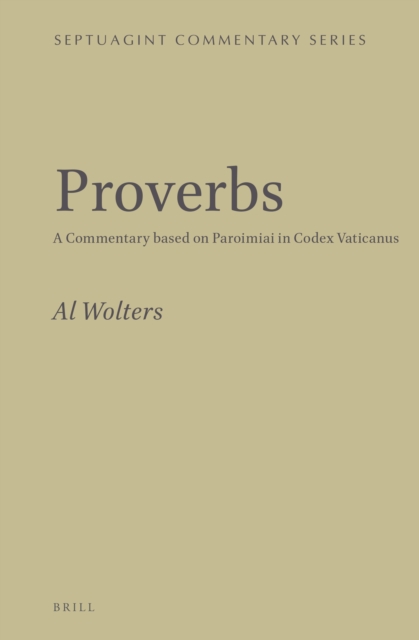
Proverbs
In the Proverbs volume in the Septuagint Commentary Series Al Wolters gives a meticulous philological commentary on the text of Proverbs as found in the Codex Vaticanus, often breaking new ground in illuminating the meaning of the Greek.
eBook
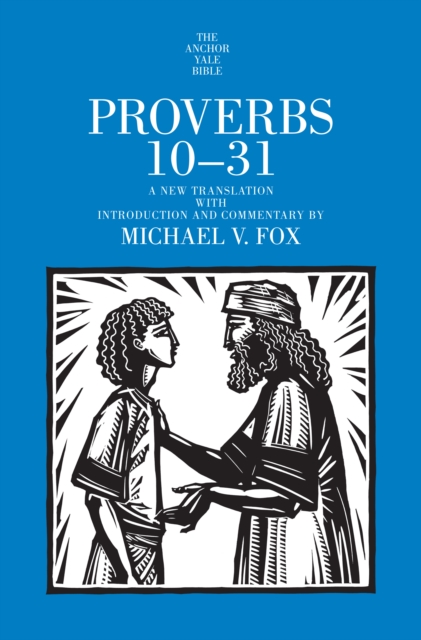
Proverbs 10-31 : a new translation with introduction and commentary
This volume completes Bible scholar Michael V. Foxs comprehensive commentary on the book of Proverbs. As in his previous volume on the early chapters of Proverbs, the author here translates and explains in accessible language the meaning and literary qualities of the sayings and poems that comprise the final chapters. He gives special attention to comparable sayings in other wisdom books, particularly from Egypt, and makes extensive use of medieval Hebrew commentaries, which have received scant attention in previous Proverb commentaries. In separate sections set in smaller type, the author addresses technical issues of text and language for interested scholars.The authors essays at the end of the commentary view the book of Proverbs in its entirety and investigate its ideas of wisdom, ethics, revelation, and knowledge. Out of Proverbs great variety of sayings from different times, Fox shows, there emerges a unified vision of life, its obligations, and its potentials.
eBook

Kazak Atasözleri Penceresinden Modern Ulus Kimlikler
Kaynaklarda Türkistan, Turan, Orta Asya, Merkezî Asya gibi farklı adlandırmalarla kaydedilen coğrafyada var olan modern ulus kimliklerin karşılıklı ilişkileri, farklı açılardan incelenmeye değer bir konudur. Resmî tarih yazımı, edebiyat tarihi, şekillenmiş edebî dil sorunlu olmakla birlikte çizilmiş siyasi sınırlara dayalı biçimde kurulmuş olan ulus devletlerin ve dolayısıyla çoğunluğunu Türk boylarının oluşturduğu modern kimliklerin arasında günümüzde keskin çizgiler mevcuttur. Makalede Kazak atasözlerinde Özbek, Sart, Rus, Tatar, Türkmen başta olmak üzere diğer topluluklarla ilgili kayıtlar; tarihî süreç de dikkate alınarak günümüze yansımaları çerçevesinde değerlendirilmiştir. Günümüzde keskin çizgileri ortaya çıkaracak bir bakış açısının Kazak atasözleri temelinde desteklenip desteklenmediği sorusu çerçevesinde bir değerlendirme yapılmıştır. Makalenin temel amacı keskin ulus kimliklerin ortaya çıkışına sebep olan bakış açılarının atasözlerine yansıyıp yansımadığı sorusuna cevap aramaktır. Makalenin temel malzemesini yayımlanmış atasözleri oluşturmaktadır. Çalışmada alan araştırması çerçevesinde derlenen malzemeler kullanılmamakla birlikte etnografik yönteme dayalı gözlemlerden istifade edilmiştir. Examining the interconnections between contemporary national identities in the geographical region known by various names such as Turkestan, Turan, and Central Asia is a topic of significant interest that warrants exploration from multiple angles. Currently, distinct boundaries exist between the authorized historical accounts, the study of literary works, the influenced literary dialect, the states formed along contentious political boundaries, and consequently, the contemporary identities, predominantly comprised of Turkic tribes. The article examines the Kazakh proverbs that pertain to many ethnic groups, such as the Uzbek, Sart, Russian, Tatar, and Turkmen. These proverbs are analyzed in relation to their relevance to the present, while also considering the historical context. An assessment has been conducted to determine whether the use of Kazakh proverbs can effectively present a clear perspective in contemporary times. The primary objective of the research is to investigate if the viewpoints that give rise to distinct national identities are evident in proverbs. The article is primarily based on published proverbs. The study did not utilize compilation materials produced by field research, but instead relied on observations derived from the ethnographic method.
Journal Article