
Catalogue Search | MBRL


Are you sure you want to remove the book from the shelf?

{{itemTitle}}
444
result(s) for
"Proverbs, African."
Sort by:

From the heart of Africa : a book of wisdom
A collection of African aphorisms illustrated by artists from Ghana, South Africa, Zimbabwe, Canada, the United States, and more.
Book


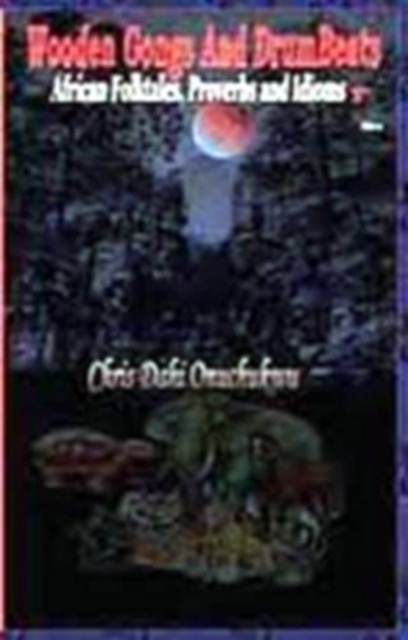
Wooden Gongs and Drumbeats
The moon is high and round. Its silvery light washes over and illuminates all in the homestead. In the centre of the homestead is a small bonfire. Some women are roasting corn and pears. Not far from the bonfire, sat a group of children and adults. The attention of the group is focused on the old man with a cow tail flung casually over his left shoulder. The group is expectant. Their concentration is total. The night has gone suddenly very quiet. The old one clears his throat noisily. \"Chapkrii\" he bellows with a gesticulation of his left hand.\"Waaaaarrri\", the listeners reply in chorus.\"Once upon a time\", he begins, drawing out the words slowly.\"And time came upon time,\" the group replies. \"The tortoise and the he-goat used to be best friends,\" began the old man, a dry smile of superior wisdom on his lower lip. The above is one of the many traditional African storytelling scenes, which Wooden Gongs and Drumbeats seeks to recapture. Funny, witty, light-hearted and highly amusing, Dahi also brings together some of the idioms and proverbs commonly used in Africa. These are, as they say, the salt with which prudent speakers spice words and statements. Their measured and apt usages are also widely regarded as the hallmarks of sober oratory. A must-read to all interested in understanding the African worldview!
eBook

I Am Because We Are
I Am Because We Are features 125 black and white
photographs by Betty Press taken all over East and West Africa
since 1987, combined with related African proverbs compiled by
Annetta Miller, an American born in Tanzania.
The book highlights the importance of proverbs in educating
members of African societies on how to think, how to behave, and
how to have a better life. Press took these photographs with the
goal of making a significant educational and artistic contribution
to the appreciation and understanding of African culture and
society as well as our own.
The photographs of daily life deal with knowledge, cooperation,
love, beauty, friendship, hope, humor, sorrow, happiness,
gratitude, dance, tradition, faith, peace, war, death, and human
relationships. These are the same themes found in African
proverbial language. Thus came the natural idea of coupling images
with proverbs. Together they offer a powerful expression of African
life and the universality of human emotions, ideas, and
knowledge.
eBook
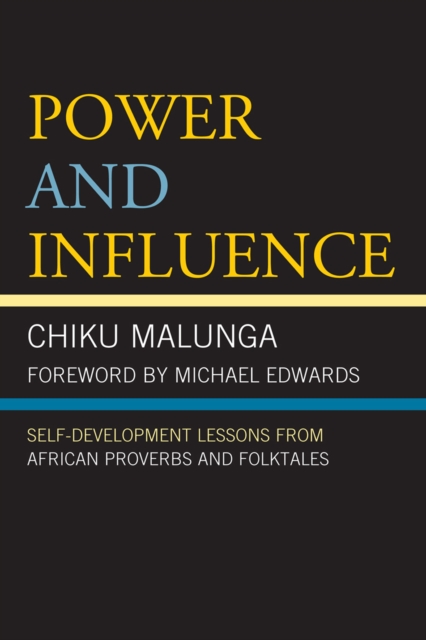
Power and influence
Power and Influence demonstrates how the indigenous wisdom contained in African proverbs and folktales can be used to enhance modern life. The timeless wisdom contained in African proverbs and folktales enriches self-development and positive influence. The inspiring results provide deeper understanding of self-development and self-leadership, forming a solid foundation for leadership effectiveness at all levels. This book is among the first to consciously acknowledge and demonstrate the rationale of applying indigenous wisdom to enhance the understanding of disciplines, theories, and practice. African proverbs and folktales express an accumulated wisdom of human relations; add dimensions to practice in ways that are soulful, respectful, practical, and socially embedded. By using African indigenous wisdom, the book contributes towards the much-needed, cross-cultural dialogue among individuals, organizations and societies in this increasingly diversified world.
eBook

The African Proverbs Project and After
Abstract: The Pew Charitable Trusts financed the African Proverbs Project with Dr Stan Nussbaum as co-ordinator, for three years (1993?1996). He assembled a number of scholars who had collected and studied proverbs. The purpose of the Project was to encourage further work of collecting, studying and publishing proverbs. It organised international and interdisciplinary symposia and embarked on three types of publications. One kind of publication was the African Proverbs Series, with Prof. John Mbiti as editor. Five volumes were published in 1997, each with proverbs from respectively Ethiopia, Uganda, Lesotho, Burkina Faso and Ghana. Their size ranged from 584 to 1 497 proverbs in African languages, with translations into English or French. Another set of publications with the Rev. Joshua Kudadjie as editor, covered proverbs for preaching and teaching purposes. Three volumes have come from Malawi, Ghana and Liberia. The Project also published an annotated bibliography by Prof. Wolfgang Mieder. The report from one of the symposia appeared in 1997. The third manner of publication is in the form of a CD-ROM edited by Dr Stan Nussbaum and published in 1996. This is a very comprehensive collection and source of material that includes, inter alia, books from the Project, some 28 000 proverbs, a bibliography with 1 000 items, summaries and extracts from published collections, and a language survey of work on proverbs. The Project has generated both local and international interest in African paremiography and paremiology. Four academic institutions in South Africa, Kenya, Ghana and the Ivory Coast, with links to others in Africa, Europe and America, are continuing this work on proverbs.
Keywords: AFRICAN PROVERBS PROJECT, AFRICAN PROVERBS SERIES, PROVERB, PAREMIOGRAPHY, PAREMIOLOGY
Opsomming: Die African Proverbs Project en daarna. Die Pew Charitable Trusts het die African Proverbs Project, met dr. Stan Nussbaum as ko?rdineerder, vir drie jaar (1993?1996) gefinansier. Hy het 'n aantal vakkundiges bymekaargebring wat spreekwoorde versamel en bestudeer het. Die doel van die projek was om verdere werk ten opsigte van die versameling, bestudering en publikasie van spreekwoorde aan te moedig. Dit het internasionale en interdissiplin?re simposia georganiseer en drie soorte publikasies onderneem. Een soort publikasie was die African Proverbs Series, met prof. John Mbiti as redakteur. Vyf bande is in 1997 gepubliseer, elkeen met spreekwoorde van onderskeidelik Ethiopi?, Uganda, Lesotho, Burkina Faso en Ghana. Hul omvang het gewissel van 584 tot 1 497 spreekwoorde in Afrikatale, met vertalings in Engels en Frans. 'n Ander stel publikasies, met eerw. Joshua Kudadjie as redakteur, het spreekwoorde vir preek- en onderwysdoeleindes gedek. Drie dele is afkomstig van Malawi, Ghana en Liberi?. Die projek het ook 'n geannoteerde bibliografie deur prof. Wolfgang Mieder gepubliseer. Die verslag van een van die simposia het in 1997 verskyn. Die derde manier van publikasie is in die vorm van 'n CD-ROM, deur dr. Sam Nussbaum geredigeer en in 1996 gepubliseer. Dit is 'n baie omvattende versameling en bron van materiaal wat onder andere boeke van die projek, ongeveer 28 000 spreekwoorde, 'n bibliografie met 1 000 items, opsomming en uittreksels van gepubliseerde versamelings en 'n taaloorsig van werk oor spreekwoorde insluit. Die projek het sowel plaaslike as internasionale belangstelling in die paremiografie en paremiologie van Afrika gewek. Vier akademiese instellings in Suid-Afrika, Kenia, Ghana en die Ivoorkus met skakels met ander in Afrika, Europa en Amerika, sit hierdie werk oor spreekwoorde voort.
Sleutelwoorde: AFRICAN PROVERBS PROJECT, AFRICAN PROVERBS SERIES, SPREEKWOORD, PAREMIOGRAFIE, PAREMIOLOGIE
Journal Article

A male body as communal space? Engaging sexuality and masculinities from selected sacred texts
Expressions such as 'a piece of a man is better than no man', and monna ke kobo, re a apolelana [a man is a blanket, he is shared among us] (read: women) afford hearers a small glimpse about female perceptions on a male body and/or male sexuality. Several African proverbs shed light on the underlying assumption that a male body, despite the man's marital status, can be shared with many women. Also, a glimpse, at certain texts in the Hebrew Bible (cf. Es 2) appears to give readers an impression that a male body, including a married man's body, can be shared with other women. In a nutshell, patriarchal heteronormativity coupled with unhealthy notions of masculinity, seem to take it for granted that a male body is a collective space, not necessarily for female pleasure in marriage, it may be argued, but first and foremost, for the satisfaction of male desire, the entrenchment of the normativity of the male species as well as the endorsement of dangerous notions of masculinities. Contribution Can the pursuit for equality, human and/or woman dignity and reciprocity succeed amid the preceding dynamics of the intersection among power, male sexuality and unhealthy notions of masculinities as revealed in the affirmation and celebration of the notion of the 'male body as communal space' especially in the context of heterosexual unions? The preceding was the main question that this essay sought to answer.
Journal Article
Tamed identities? Glimpsing her identity in Proverbs 10:1–22:16 and selected African proverbs
Notions about worthy womanhood are shaped to a large extent by the cultural contexts in which they are constructed. In the global village though, shaped as it is mainly by Eurocentric cultures, it would be presumptuous to assume that one can with certainty pinpoint what may be termed ‘purely traditional African notions of womanhood’. Also, it will be an exaggeration to argue that Africa does not have its own notions on ideal womanhood. Particularly in Christian African contexts, notions about womanhood are still shaped to a large extent by both the traditional African worldviews and the received biblical interpretations about womanhood. In the preceding scenario, one wonders if women’s identities reveal their real selves or whether they are tamed, and thus artificial. In one’s attempt to unravel notions of womanhood from both the corpus, Proverbs 10:1–22:16 and in the South African context (cf. selected African proverbs), this article has sought to answer the following main question: if images of women in selected African (Northern Sotho) proverbs (cf. also selected South African narratives) and in the book of Proverbs (cf. Pr 10:1–22:16) are brought together, what kind of picture may emerge from such a comparison?
Journal Article

A literary figure or patriarchal reality? Reflections on the ‘ēšet hayil in light of depictions of womanhood from selected Yorùbá and Sotho proverbs
In varying Jewish and African contexts (cf. the Yorùbá and Sotho in the present essay), the ‘ēšet hayil is regarded as a historical figure who should serve as a model for women both young and old. As an organic scholar within an African context, I am both fascinated and also challenged by how biblical notions of gender and womanhood, as portrayed in the paean on the ‘ēšet hayil in Proverbs 31:10–31, seem to be at variance with notions of gender and womanhood as depicted in some Yorùbá and Sotho proverbs. Noting the emphasis in Proverbs 31:10–31 on the positive image of the ‘ēšet hayil as the ideal wife, this article shows that overall, in the African proverbs, the woman is depicted positively as a mother, though many proverbs (cf. especially the Yorùbá proverbs) cast the woman as a wife in a negative light. It is argued that the epitome of womanhood, which in Proverbs 31:10–31 is the ideal wife, appears to stand in tension with the image of a good mother and of a bad wife observed in some of the African proverbs. This article therefore focuses on the kind of gender- and family-conscious hermeneutic that may be envisioned when Proverbs 31:10–31 is read in the Yorùbá and Sotho contexts.Intradisciplinary and/or interdisciplinary implications: The research carried out in this article entails Old Testament Studies, Gender Studies and African Languages. Sotho and Yorùbá proverbs on womanhood are used as a hermeneutical lens to interrogate the text of Proverbs 31:10–31, resulting in fresh insights on womanhood. The resultant output makes a needed contribution in challenging patriarchal ideologies and contexts.
Journal Article