
Catalogue Search | MBRL


Are you sure you want to remove the book from the shelf?

{{itemTitle}}
7
result(s) for
"Pseudoscience Popular works."
Sort by:

Bad science : quacks, hacks, and big pharma flacks
While exposing quack doctors and nutritionists, bogus credentialing programs, and biased scientific studies, the author takes the media to task for its willingness to throw facts and proof out the window in its quest to sell more copies. He also teaches you how to evaluate placebo effects, double-blind studies, and sample size, so that you can recognize bad science when you see it.
Book
Superfoods, Silkworms, and Spandex
In this new collection of bite-size pop science essays, bestselling author, chemistry professor, and radio broadcaster Dr. Joe Schwarcz shows that you can find science virtually anywhere you look. And the closer you look, the more fascinating it becomes. In this volume, we look through our magnifying glass at maraschino cherries, frizzy hair, duct tape, pickle juice, yellow school buses, aphrodisiacs, dental implants, and bull testes. If those don't tickle your fancy, how about aconite murders, shot towers, book smells, Swarovski crystals, French wines, bees, or head transplants? You can also learn about the scientific escapades of James Bond, California's confusing Proposition 65, the problems with oxygen on Mars, Valentine's Meat Juice, the benefits of pasteurization, the pros and cons of red light therapy, the controversy swirling around perfluoroalkyl substances (PFAS), why English cucumbers are wrapped in plastic, and how probiotics may have seeded Hitler's downfall.
Superfoods, Silkworms, and Spandex answers all your burning questions about the science of everyday life, like:
* why \"superfood\" is a marketing term, not a scientific one;
* why plastic wrap is sometimes the environmental choice;
* why supplements to reduce inflammation may just reduce your bank account;
* how maraschino cherries went from a luxury good to a cheap sundae topper;
* what's behind \"old book smell\";
* how margarine became a hot item for bootleggers;
* why duct tape is useful, but not on ducts; and
* how onstage accidents led to fireproof fabrics.
eBook

Quantum Leaps in the Wrong Direction
\"Quantum Leaps in the Wrong Direction\" carefully deconstructs five examples of pseudoscience--UFOs, out-of-body experiences, astrology, creationism, and ESP-- and gives easy recipes to test other dubious notions so that the reader can ascertain what lies in the realm of real science and what more properly deserves the tag of pseudoscience.
eBook
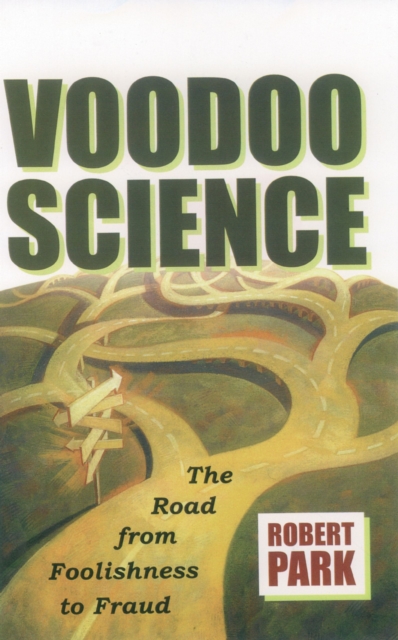
Voodoo science : the road from foolishness to fraud
In a time of dazzling scientific progress, how can we separate genuine breakthroughs from the noisy gaggle of false claims? From Deepak Chopra's \"quantum alternative to growing old\" to unwarranted hype surrounding the International Space Station, Robert Park leads us down the back alleys of fringe science, through the gleaming corridors of Washington power and even into our evolutionary past to search out the origins of voodoo science. Along the way, he offers simple and engaging science lessons, proving that you don't have to be a scientist to spot the fraudulent science that swirls around us.
eBook
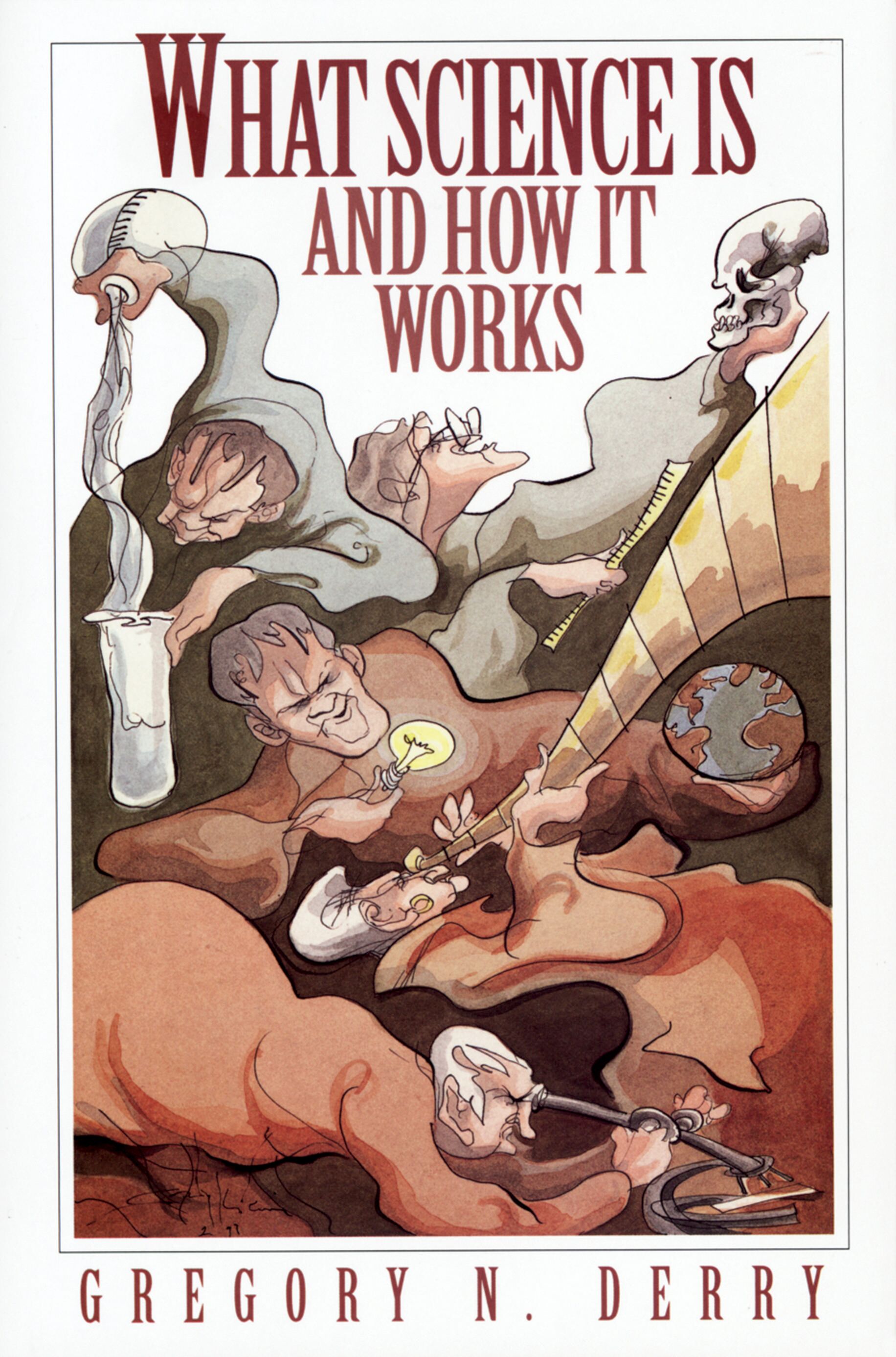
What Science Is and How It Works
How does a scientist go about solving problems? How do scientific discoveries happen? Why are cold fusion and parapsychology different from mainstream science? What is a scientific worldview? In this lively and wide-ranging book, Gregory Derry talks about these and other questions as he introduces the reader to the process of scientific thinking. From the discovery of X rays and semiconductors to the argument for continental drift to the invention of the smallpox vaccine, scientific work has proceeded through honest observation, critical reasoning, and sometimes just plain luck. Derry starts out with historical examples, leading readers through the events, experiments, blind alleys, and thoughts of scientists in the midst of discovery and invention. Readers at all levels will come away with an enriched appreciation of how science operates and how it connects with our daily lives.
An especially valuable feature of this book is the actual demonstration of scientific reasoning. Derry shows how scientists use a small number of powerful yet simple methods--symmetry, scaling, linearity, and feedback, for example--to construct realistic models that describe a number of diverse real-life problems, such as drug uptake in the body, the inner workings of atoms, and the laws of heredity.
Science involves a particular way of thinking about the world, and Derry shows the reader that a scientific viewpoint can benefit most personal philosophies and fields of study. With an eye to both the power and limits of science, he explores the relationships between science and topics such as religion, ethics, and philosophy. By tackling the subject of science from all angles, including the nuts and bolts of the trade as well as its place in the overall scheme of life, the book provides a perfect place to start thinking like a scientist.
eBook

Using Celebrities and Advertising Campaigns to Enhance Learning of Critical Review and Experimental Design, within an Inquiry-Oriented Biomedical Curriculum
A challenge in learning to become a scientist is gaining skills in critical review and experimental design. Our aim was to measure the effectiveness of an inquiry-oriented learning (IOL) workshop which used popular culture and pseudoscience as stimuli for engagement. The workshop on critical review of scientific literature and best-practice experimental design consisted of a Socratic-seminar (i.e., collaborative, intellectual dialogue facilitated with open-ended questions) and a poster-defence. Students analysed the scientific publication which led Dr Oz (medical doctor and TV host) to falsely claim green coffee bean extract as a 'miracle' cure for obesity. Students also designed an experiment to test the effectiveness of an advertising campaign (e.g., Old Spice: 'The Man Your Man Could Smell Like') and presented their design in poster format. Students were assessed before and after the workshop. Post-test scores were higher than pre-test scores (51.8 ± 3.8% vs 38.2 ± 3.1%, n = 25, p < 0.0001) and were correlated (p < 0.001) with students' assignment marks. Students agreed that the workshop developed their ability to critically review scientific literature (79%) and to design experiments (63%). Our findings suggest that an IOL workshop, using popular culture and pseudoscience, improves skills in critical review and experimental design. [Author abstract]
Journal Article

Wonder Shows
Imagine a stage full of black cats emitting electrical sparks, a man catching bullets with his teeth, or an evangelist jumping on a transformer to shoot bolts of lightning through his fingertips. These and other wild schemes were part of the repertoire of showmen who traveled from city to city, making presentations that blended science with myth and magic.
InWonder Shows, Fred Nadis offers a colorful history of these traveling magicians, inventors, popular science lecturers, and other presenters of \"miracle science\" who revealed science and technology to the public in awe-inspiring fashion. The book provides an innovative synthesis of the history of performance with a wider study of culture, science, and religion from the antebellum period to the present.
It features a lively cast of characters, including electrical \"wizards\" Nikola Tesla and Thomas Alva Edison, vaudeville performers such as Harry Houdini, mind readers, UFO cultists, and practitioners of New Age science. All of these performers developed strategies for invoking cultural authority to back their visions of science and progress. The pseudo-science in their wonder shows helped promote a romantic worldview that called into question the absolute authority of scientific materialism while reaffirming the importance of human spirituality. Nadis argues that the sensation that these entertainers provided became an antidote to the alienation and dehumanization that accompanied the rise of modern America.
Although most recent defenders of science are prone to reject wonder, considering it an ally of ignorance and superstition,Wonder Showsdemonstrates that the public's passion for magic and meaning is still very much alive. Today, sales continue to be made and allegiances won based on illusions that products are unique, singular, and at best, miraculous. Nadis establishes that contemporary showmen, corporate publicists, advertisers, and popular science lecturers are not that unlike the magicians and mesmerists of years ago.
eBook