
Catalogue Search | MBRL


Are you sure you want to remove the book from the shelf?

{{itemTitle}}
89
result(s) for
"Psychiatry under National Socialism"
Sort by:

Berufsfähig, entlassungsfähig, verlegungsfähig
Die Forschung zur Psychiatrie im Nationalsozialismus hat sich zu einem großen Teil auf die Medizinverbrechen der Zwangssterilisation und der Patient*innenmorde konzentriert. Deutlich weniger Aufmerksamkeit erhielten die im psychiatrischen Alltag durchgeführten Therapien und die Beurteilungen ihrer Erfolge. Letztere führten im psychiatrischen „Normalbetrieb“ auch unter den Bedingungen des Nationalsozialismus zu Entlassungen oder zu Verlegungen innerhalb der oder zwischen den Institutionen der Versorgung. Sie konnten aber im negativen Fall auch tödliche Konsequenzen für die Patient*innen haben. Insofern ist es relevant, was Psychiater in dieser Zeit unter „Heilung“ und „Remission“ verstanden, wie und in welchen Abstufungen sie die Beurteilung der Erfolge ihrer Behandlungen auch hinsichtlich der neueren, intensiven somatischen Therapiemaßnahmen und der Arbeitstherapie vornahmen. Diesen Fragen geht der Beitrag im Sinne einer Fallstudie am Beispiel der Universitätspsychiater Gottfried Ewald und Carl Schneider nach, die Lehrbücher verfassten und für ihre unterschiedliche Haltung zu den Patient*innenmorden bekannt sind.
Research on psychiatry under National Socialism has largely focused on the medical crimes of compulsory sterilisation and patient killings. The therapies carried out in everyday psychiatric work and the assessments of their success received significantly less attention. Even under the conditions of National Socialism, the assessments of therapeutic success led to dismissals or transfers within or between institutions as a part of the “normal” psychiatric practice. In the negative case, however, these assessments could also have fatal consequences for the patients. In this respect, it is relevant what psychiatrists understood by “healing” and “remission” during this period, how and in what gradations they assessed the success of their treatments - also with regard to the more recent, intensive somatic therapy measures and occupational therapy. The article explores these questions as a case study using the examples of the university psychiatrists Gottfried Ewald and Carl Schneider, who wrote both textbooks and are known for their different attitudes towards patient killings.
Journal Article
Berufsfähig, entlassungsfähig, verlegungsfähig
Die Forschung zur Psychiatrie im Nationalsozialismus hat sich zu einem großen Teil auf die Medizinverbrechen der Zwangssterilisation und der Patient*innenmorde konzentriert. Deutlich weniger Aufmerksamkeit erhielten die im psychiatrischen Alltag durchgeführten Therapien und die Beurteilungen ihrer Erfolge. Letztere führten im psychiatrischen „Normalbetrieb“ auch unter den Bedingungen des Nationalsozialismus zu Entlassungen oder zu Verlegungen innerhalb der oder zwischen den Institutionen der Versorgung. Sie konnten aber im negativen Fall auch tödliche Konsequenzen für die Patient*innen haben. Insofern ist es relevant, was Psychiater in dieser Zeit unter „Heilung“ und „Remission“ verstanden, wie und in welchen Abstufungen sie die Beurteilung der Erfolge ihrer Behandlungen auch hinsichtlich der neueren, intensiven somatischen Therapiemaßnahmen und der Arbeitstherapie vornahmen. Diesen Fragen geht der Beitrag im Sinne einer Fallstudie am Beispiel der Universitätspsychiater Gottfried Ewald und Carl Schneider nach, die Lehrbücher verfassten und für ihre unterschiedliche Haltung zu den Patient*innenmorden bekannt sind.
Research on psychiatry under National Socialism has largely focused on the medical crimes of compulsory sterilisation and patient killings. The therapies carried out in everyday psychiatric work and the assessments of their success received significantly less attention. Even under the conditions of National Socialism, the assessments of therapeutic success led to dismissals or transfers within or between institutions as a part of the “normal” psychiatric practice. In the negative case, however, these assessments could also have fatal consequences for the patients. In this respect, it is relevant what psychiatrists understood by “healing” and “remission” during this period, how and in what gradations they assessed the success of their treatments - also with regard to the more recent, intensive somatic therapy measures and occupational therapy. The article explores these questions as a case study using the examples of the university psychiatrists Gottfried Ewald and Carl Schneider, who wrote both textbooks and are known for their different attitudes towards patient killings.
Journal Article

Hans Asperger, National Socialism, and “race hygiene” in Nazi-era Vienna
Background
Hans Asperger (1906–1980) first designated a group of children with distinct psychological characteristics as ‘autistic psychopaths’ in 1938, several years before Leo Kanner’s famous 1943 paper on autism. In 1944, Asperger published a comprehensive study on the topic (submitted to Vienna University in 1942 as his postdoctoral thesis), which would only find international acknowledgement in the 1980s. From then on, the eponym ‘Asperger’s syndrome’ increasingly gained currency in recognition of his outstanding contribution to the conceptualization of the condition. At the time, the fact that Asperger had spent pivotal years of his career in Nazi Vienna caused some controversy regarding his potential ties to National Socialism and its race hygiene policies. Documentary evidence was scarce, however, and over time a narrative of Asperger as an active opponent of National Socialism took hold. The main goal of this paper is to re-evaluate this narrative, which is based to a large extent on statements made by Asperger himself and on a small segment of his published work.
Methods
Drawing on a vast array of contemporary publications and previously unexplored archival documents (including Asperger’s personnel files and the clinical assessments he wrote on his patients), this paper offers a critical examination of Asperger’s life, politics, and career before and during the Nazi period in Austria.
Results
Asperger managed to accommodate himself to the Nazi regime and was rewarded for his affirmations of loyalty with career opportunities. He joined several organizations affiliated with the NSDAP (although not the Nazi party itself), publicly legitimized race hygiene policies including forced sterilizations and, on several occasions, actively cooperated with the child ‘euthanasia’ program. The language he employed to diagnose his patients was often remarkably harsh (even in comparison with assessments written by the staff at Vienna’s notorious Spiegelgrund ‘euthanasia’ institution), belying the notion that he tried to protect the children under his care by embellishing their diagnoses.
Conclusion
The narrative of Asperger as a principled opponent of National Socialism and a courageous defender of his patients against Nazi ‘euthanasia’ and other race hygiene measures does not hold up in the face of the historical evidence. What emerges is a much more problematic role played by this pioneer of autism research. Future use of the eponym should reflect the troubling context of its origins in Nazi-era Vienna.
Journal Article

Hans Berger and 100 years of the electroencephalogram
After studying medicine Hans Berger (1873–1941) spent his entire professional career at the Psychiatric Hospital of the University of Jena, Germany. Over many years, he developed independently and almost by himself a device for recording physiological brain activity in humans, which he named the “electrencephalogram”. He himself dated the day of the first successful and reliable recording to 6 July 1924. Berger avoided publicity and only maintained close contact with a few confidants. These included his senior physician Rudolf Lemke, who accompanied him as a colleague throughout the 1930s and followed him as director of the hospital years later. Rudolf Lemke renamed the hospital the “Hans Berger Clinic” and also perpetuated his mentor in the form of painted portraits as well as a death mask, which he made of him immediately after Berger’s tragic death. The name of the hospital was removed again in 2022 due to Berger’s work at the Higher Hereditary Health Court; however, Berger’s invention, the human electroencephalogram (EEG), remains a milestone in neurological and epileptological diagnostics even 100 years after its development.
Journal Article

Response to ‘Non-complicit: Revisiting Hans Asperger’s Career in Nazi-era Vienna
In her recent paper ‘Non-complicit: Revisiting Hans Asperger’s Career in Nazi-era Vienna,’ Dean Falk claims to refute what she calls ‘allegations’ about Hans Asperger’s role during National Socialism documented in my 2018 paper ‘Hans Asperger, National Socialism, and “race hygiene” in Nazi-era Vienna’ and Edith Sheffer’s book ‘Asperger’s Children.’ Falk’s paper, which relies heavily on online translation software, does not contain a single relevant piece of new evidence, but abounds with mistranslations, misrepresentations of the content of sources, and basic factual errors, and omits everything that does not support the author’s agenda of defending Hans Asperger’s record. The paper should never have passed peer review and, in view of the academic credibility of all parties concerned, it should be retracted.
Journal Article

The Impact of Dealing with the Late Effects of National Socialist Terror on West German Psychiatric Care
Health damages and the late effects of NS trauma were largely ignored in German-speaking countries. This paper describes how dealing with the late effects of Nazi terror influenced post-war psychiatry in West Germany and thus the development of the psychiatric reform. As part of a greater overview study of the impulses and framework conditions of the reform-orientated development of post-war psychiatry in West Germany, this analysis is based on a thorough literary and documentary analysis. The sources show that publications by Helmut Paul and Herberg [81] as well as Baeyer et al. [12] can be considered as remarkable milestones. The awareness of psychological late effects of NS persecution was only reluctantly taken up by the scientific community. Nevertheless, this discussion was an essential component of the reform-orientated psychiatry in West Germany in the late 1960s to 1970s.
Journal Article

Electroconvulsive Therapy in the Shadow of the Gas Chambers
Six years after it was first introduced into psychiatry in 1938, electroconvulsive therapy (ECT) became the subject of criminal human experiments in Nazi Germany. In 1944, at the Auschwitz III / Monowitz camp hospital, the Polish Jewish prisoner psychiatrist Zenon Drohocki started experimental treatments on prisoners with an ECT device that he had constructed himself. According to eyewitnesses, Drohocki's intention to treat mentally unstable prisoners was soon turned into something much more nefarious by SS doctors (including Josef Mengele), who used the device for deadly experiments. This article provides an account of this important and little-known aspect of the early history of ECT, drawing on an extensive array of historical literature, testimonies, and newly accessible documents. The adoption of ECT in Auschwitz is a prime example of the \"grey zone\" in which prisoner doctors had to operate—they could only survive as long as the SS considered their work useful for their own destructive purposes.
Journal Article

‘Electroshock Therapy’ in the Third Reich
The history of ‘electroshock therapy’ (now known as electroconvulsive therapy (ECT)) in Europe in the Third Reich is still a neglected chapter in medical history. Since Thomas Szasz’s ‘From the Slaughterhouse to the Madhouse’, prejudices have hindered a thorough historical analysis of the introduction and early application of electroshock therapy during the period of National Socialism and the Second World War. Contrary to the assumption of a ‘dialectics of healing and killing’, the introduction of electroshock therapy in the German Reich and occupied territories was neither especially swift nor radical. Electroshock therapy, much like the preceding ‘shock therapies’, insulin coma therapy and cardiazol convulsive therapy, contradicted the genetic dogma of schizophrenia, in which only one ‘treatment’ was permissible: primary prevention by sterilisation. However, industrial companies such as Siemens–Reiniger–Werke AG (SRW) embraced the new development in medical technology. Moreover, they knew how to use existing patents on the electrical anaesthesia used for slaughtering to maintain a leading position in the new electroshock therapy market. Only after the end of the official ‘euthanasia’ murder operation in August 1941, entitled T4, did the psychiatric elite begin to promote electroshock therapy as a modern ‘unspecific’ treatment in order to reframe psychiatry as an ‘honorable’ medical discipline. War-related shortages hindered even the then politically supported production of electroshock devices. Research into electroshock therapy remained minimal and was mainly concerned with internationally shared safety concerns regarding its clinical application. However, within the Third Reich, electroshock therapy was not only introduced in psychiatric hospitals, asylums, and in the Auschwitz concentration camp in order to get patients back to work, it was also modified for ‘euthanasia’ murder.
Journal Article
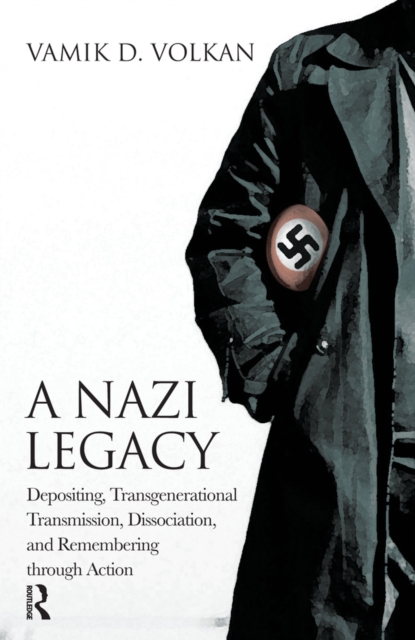
A Nazi Legacy
This book relates the psychoanalytic journey of a man in his thirties, a grandson of a high-level SS officer, whose case illustrates how individuals can sometimes suffer greatly or cause the suffering of other innocent persons, simply because they are descendants of perpetrators. In it, technical considerations in treating such an individual, including countertransference issues and concepts related to transgenerational transmissions-for example, identification, depositing, dissociation, encapsulation, and remembering through actions-are explored. The man had a repeating daydream of carrying a big egg under his arm. The imagined egg, representing his encapsulated dissociated state, contained the mental representation of his Nazi grandfather and his grandfather's victims, along with images of most tragic historical events. He attempted to turn his grandfather's image from a life-taker to a life-giver and wished to own the older man's grandiose specialness, while fearing the loss of his own life. These opposite aims created unnamed \"catastrophes\".
eBook

In the face of horror – secondary traumatisation and mental distress in employees and volunteers at national socialism related memorial sites
Employees and volunteers at national socialism related memorial sites in Germany (MemoS) are confronted with severely aversive documents of German history on a regular basis.
Enhance knowledge on mental health in MemoS.
In an online study, mental distress, secondary traumatisation as well as potential risk and protective factors were assessed in MemoS and a control group.
40.9% of MemoS reported at least one kind of secondary traumatic event experienced in the context of their work. Depression and general mental distress were higher in the MemoS than in controls, and symptoms of secondary traumatisation were significantly more common.
Our results give clear evidence for mental distress and symptoms of secondary traumatisation in the MemoS group. This finding shows secondary traumatisation symptoms based on documents of atrocities that happened more than 70 years ago. Further, the high mental burden in the MemoS suggests the necessity of supervision for people dedicating their work life to assuring remembrance of the crimes of the Nazi era.
Journal Article