
Catalogue Search | MBRL


Are you sure you want to remove the book from the shelf?

{{itemTitle}}
1,345
result(s) for
"Psychoanalysis Biography."
Sort by:

Introductory Lectures on Lacan
Lacan developed his theory and practice of psychoanalysis on the basis of Freud's original work. In his \"return to Freud\" he not only elaborated and revised some of Freud's innovative ideas, but turned to important questions and problems in Freud's theory that had remained obscure and unresolved, and provided a new way of articulating these issues and their implication for psychoanalytic theory and practice. This book offers a selection of chapters about some of the fundamental concepts of psychoanalysis. The authors aim to explore the trajectory of the development of these concepts from their original basis in Freud's work to their elaboration by Lacan. The book will be of interest to readers from different backgrounds, including the clinical and academic field, social and cultural studies and the arts, for whom psychoanalytic ideas may be a relatively new field to explore, or who are looking for new perspectives to develop their ideas about psychoanalysis.
eBook

Freud : an intellectual biography
\"The life and work of Sigmund Freud continue to fascinate general and professional readers alike. Joel Whitebook here presents the first major biography of Freud since the last century, taking into account recent developments in psychoanalytic theory and practice, gender studies, philosophy, cultural theory, and more. Offering a radically new portrait of the creator of psychoanalysis, this book explores the man in all his complexity alongside an interpretation of his theories that cuts through the stereotypes that surround him. The development of Freud's thinking is addressed not only in the context of his personal life, but also in that of society and culture at large, while the impact of his thinking on subsequent issues of psychoanalysis, philosophy, and social theory is fully examined. Whitebook demonstrates that declarations of Freud's obsolescence are premature, and, with his clear and engaging style, brings this vivid figure to life ... \"-- Provided by publisher.
BOOK

A Dream of Undying Fame
The fascinating story behind Studies on Hysteria, the groundbreaking book that launched Freud's career and created psychoanalysis.
eBook

Erich Fromm : explorer of the human condition
\"How can we conduct loving relationships with partners and productive interactions with clients or pupils? This is an introduction to Fromm's thought-provoking answers to these modern dilemmas which made him one of the most widely read thinkers of the 20th century. Ideal for students of History of Psychology, Social Psychology and Political Philosophy\"--Provided by publisher.
BOOK

Intimate Domain
For René Girard, human life revolves around mimetic desire, which regularly manifests itself in acquisitive rivalry when we find ourselves wanting an object because another wants it also. Noting that mimetic desire is driven by our sense of inadequacy or insufficiency, Girard arrives at a profound insight: our desire is not fundamentally directed toward the other's object but toward the other's being. We perceive the other to possess a fullness of being we lack. Mimetic desire devolves into violence when our quest after the being of the other remains unfulfilled. So pervasive is mimetic desire that Girard describes it as an ontological illness. InIntimate Domain,Reineke argues that it is necessary to augment Girard's mimetic theory if we are to give a full account of the sickness he describes. Attending to familial dynamics Girard has overlooked and reclaiming aspects of his early theorizing on sensory experience, Reineke utilizes psychoanalytic theory to place Girard's mimetic theory on firmer ground. Drawing on three exemplary narratives-Proust'sIn Search of Lost Time,Sophocles'sAntigone,and Julia Kristeva'sThe Old Man and the Wolves-the author explores familial relationships. Together, these narratives demonstrate that a corporeal hermeneutics founded in psychoanalytic theory can usefully augment Girard's insights, thereby ensuring that mimetic theory remains a definitive resource for all who seek to understand humanity's ontological illness and identify a potential cure.
eBook


Frances Tustin
Frances Tustin describes the life and clarifies the work of an outstanding clinician whose understanding of autistic and psychotic children has brilliantly illuminated the relationship between autism and psychosis for others in the field. Sheila Spensley defines Tustin's position in traditional and contemporary psychoanalytic theory and explains how it is related to work in infant psychiatry and developmental psychology. She makes Tustin's original concepts accessible to the non-specialist reader and shows how relevant they are to work in other areas such as learning disability and work with adult patients.
eBook

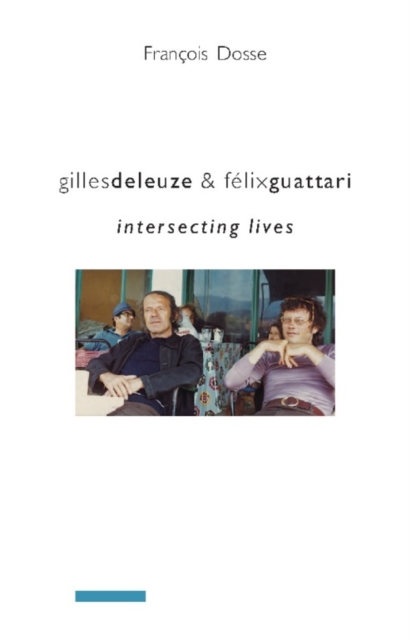
Gilles deleuze and Felix Guattari
In May 1968, Gilles Deleuze was an established philosopher
teaching at the innovative Vincennes University, just outside of
Paris. Félix Guattari was a political militant and the director of
an unusual psychiatric clinic at La Borde. Their meeting was quite
unlikely, yet the two were introduced in an arranged encounter of
epic consequence. From that moment on, Deleuze and Guattari engaged
in a surprising, productive partnership, collaborating on several
groundbreaking works, including Anti-Oedipus, What Is
Philosophy? and A Thousand Plateaus.
François Dosse, a prominent French intellectual known for his
work on the Annales School, structuralism, and biographies of the
pivotal intellectuals Paul Ricoeur, Pierre Chaunu, and Michel de
Certeau, examines the prolific if improbable relationship between
two men of distinct and differing sensibilities. Drawing on
unpublished archives and hundreds of personal interviews, Dosse
elucidates a collaboration that lasted more than two decades,
underscoring the role that family and history-particularly the
turbulent time of May 1968-play in their monumental work. He also
takes the measure of Deleuze and Guattari's posthumous fortunes and
the impact of their thought on intellectual, academic, and
professional circles.
eBook