
Catalogue Search | MBRL


Are you sure you want to remove the book from the shelf?

{{itemTitle}}
6,559
result(s) for
"Psychoanalysis in literature"
Sort by:


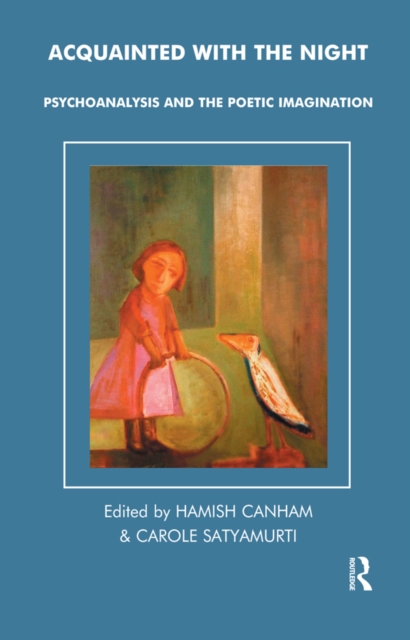
Acquainted with the Night
This book explores some of the ways in which an understanding of poetry, and the poetic impulse, can be fruitfully informed by psychoanalytic ideas. It could be argued that there is a particular affinity between poetry and psychoanalysis, in that both pay close attention to the precise meanings of linguistic expression, and both, though in different ways, are centrally concerned with unconscious processes. The contributors to this volume, nearly all of them clinicians with a strong interest in literature, explore this connection in a variety of ways, focusing on the work of particular poets, from the prophet Ezekiel to Seamus Heaney.
eBook

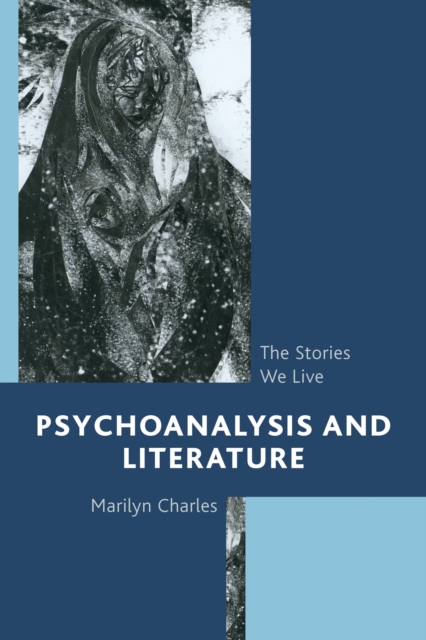
Psychoanalysis and literature
Marilyn Charles is noted for her efforts to translate dense psychoanalytic terms into language that is accessible and clinically relevant. In Psychoanalysis, Literature, and Life: The Stories We Live, she pairs case vignettes with examples from literature to highlight essential human struggles that play out in the consulting room.
eBook

James Joyce and the Problem of Psychoanalysis
From its very beginning, psychoanalysis sought to incorporate the aesthetic into its domain. Despite Joyce's deliberate attempt in his writing to resist this powerful hermeneutic, his work has been confronted by a long tradition of psychoanalytic readings. Luke Thurston argues that this very antagonism holds the key to how psychoanalytic thinking can still open up new avenues in Joycean criticism and literary theory. In particular, Thurston shows that Jacques Lacan's response to Joyce goes beyond the 'application' of theory: rather than diagnosing Joyce's writing or claiming to have deciphered its riddles, Lacan seeks to understand how it can entail an unreadable signature, a unique act of social transgression that defies translation into discourse. Thurston imaginatively builds on Lacan's work to illuminate Joyce's place in a wide-ranging literary genealogy that includes Shakespeare, Hogg, Stevenson and Wilde. This study should be essential reading for all students of Joyce, literary theory and psychoanalysis.
eBook


Jungian Metaphor in Modernist Literature
Jungian Metaphor in Modernist Literature argues for the centrality of Carl Jung’s theory of individuation and alchemy in modernist poetics. Through analysis of the uses of a mythic method in modernist literary works, this book develops a related alchemical model which serves to expand understanding of modernist uses of language.
This book is an innovative exploration of modernist literary creativity under a Jungian lens, spanning both the literary and scholarly Jungian field. The literary works of Hilda Doolittle, James Joyce and W.B. Yeats are read in light of Jung’s central theme of an “alchemical marriage” with attempts at developing a related alchemical model, a Jungian poetics, which serves to expand the reader’s understanding of modernist uses of language. This provides a fresh new lens through which modernist literature is viewed and seeks to revaluate the role of Jung in the humanities, namely in the field of modernist literature, an area from which Jung has long been shunned.
This book will be of great interest for academics, researchers and postgraduate students in the fields of literature, modernism, psychoanalysis, gender studies, Jungian psychology, depth psychology, literary theory, and cultural studies.
eBook