
Catalogue Search | MBRL


Are you sure you want to remove the book from the shelf?

{{itemTitle}}
223,536
result(s) for
"Psychological aspects"
Sort by:


The Aesthetic of Play
The impulse toward play is very ancient, not only pre-cultural but pre-human; zoologists have identified play behaviors in turtles and in chimpanzees. Games have existed since antiquity; 5,000-year-old board games have been recovered from Egyptian tombs. And yet we still lack a critical language for thinking about play. Game designers are better at answering small questions (\"Why is this battle boring?\") than big ones (\"What does this game mean?\"). In this book, the game designer Brian Upton analyzes the experience of play -- how playful activities unfold from moment to moment and how the rules we adopt constrain that unfolding. Drawing on games that range from Monopoly to Dungeons & Dragons to Guitar Hero, Upton develops a framework for understanding play, introducing a set of critical tools that can help us analyze games and game designs and identify ways in which they succeed or fail.Upton also examines the broader epistemological implications of such a framework, exploring the role of play in the construction of meaning and what the existence of play says about the relationship between our thoughts and external reality. He considers the making of meaning in play and in every aspect of human culture, and he draws on findings in pragmatic epistemology, neuroscience, and semiotics to describe how meaning emerges from playful engagement. Upton argues that play can also explain particular aspects of narrative; a play-based interpretive stance, he proposes, can help us understand the structure of books, of music, of theater, of art, and even of the process of critical engagement itself.
eBook


Intimate Enemies
In the aftermath of a civil war, former enemies are left living side by side-and often the enemy is a son-in-law, a godfather, an old schoolmate, or the community that lies just across the valley. Though the internal conflict in Peru at the end of the twentieth century was incited and organized by insurgent Senderistas, the violence and destruction were carried out not only by Peruvian armed forces but also by civilians. In the wake of war, any given Peruvian community may consist of ex-Senderistas, current sympathizers, widows, orphans, army veterans-a volatile social landscape. These survivors, though fully aware of the potential danger posed by their neighbors, must nonetheless endeavor to live and labor alongside their intimate enemies. Drawing on years of research with communities in the highlands of Ayacucho, Kimberly Theidon explores how Peruvians are rebuilding both individual lives and collective existence following twenty years of armed conflict.Intimate Enemiesrecounts the stories and dialogues of Peruvian peasants and Theidon's own experiences to encompass the broad and varied range of conciliatory practices: customary law before and after the war, the practice ofarrepentimiento(publicly confessing one's actions and requesting pardon from one's peers), a differentiation between forgiveness and reconciliation, and the importance of storytelling to make sense of the past and recreate moral order. The micropolitics of reconciliation in these communities present an example of postwar coexistence that deeply complicates the way we understand transitional justice, moral sensibilities, and social life in the aftermath of war. Any effort to understand postconflict reconstruction must be attuned to devastation as well as to human tenacity for life.
eBook

Sport, exercise, and performance psychology : theories and applications
\"This book brings together world-class professionals to share theoretical understanding applied to sport, exercise, and performance domains. It highlights how to be more effective in developing psychological skills, context, and understanding for educators, students, and professionals. From both academic and practitioner perspectives, this book takes readers through contextual understanding of this field of study and into a wide variety of important areas. Specifically, the chapters focus on the mind-body relationship and performance challenges, and on core mental skills applied across different sport, exercise, and performance examples (including professional athletes, normal exercise populations, and military service members). The final section expands the context into the role of relationships and performance in group settings to cover a broad practice of modern day applied performance psychology\"-- Provided by publisher.
Book

The Social Cure
A growing body of research shows that social networks and identities have a profound impact on mental and physical health. With such mounting evidence of the importance of social relationships in protecting health the challenge we face is explaining why this should be the case. What is it that social groups offer that appears to be just as beneficial as a daily dose of vitamin C or regular exercise?
This edited book brings together the latest research on how group memberships and the social identities associated with them determine people's health and well-being. The volume provides a variety of perspectives from clinical social organisational and applied fields that offer theoretical and empirical insights into these processes and their consequences. The contributions present a rich and novel analysis of core theoretical issues relating to the ways in which social identities and factors associated with them (such as social support and a sense of community) can bolster individuals' sense of self and contribute to physical and mental health. In this way it is shown how social identities constitute a 'social cure' capable of promoting adjustment coping and well-being for individuals dealing with a range of illnesses injuries trauma and stressors. In addition these theories provide a platform for practical strategies that can maintain and enhance well-being particularly among vulnerable populations.
Contributors to the book are at the forefront of these developments and the book's strength derives from its analysis of factors that shape the health and well-being of a broad range of groups. It presents powerful insights which have important implications for health clinical social and organisational psychology and a range of cognate fields.
eBook


How we grieve : relearning the world
In this revised esition, Thomas Attig tells tales of survival to illustrate the poignant suffering that the loss of a loved one entails. Dr. Attig shows how through grieving we meet daunting challenges, make choices, and reshape our lives forever. In so doing, he redefines grief as an active, coping process rather than a stage to be endured, or a problem to be overcome. The book's many valuable lessons inform and instruct a wide audience of clinicians, caregivers, friends and family members of bereaved persons, and those who seek a general, non-clinical perspective on their own experience of grief.This version includes updated references and a new introduction.
eBook

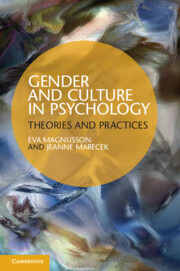
Gender and Culture in Psychology
Gender and Culture in Psychology introduces new approaches to the psychological study of gender that bring together feminist psychology, socio-cultural psychology, discursive psychology and critical psychology. It presents research and theory that embed human action in social, cultural and interpersonal contexts. The book provides conceptual tools for thinking about gender, social categorization, human meaning-making, and culture. It also describes a family of interpretative research methods that focus on rich talk and everyday life. It provides a close-in view of how interpretative research proceeds. The latter part of the book showcases innovative projects that investigate topics of concern to feminist scholars and activists: young teens' encounters with heterosexual norms; women and men negotiating household duties and childcare; sexual coercion and violence in heterosexual encounters; the cultural politics of women's weight and eating concerns; psychiatric labelling of psychological suffering; and feminism in psychotherapy.
eBook