
Catalogue Search | MBRL


Are you sure you want to remove the book from the shelf?

{{itemTitle}}
16,068
result(s) for
"Psychological processes"
Sort by:


The impact of information privacy concerns on information systems use behaviors in non-volitional surveillance contexts: A moderated mediation approach
Electronic surveillance/monitoring has become ubiquitous in modern organizations as advanced information technology (IT) expands organizational capacity to track system users’ daily information systems (IS) activities. Although this environmental shift surrounding IS raises an important (though largely unexplored) issue of IS users’ information privacy and subsequent IS behaviors, little is known about cognitive/psychological processes and boundary conditions underlying IS users’ information privacy concerns and behaviors under the context of non-volitional workplace surveillance. Grounded on psychological reactance theory, this paper articulates how and when information privacy concerns under workplace surveillance relate to IS use behaviors (i.e., effective IS use and shadow IT use) via psychological reactance. In addition, it investigates IS procedural fairness, a contextual boundary condition. We tested a research model using two surveys (via online platforms) data collected from a sample of 301 and 302 IS users working under electronic surveillance/monitoring systems in various organizations and industries. Using moderated mediation analyses, the results of the study show that (1) psychological reactance mediates the relationship between IS users’ information privacy concerns and effective IS use and shadow IT use, respectively; and (2) IS procedural fairness acts as a boundary condition for the given mediated relationships such that the negative impacts of information privacy concerns on psychological reactance and IS behaviors are mitigated. Implications for theory and practice are discussed.
Journal Article

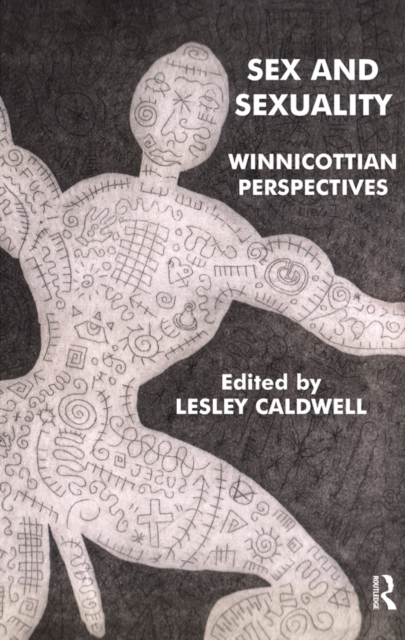
Sex and Sexuality
\"Winnicott\" and \"sex\" are two subjects that are rarely associated with one another. Sexuality is not a prominent theme within the work of Winnicott, who preferred to concentrate on the development of the self from infancy. However, his writings contain unexplored insights into sexuality and it is these hidden insights that prompted the author to invite papers from leading analysts to expand upon them. This collection provides a fresh and innovative look at the work of Winnicott and into sexuality, in particular infantile sexuality. The unusual link of Winnicott to Freud and to a psychoanalysis located in the drives encourages a different perspective into British psychoanalysis. Other diverse themes include a historical examination of Winnicott through the British Society; an exploration of the similarities between Laplanche and Winnicott; the use of Winnicott's work in the treatment of sexual dysfunction; and the interrelation between sexuality and play. This is the sixth volume in the Winnicott Studies Monograph Series.
eBook


Collective Psychological Ownership and Intergroup Relations
Whereas much social psychological research has studied the in-group and out-group implications of social categorization and collective identity (“we”), little research has examined the nature and relevance of collective psychological ownership (“ours”) for intergroup relations. We make a case for considering collective psychological ownership as an important source of intergroup tensions. We do so by integrating theory and research from various social sciences, and we draw out implications for future social psychological research on intergroup relations. We discuss collective psychological ownership in relation to the psychology of possessions, marking behavior, intergroup threats, outgroup exclusion, and in-group responsibility. We suggest that the social psychological processes discussed apply to a range of ownership objects (territory, buildings, cultural artifacts) and various intergroup settings, including international, national, and local contexts, and in organizations and communities. We conclude by providing directions for future research in different intergroup contexts.
Journal Article

The paradox of Internet groups : alone in the presence of virtual others
Drawing on the seminal ideas of British, European and American group analysis, psychoanalysts, social psychologists and social scientists, the books in this series will focus on the study of small and large groups, organisations and other social systems, and on the study of the transpersonal and transgenerational sociality of human nature. NILGA books will be required reading for the members of professional organisations in the fields of group analysis, psychoanalysis, and related social sciences. They will be indispensable for the \"formation\" of students of psychotherapy, whether they are mainly interested in clinical work with patients or in consultancy to teams and organisational clients within the private and public sectors. --Page 4 of cover.
Book

The puzzle of judicial behavior (analytical perspectives on politics)
From local trial courts to the United States Supreme Court, judges' decisions affect the fates of individual litigants and the fate of the nation as a whole. Scholars have long discussed and debated explanations of judicial behavior. This book examines the major issues in the debates over how best to understand judicial behavior and assesses what we actually know about how judges decide cases. It concludes that we are far from understanding why judges choose the positions they take in court.
Lawrence Baum considers three issues in examining judicial behavior. First, the author considers the balance between the judges' interest in the outcome of particular cases and their interest in other goals such as personal popularity and lighter workloads. Second, Baum considers the relative importance of good law and good policy as bases for judges' choices. Finally Baum looks at the extent to which judges act strategically, choosing their own positions after taking into account the positions that their fellow judges and other policy makers might adopt. Baum argues that the evidence on each of these issues is inconclusive and that there remains considerable room for debate about the sources of judges' decisions. Baum concludes that this lack of resolution is not the result of weaknesses in the scholarship but from the difficulty in explaining human behavior. He makes a plea for diversity in research.
This book will be of interest to political scientists and scholars in law and courts as well as attorneys who are interested in understanding judges as decision makers and who want to understand what we can learn from scholarly research about judicial behavior.
Lawrence Baum is Professor of Political Science, Ohio State University.
eBook


A dynamic phase model of psychological contract processes
In formulating a dynamic model of psychological contract (PC) phases, this paper offers new insights by incorporating a temporal perspective into the study of the PC. Although conceptualized as a dynamic construct, little empirical attention has been directed at how PCs evolve and change over time. Moreover, conceptualization of the PC and its processes has undergone limited revision since the 1990s despite challenges to some of its tenets and advances in related fields that suggest the importance of time to such processes. In this article, we address limitations in existing theory, clarify the conceptualization of the PC, and bring dynamism to the forefront of PC theory building by emphasizing dynamic processes. We propose a phase-based model of PC processes (intraphase and interphase) wherein the functions of key variables (e.g., promises, inducements, contributions, and obligations) change over time and context. These phases include creation, maintenance, renegotiation, and repair. This model directs attention to the dynamic nature of the PC, drawing on contemporary evidence regarding self-regulatory mechanisms. Finally, we present the implications of this dynamic phase model for theory and research.
Journal Article