
Catalogue Search | MBRL


Are you sure you want to remove the book from the shelf?

{{itemTitle}}
234
result(s) for
"Psychology Miscellanea"
Sort by:

What would Freud do? : how the greatest psychotherapists would solve your everyday problems
\"How would the greatest psychotherapists solve these everyday problems? Each question is answered using the theories of a number of different psychologists.\"-- Provided by publisher.
Book

The redemptive self : stories Americans live by
Drawing from the author's psychological research on especially generative (that is, caring and productive) midlife American adults and on a reading of American cultural history and literature, this book identifies a prototypical story of the good life that many Americans employ to make sense of who they are, who they have been, and who they will be in the future. The central theme in this story is redemption — the deliverance from suffering to a positive status or outcome. Empirical research suggests that highly generative American adults are much more likely than their less generative counterparts to construe their lives as tales of redemption. Redemptive life stories promote psychological well-being, physical health, and the adult's commitment to making a positive contribution to society. But stories of redemption are as much cultural texts as they are individual psychological constructions. From the spiritual autobiographies composed by the Massachusetts Bay Puritans to the most recent episodes of the Oprah Winfrey Show, common scripts for the redemptive self may be found in religious accounts of conversion and atonement, the rags-to-riches stories of the American dream, and canonical cultural narratives about personal liberation, freedom, and recovery. The book examines the psychological and cultural dynamics of redemptive life narratives, including the role of American religion and self-help as sources for the construction of life stories and the broad similarities, as well as the striking differences in how African-American and Euro-American adults construct redemptive stories of the self. For all their psychological and cultural power, redemptive life stories sometimes reveal important limitations in American identity. For example, some versions of the redemptive self underscore the naïve expectation that suffering will always be overcome and the arrogance of seeing one's own life as the living out of a personal manifest destiny.
eBook

Blind Rage
As a young blind girl, Georgina Kleege repeatedly heard the
refrain, \"Why can't you be more like Helen Keller?\" Kleege's
resentment culminates in her book Blind Rage: Letters to Helen
Keller , an ingenious examination of the life of this renowned
international figure using 21st-century sensibilities. Kleege's
absorption with Keller originated as an angry response to the ideal
of a secular saint, which no real blind or deaf person could ever
emulate. However, her investigation into the genuine person
revealed that a much more complex set of characters and
circumstances shaped Keller's life. Blind Rage employs an
adroit form of creative nonfiction to review the critical junctures
in Keller's life. The simple facts about Helen Keller are
well-known: how Anne Sullivan taught her deaf-blind pupil to
communicate and learn; her impressive career as a Radcliffe
graduate and author; her countless public appearances in various
venues, from cinema to vaudeville, to campaigns for the American
Foundation for the Blind. But Kleege delves below the surface to
question the perfection of this image. Through the device of her
letters, she challenges Keller to reveal her actual emotions, the
real nature of her long relationship with Sullivan, with Sullivan's
husband, and her brief engagement to Peter Fagan. Kleege's
imaginative dramatization, distinguished by her depiction of
Keller's command of abstract sensations, gradually shifts in
perspective from anger to admiration. Blind Rage
criticizes the Helen Keller myth for prolonging an unrealistic
model for blind people, yet it appreciates the individual who found
a practical way to live despite the restrictions of her myth.
eBook
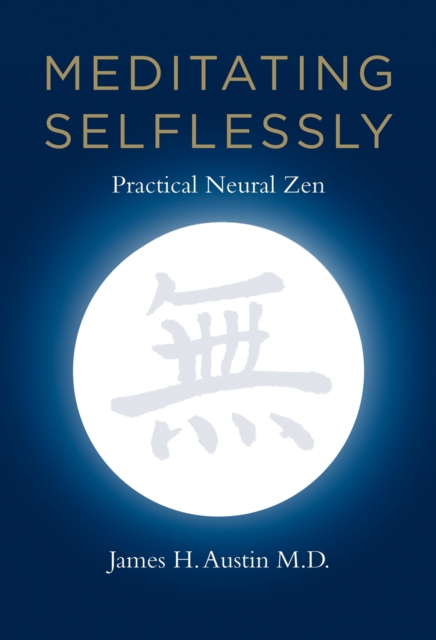
Meditating selflessly : practical neural Zen
A guide to Zen meditative practice informed by the latest findings in brain research.This is not the usual kind of self-help book.Indeed, its major premise heeds a Zen master's advice to be less self-centered.
eBook


How Psychology Applies to Everyday Life
Do violent video games lead to violence?Does spanking children make them unstable?Can the alcoholic drink socially?Do children raised by gay parents turn out OK?Are eyewitness accounts accurate?Is winter a cause of depression?Does cell phone use compromise driving ability?.
eBook

How to argue with a cat : a human's guide to the art of persuasion
An entertaining primer on rhetoric and argument teaches readers how to argue logically, use body language, master decorum, earn respect and loyalty, and learn how to recognize the right moment to make a move.
Book
