
Catalogue Search | MBRL


Are you sure you want to remove the book from the shelf?

{{itemTitle}}
88,788
result(s) for
"Psychology Philosophy."
Sort by:

The Wiley handbook of theoretical and philosophical psychology : methods, approaches, and new directions for social sciences
The Wiley Handbook of Theoretical and Philosophical Psychology presents a comprehensive exploration of the wide range of methodological approaches utilized in the contemporary field of theoretical and philosophical psychology.
* The Wiley Handbook of Theoretical and Philosophical Psychology presents a comprehensive exploration of the wide range of methodological approaches utilized in the contemporary field of theoretical and philosophical psychology.
* Gathers together for the first time all the approaches and methods that define scholarly practice in theoretical and philosophical psychology
* Chapters explore various philosophical and conceptual approaches, historical approaches, narrative approaches to the nature of human conduct, mixed-method studies of psychology and psychological inquiry, and various theoretical bases of contemporary psychotherapeutic practices
* Features contributions from ten Past Presidents of the Society of Theoretical and Philosophical Psychology, along with several Past Presidents of other relevant societies
eBook


Evil and Moral Psychology
This book examines what makes someone an evil person and how evil people are different from merely bad people. Rather than focusing on the \"problem of evil\" that occupies philosophers of religion, Barry looks instead to moral psychology-the intersection of ethics and psychology. He provides both a philosophical account of what evil people are like and considers the implications of that account for social, legal, and criminal institutions. He also engages in traditional philosophical reasoning strongly informed by psychological research, especially abnormal and social psychology.
In response to the popularity of phrases like \"the axis of evil\" and the ease with which politicians and others describe their opponents as \"evil,\" Barry sets out to make clear just what it is to be an evil person.
eBook

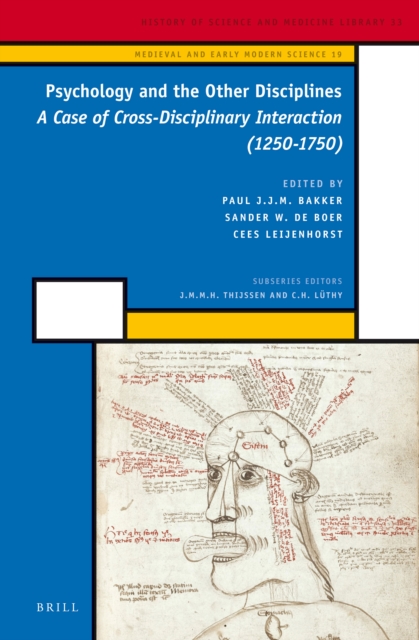
Psychology and the Other Disciplines
Psychology and the Other Disciplines looks at how Aristotelian psychology developed from the medieval to the early modern period, by studying its interactions with the other philosophical disciplines, medicine, and theology.
eBook

Nonlinear dynamical systems analysis for the behavioral sciences using real data
\"By considering systems as nonlinear and by considering the ways in which this nonlinearity can be described, the book offers new ways for Ergonomists to reflect on the central focus of its endeavour, i.e. the 'system'. As Ergonomics evolves into its twenty-first-century manifestation, it needs to develop and refine its concept of how systems operate. This book provides the foundation for that development and should be required reading for anyone who uses the word 'system' in their discussion of Ergonomics.\"-Chris Baber, School of Electronic, Electrical and Systems, Engineering University of Birmingham, in Ergonomics, 2014.
eBook


The Recognition Principle
This book responds to the need for a clearer understanding of issues related to the theme of recognition in various disciplinary fields in which it plays an important role, such as psychology, sociology and politics. The book also considers in particular detail the usefulness of a theoretical-speculative definition of the question of recognition. It also shows that no philosophy of recognition can be solidly built, or claim epistemic strength and practical-operational forcefulness, without a certain degree of psychological and anthropological excavation, without a specific 'discourse on man'. Through an engagement with such a discourse, this book is able to explore the concept of recognition as a general principle, namely the 'recognition principle'.
eBook