
Catalogue Search | MBRL


Are you sure you want to remove the book from the shelf?

{{itemTitle}}
423
result(s) for
"Psychology Web-based instruction."
Sort by:

Fragile learning : the Influence of anxiety
What are the barriers and obstacles to adults learning? What makes the process of adult learning so fragile? And what exactly do we mean by Fragile Learning? This book addresses these questions in two ways. In Part One, it looks at challenges to learning, examining issues such as language invention in a maximum security prison, geography and bad technology, and pedagogic fragility in Higher Education. Through a psychoanalytic lens, Fragile Learning examines authorial illness and the process of slow recovery as a tool for reflective learning, and explores ethical issues in problem-based learnin.
Book
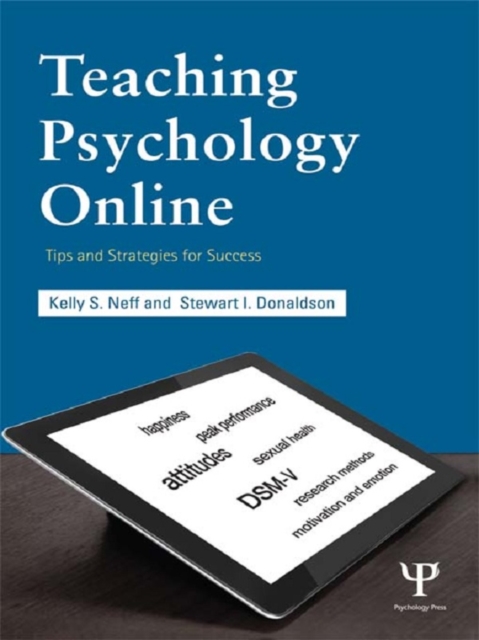
Teaching Psychology Online
\"Intended as a resource for psychology educators ranging from teaching assistants to experienced faculty, this book shows readers how to effectively create and manage an online psychology course. Guidelines for preparing courses, facilitating communication, and assigning grades are provided along with activities and assessments geared specifically towards psychology. Pedagogical theories and research are fused with the authors' teaching experiences to help maximize the reader's abilities as an online psychology instructor. The book focuses on psychology education at the undergraduate level but it also includes material appropriate for graduate students and professionals. Readers will find helpful examples from all the major content areas including introductory, social, developmental, biological, abnormal, and positive psychology, and human sexuality.
Every chapter is organized around 3 sections. The Purpose part introduces the key concepts, theory, and research. The Implementation section reviews the 'nuts and bolts' of online teaching, and the Troubleshooting section addresses key problems and potential solutions. 'Text boxes' highlight important tips. The website http://www.TeachingPsychologyOnline.com provides additional tips, links to related articles and other resources, and examples of online psychology assignments from across the discipline. The book addresses: launching your online course; enhancing student/instructor communication; modes of multimedia and how to integrate them into your course including lecture videos, podcasting, blogging, wikis, and social networking sites; creating activities for online courses; assessment and grading; and online education trend including doctoral level education.
Ideal for instructors teaching ANY psychology course, from introductory to upper-level undergraduate to graduate courses, this text can be used for developing on line courses in applied\"
eBook


Autonomous Language Learning with Technology
This book looks beyond the classroom, and focuses on out-of-class autonomous use of technology for language learning, discussing the theoretical frameworks, key findings and critical issues. The proliferation of digital language learning resources and tools is forcing language education into an era of unprecedented change. The book will stimulate discussions on how to support language learners to construct quality autonomous technology-mediated out-of-class learning experience outside the classroom and raise greater awareness of and research interest in this field. Out-of-class learning constitutes an important context for human development, and active engagement in out-of-class activities is associated with successful language development. With convenient access to expanded resources, venues and learning spaces, today’s learners are not as dependent on in-class learning as they used to be. Thus, a deeper understanding of the terrain of out-of-class learning is of increasing significance in the current educational era. Technology is part and parcel of out-of-class language learning, and has been a primary source that learners actively use to construct language learning experience beyond the classroom. Language learners of all ages around the world have been found to actively utilize technological resources to support their language learning beyond formal language learning contexts. Insights into learners’ out-of-class autonomous use of technology for language learning are essential to our understanding of out-of-class learning and inform educators on how language learners could be better supported to maximize the educational potentials of technology to construct quality out-of-class learning experience.
eBook

Design of Technology-Enhanced Learning
This book explains how educational research can inform the design of technology-enhanced learning environments. After laying pedagogical, technological and content foundations, it analyses learning in Web 2.0, Social Networking, Mobile Learning and Virtual Worlds to derive nuanced principles for technology-enhanced learning design.
eBook

Comparison of a Self-Directed and Therapist-Assisted Telehealth Parent-Mediated Intervention for Children with ASD: A Pilot RCT
This pilot RCT compared the effect of a self-directed and therapist-assisted telehealth-based parent-mediated intervention for young children with ASD. Families were randomly assigned to a self-directed or therapist-assisted program. Parents in both groups improved their intervention fidelity, self-efficacy, stress, and positive perceptions of their child; however, the therapist-assisted group had greater gains in parent fidelity and positive perceptions of child. Children in both groups improved on language measures, with a trend towards greater gains during a parent–child interaction for the therapist-assisted group. Only the children in the therapist-assisted group improved in social skills. Both models show promise for delivering parent-mediated intervention; however, therapist assistance provided an added benefit for some outcomes. A full-scale comparative efficacy trial is warranted.
Journal Article
Changing College Students’ Conceptions of Autism: An Online Training to Increase Knowledge and Decrease Stigma
College students with autism may be negatively impacted by lack of understanding about autism on college campuses. Thus, we developed an online training to improve knowledge and decrease stigma associated with autism among college students. Participants (
N
= 365) completed a pre-test, online training, and post-test. Women reported lower stigma towards autism than men. Participation in the training was associated with decreased stigma and increased knowledge about autism. Although participants exhibited relatively high baseline knowledge of autism, misconceptions were common, particularly in open-ended responses. Participants commonly confused autism with other disorders, such as learning disabilities. This study suggests that online training may be a cost-effective way to increase college students’ understanding and acceptance of their peers with autism.
Journal Article
Increasing Access to an ASD Imitation Intervention Via a Telehealth Parent Training Program
Systematic research focused on developing and improving strategies for the dissemination and implementation of effective ASD services is essential. An innovative and promising area of research is the use of telehealth programs to train parents of children with ASD in intervention techniques. A hybrid telehealth program, combining self-directed internet-based instruction with remote coaching, was created to introduce parents of children with ASD to an imitation intervention. A single-subject multiple-baseline design study evaluated the effect of the program on changes in parent and child behavior. Parents improved in their use of the intervention techniques and their children demonstrated concurrent increases in spontaneous imitation skills. Parents also indicated that the intervention and telehealth service delivery model were acceptable, useable, and effective. Results suggest that this hybrid telehealth program has the potential to increase access to ASD services.
Journal Article
The Digital Divide in Technologies for Autism: Feasibility Considerations for Low- and Middle-Income Countries
Digital technologies have the potential to empower individuals with autism and their families. The COVID-19 pandemic emphasized and accelerated the drive towards technology for information, communication, training, clinical care and research, also in the autism community. However, 95% of individuals with autism live in low- and middle-income countries (LMIC) where access to electricity, internet and the ever-increasing range of digital devices may be highly limited. The World Bank coined the term ‘the digital divide’ to describe the disparities in access to digital technologies between high-income and LMIC contexts. Here we evaluated the feasibility of six emerging technologies for autism spectrum disorders, and reflected on key considerations for implementation in LMIC contexts to ensure that we do not inadvertently widen the pre-existing digital divide.
Journal Article

The role of hardiness in securities practitioners’ web-based continuing learning
Due to the rapid changes in global economic environments, enterprises have to continually enhance their business competitiveness. To improve business, planning educational training has been regarded as a channel to educate outstanding employees. Recently, most of the companies in the securities industry in Taiwan have adopted web-based educational training as a form of employee training. However, low e-learning acceptance on the part of employees is the essential obstacle when enterprises attempt to promote web-based continuing learning. Previous studies have shown that hardiness and Internet self-efficacy may be important factors that influence whether an individual will continue with web-based learning when facing pressure. Securities practitioners are required to deal with high pressure and persist in enhancing their professional knowledge in their working environment; therefore, continuing learning is crucial to maintaining the quality of professional service. The present study recruited securities practitioners as the research participants, and examined the effects of hardiness and Internet self-efficacy on their attitudes towards web-based learning when they were participating in web-based learning. The findings revealed that securities practitioners’ hardiness and Internet self-efficacy both had direct positive effects on their attitudes towards web-based continuing learning. Meanwhile, their Internet self-efficacy had a mediating effect on the relationships between hardiness and attitudes towards web-based continuing learning.
Journal Article