
Catalogue Search | MBRL


Are you sure you want to remove the book from the shelf?

{{itemTitle}}
224
result(s) for
"Psychotherapy Fiction."
Sort by:

Die Wiedergeborene II
Burn-out das ist die Diagnose, mit der Renate Weber in eine psychosomatische Klinik aufgenommen wird.Zu diesem Zeitpunkt liegen schon aufreibende Jahre der Auseinandersetzung hinter der Lehrerin: mit ihrer Familie, Freunden, Kollegen und Schülern.
eBook

Strange bodies : a novel
A dizzying novel of deception and metempsychosis by the author of the National Book Award finalist Far North Whatever this is, it started when Nicholas Slopen came back from the dead. In a locked ward of a notorious psychiatric hospital sits a man who insists that he is Dr. Nicholas Slopen, failed husband and impoverished Samuel Johnson scholar. Slopen has been dead for months. Yet nothing can make this man change his story. What begins as a tale of apparent forgery, involving unseen letters by the great Dr. Johnson, grows to encompass a conspiracy between a Silicon Valley mogul and his Russian allies to exploit the darkest secret of Soviet technology: the Malevin Procedure. With echoes of both Jorge Luis Borges and Philip K. Dick, Marcel Theroux's Strange Bodies takes the reader on a dizzying speculative journey that poses questions about identity, authenticity, and what it means to be truly human.
Book

Jacob L. Moreno and psychodrama – psychiatry in history
Moreno did not accept the psychotherapeutic approach of the time: as a medical student, he attended a lecture by Sigmund Freud in 1912; when Freud approached him, asking his occupation, he replied, ‘Well, Dr Freud, I start where you leave off. […] [...]he was appointed an adjunct professor in the Department of Sociology at New York University (1951–1966) and special lecturer at various universities in North America, continuing his studies until his death in 1974. [...]he believed that the complexity of the human psyche could not be represented by static images, but it required the action of the theatre, which allowed the individual to become aware of their condition and to critically observe it through fiction.
Journal Article

Paprika
\"Widely acknowledged as Yasutaka Tsutsui's masterpiece, Paprika unites his surreal, quirky imagination with a compelling, haunting narrative. When prototype models of a device for entering into patients' dreams go missing at the Institute for Psychiatric Research, it transpires that someone is using them to manipulate people's dreams and drive them insane. Threatened both personally and professionally, brilliant psychotherapist Atsuko Chiba has to journey into the world of fantasy to fight her mysterious opponents. As she delves ever deeper into the imagination, the borderline between dream and reality becomes increasingly blurred, and nightmares begin to leak into the everyday realm. The scene is set for a final showdown between the dream detective and her enemies, with the subconscious as their battleground, and the future of the waking world at stake\"-- Provided by publisher.
Book


Cracked
When Bull Mastrick and Victor Konig wind up in the same psychiatric ward at age sixteen, each recalls and relates in group therapy the bullying relationship they have had since kindergarten, but also facts about themselves and their families that reveal they have much in common.
Book

A daily diary study on maladaptive daydreaming, mind wandering, and sleep disturbances: Examining within-person and between-persons relations
Cross-sectional and experimental research have shown that task-unrelated thoughts (i.e., mind wandering) relate to sleep disturbances, but there is little research on whether this association generalizes to the day-level and other kinds of task-unrelated mentation. We employed a longitudinal daily diary design to examine the within-person and between-person associations between three self-report instruments measuring mind wandering, maladaptive daydreaming (a condition characterized by having elaborate fantasy daydreams so insistent that they interfere with daily functioning) and sleep disturbances. A final sample of 126 participants self-identified as experiencing maladaptive daydreaming completed up to 8 consecutive daily reports (in total 869 daily observations). The scales showed acceptable-to-excellent within-person reliability (i.e., systematic day-to-day change) and excellent between-person reliability. The proportion of between-person variance was 36% for sleep disturbances, 57% for mind wandering, and 75% for maladaptive daydreaming, respectively (the remaining being stochastic and systematic within-person variance). Contrary to our pre-registered hypothesis, maladaptive daydreaming did not significantly predict sleep disturbances the following night, B = -0.00 (SE = 0.04), p = .956. Exploratory analyses indicated that while nightly sleep disturbances predicted mind wandering the following day, B = 0.20 (SE = 0.04), p < .001, it did not significantly predict maladaptive daydreaming the following day, B = -0.04 (SE = 0.05), p = .452. Moreover, daily mind wandering did not significantly predict sleep disturbances the following night, B = 0.02 (SE = 0.05), p = .731. All variables correlated at the between-person level. We discuss the implications concerning the differences between maladaptive daydreaming and mind wandering and the possibility of targeting sleep for mind wandering interventions.
Journal Article
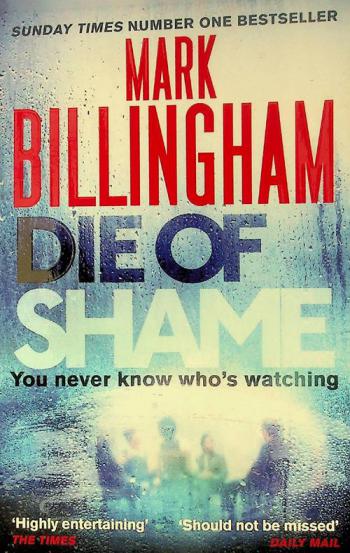
Die of shame
Every Monday evening, 6 people gather in a smart North London house to talk about addiction. There they share their deepest secrets: stories of lies, regret, and above all, shame. Then one of them is killed - and it's clear one of the circle was responsible. Detective Inspector Nicola Tanner quickly finds her investigation hampered by the strict confidentiality that binds these people and their therapist together. So what could be shameful enough to cost someone their life? And how do you find the truth when denial and deception are second nature to all of your suspects?
Peripheral oxytocin is inversely correlated with cognitive, but not emotional empathy in schizophrenia
Endogenous oxytocin has been associated with different aspects of social cognition in healthy subjects and patients with schizophrenia. In this pilot study, we investigated the relationship between plasma oxytocin and oxytocin level changes induced by empathy-eliciting, attachment-related movie scenes with correlates of cognitive and emotional empathy in patients and healthy controls. The Multifaceted Empathy Test (MET) and the Interpersonal Reactivity Index (IRI) were administered to patients with schizophrenia (N = 35, 12 females) and healthy controls (N = 35, 12 females) to estimate dimensions of cognitive and emotional empathy. Peripheral basal oxytocin concentrations and oxytocin responses to movie-based emotional stimuli were assessed using radioimmunoassay with sample extraction. In patients, induced oxytocin level changes were inversely correlated with MET cognitive empathy regarding negative emotional states. Controlling for non-social cognition and age revealed a significant negative association between basal oxytocin levels and MET cognitive empathy for positive emotions. In healthy subjects, oxytocin reactivity was inversely correlated with the IRI subscale \"fantasy\". Oxytocin was not related to any measure of emotional empathy. A hyper-reactive oxytocin system might be linked to impaired cognitive empathy as a part of a dysfunctional regulative circuit of attachment-related emotions and interpersonal stressors or threats by attribution of meaning. Healthy adults with a disposition to identify with fictional characters showed lower oxytocin reactivity, possibly indicating familiarity with movie-based stimuli. The oxytocinergic system may be involved in maladaptive coping mechanisms in the framework of impaired mentalizing and associated dysfunctional responses to interpersonal challenges in schizophrenia.
Journal Article