
Catalogue Search | MBRL


Are you sure you want to remove the book from the shelf?

{{itemTitle}}
61,311
result(s) for
"Psychotropics"
Sort by:

Toxicology and Analysis of Psychoactive Tryptamines
Our understanding of tryptamines is poor due to the lack of data globally. Tryptamines currently are not part of typical toxicology testing regimens and their contribution to drug overdoses may be underestimated. Although their prevalence was low, it is increasing. There are few published data on the many new compounds, their mechanisms of action, onset and duration of action, toxicity, signs and symptoms of intoxication and analytical methods to identify tryptamines and their metabolites. We review the published literature and worldwide databases to describe the newest tryptamines, their toxicology, chemical structures and reported overdose cases. Tryptamines are 5-HT2A receptor agonists that produce altered perceptions of reality. Currently, the most prevalent tryptamines are 5-methoxy-N,N-diisopropyltryptamine (5-MeO-DiPT), 5-methoxy-N,N- diallyltryptamine (5-MeO-DALT) and dimethyltryptamine (DMT). From 2015 to 2020, 22 new analytical methods were developed to identify/quantify tryptamines and metabolites in biological samples, primarily by liquid chromatography tandem mass spectrometry. The morbidity accompanying tryptamine intake is considerable and it is critical for clinicians and laboratorians to be informed of the latest data on this public health threat.
Journal Article

A Single Dose, Randomized, Controlled Proof-Of-Mechanism Study of a Novel Vasopressin 1a Receptor Antagonist (RG7713) in High-Functioning Adults with Autism Spectrum Disorder
The core symptoms of autism spectrum disorder (ASD) include impaired social communication, repetitive behaviors, and restricted interests. No effective pharmacotherapy for these core deficits exists. Within the domain of social communication, the vasopressin system is implicated in social cognition and social signaling deficits of ASD, and represents a potential therapeutic target. We assessed the effects of a single 20 mg intravenous dose of the arginine vasopressin receptor 1A (V1a) antagonist, RG7713, on exploratory biomarkers (eye tracking), behavioral and clinical measures of social cognition and communication (affective speech recognition (ASR), reading the mind in the eyes, olfactory identification, scripted interaction), and safety and tolerability in a multicenter, randomized, double-blind, placebo-controlled, cross-over study of 19 high-functioning adult male subjects with DSM-IV Autistic Disorder (age 18-45 years; full scale IQ >70; ABC-Irritability subscale ⩽13). Eye-tracking showed an increase in biological motion orienting preference with RG7713 (ES=0.8, p=0.047) and a non-significant improvement in the composite score (ES=0.2, p=0.29). RG7713 reduced ability to detect lust (ES=-0.8, p=0.03) and fear (ES=-0.7, p=0.07) in ASR. However, when all eight individual emotion subscales were combined into an overall ASR performance score, the reduction was non-significant (ES=-0.1, p=0.59). Thirteen adverse events were reported in 10 subjects; all were of mild (11/13) or moderate (2/13) severity. Although interpretation should be cautious due to multiple comparisons and small sample size, these results provide preliminary evidence from experimental and behavioral biomarkers, that blockade of the V1a receptor may improve social communication in adults with high-functioning ASD. ClinicalTrials.gov identifier: NCT01474278 A Study of RO5028442 in Adult Male High-Functioning Autistic Patients. Available at: https://clinicaltrials.gov/ct2/show/NCT01474278.
Journal Article

Cannabis and cocaine decrease cognitive impulse control and functional corticostriatal connectivity in drug users with low activity DBH genotypes
The dopamine β-hydroxylase (DβH) enzyme transforms dopamine into noradrenaline. We hypothesized that individuals with low activity DBH genotypes (rs1611115 CT/TT) are more sensitive to the influence of cannabis and cocaine on cognitive impulse control and functional connectivity in the limbic ‘reward’ circuit because they experience a drug induced hyperdopaminergic state compared to individuals with high activity DBH genotypes (rs1611115 CC). Regular drug users (
N
= 122) received acute doses of cannabis (450 μg/kg THC), cocaine HCl 300 mg and placebo. Cognitive impulse control was assessed by means of the Matching Familiar Figures Test (MFFT). Resting state fMRI was measured in a subset of participants to determine functional connectivity between the nucleus accumbens (NAc) and (sub)cortical areas. The influence of cannabis and cocaine on impulsivity and functional connectivity significantly interacted with DBH genotype. Both drugs increased cognitive impulsivity in participants with CT/TT genotypes but not in CC participants. Both drugs also reduced functional connectivity between the NAc and the limbic lobe, prefrontal cortex, striatum and thalamus and primarily in individuals with CT/TT genotypes. Correlational analysis indicated a significant negative association between cognitive impulsivity and functional connectivity in subcortical areas of the brain. It is concluded that interference of cannabis and cocaine with cognitive impulse control and functional corticostriatal connectivity depends on DBH genotype. The present data provide a neural substrate and behavioral mechanism by which drug users can progress to drug seeking and may also offer a rationale for targeted pharmacotherapy in chronic drug users with high risk DBH genotypes.
Journal Article

Assessment of psychotropic-like properties of a probiotic formulation (Lactobacillus helveticus R0052 and Bifidobacterium longum R0175) in rats and human subjects
In a previous clinical study, a probiotic formulation (PF) consisting of Lactobacillus helveticus R0052 and Bifidobacterium longum R0175 (PF) decreased stress-induced gastrointestinal discomfort. Emerging evidence of a role for gut microbiota on central nervous system functions therefore suggests that oral intake of probiotics may have beneficial consequences on mood and psychological distress. The aim of the present study was to investigate the anxiolytic-like activity of PF in rats, and its possible effects on anxiety, depression, stress and coping strategies in healthy human volunteers. In the preclinical study, rats were daily administered PF for 2 weeks and subsequently tested in the conditioned defensive burying test, a screening model for anti-anxiety agents. In the clinical trial, volunteers participated in a double-blind, placebo-controlled, randomised parallel group study with PF administered for 30 d and assessed with the Hopkins Symptom Checklist (HSCL-90), the Hospital Anxiety and Depression Scale (HADS), the Perceived Stress Scale, the Coping Checklist (CCL) and 24 h urinary free cortisol (UFC). Daily subchronic administration of PF significantly reduced anxiety-like behaviour in rats (P < 0·05) and alleviated psychological distress in volunteers, as measured particularly by the HSCL-90 scale (global severity index, P < 0·05; somatisation, P < 0·05; depression, P < 0·05; and anger–hostility, P < 0·05), the HADS (HADS global score, P < 0·05; and HADS-anxiety, P < 0·06), and by the CCL (problem solving, P < 0·05) and the UFC level (P < 0·05). L. helveticus R0052 and B. longum R0175 taken in combination display anxiolytic-like activity in rats and beneficial psychological effects in healthy human volunteers.
Journal Article

Current applications of high-resolution mass spectrometry for the analysis of new psychoactive substances: a critical review
The proliferation of new psychoactive substances (NPS) in recent years has resulted in the development of numerous analytical methods for the detection and identification of known and unknown NPS derivatives. High-resolution mass spectrometry (HRMS) has been identified as the method of choice for broad screening of NPS in a wide range of analytical contexts because of its ability to measure accurate masses using data-independent acquisition (DIA) techniques. Additionally, it has shown promise for non-targeted screening strategies that have been developed in order to detect and identify novel analogues without the need for certified reference materials (CRMs) or comprehensive mass spectral libraries. This paper reviews the applications of HRMS for the analysis of NPS in forensic drug chemistry and analytical toxicology. It provides an overview of the sample preparation procedures in addition to data acquisition, instrumental analysis, and data processing techniques. Furthermore, it gives an overview of the current state of non-targeted screening strategies with discussion on future directions and perspectives of this technique.
Graphical Abstract
Missing the bullseye - a graphical respresentation of non-targeted screening. Image courtesy of Christian Alonzo
Journal Article
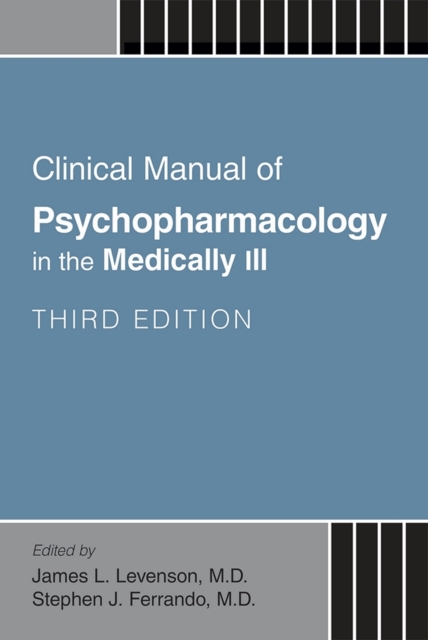
Clinical Manual of Psychopharmacology in the Medically Ill
With examinations of 19 new psychiatric drugs, 19 new forms of previously available drugs, and a host of new medical agents, this third edition of the Clinical Manual of Psychopharmacology in the Medically Ill has been updated to include medical and psychiatric drugs that have become available since the publication of the second edition in 2017, as well as recent relevant randomized controlled trials, systematic reviews, and meta-analyses.
Boasting all the rigor that characterized the preceding editions, every chapter in this new volume has been reviewed and revised by experts—including 11 new authors. For 15 categories of medical disorders and specialty areas that include cardiovascular disorders, oncology, obstetrics and gynecology, and substance use disorders, the book examines
• Key differential diagnostic considerations • The evidence for the efficacy of psychiatric drugs in each disorder • Disease-specific side effects of psychiatric drugs • Neuropsychiatric side effects of drugs for each medical disorder • Disease-specific alterations in pharmacokinetics • Drug-drug interactions
Patients with medical and psychiatric comorbidity have more functional impairment, disability days, emergency department use, and rehospitalization, as well as higher medical care costs. By examining the intersection of psychiatric and medical illness, and offering easily referenced key points for each chapter, this new edition prepares both mental health practitioners and primary care physicians and internists to more safely and effectively work with patients who have psychiatric and medical illness.
eBook

Tailored interventions for inappropriate psychotropic drug use in nursing home residents with dementia: participatory action research in a special case of a stepped-wedge cluster randomized controlled trial
Background
Psychotropic drugs are modestly effective and may cause adverse effects. Efforts to reduce inappropriateness and increase usage of psychosocial interventions often suffer from suboptimal implementation. The purpose of this study was to evaluate effectiveness of an innovative study using implementation promoting elements in nursing home residents with dementia and neuropsychiatric symptoms.
Methods
A multicenter cluster randomized controlled trial with a special case of a stepped-wedge design with two arms and one stap was designed. The intervention comprised participatory action research, tailored information provision and external coaching, leading to the implementation of tailored action and implementation plans. The primary outcome was inappropriateness of psychotropic drug use (Appropriate Psychotropic Drug Use in Dementia [APID] index) and the secondary outcome was percentage of psychotropic drug use at baseline, 8 months, and 16 months. Homes were allocated to start with usual care or the intervention. After 8 months, the control group crossed over to receive the intervention. The other homes continued the intervention to 16 months. Patients were eligible if they were diagnosed with dementia, had a life expectancy of at least 3 months, and resided in psychogeriatric units.
Results
An adjusted multilevel model revealed no effect on the APID index sum score at 8 months (0.564; 95% confidence interval [CI], -2.449–3.577;
p
= 0.71) or 16 months (2.165; 95% CI, -1.113–5.443;
p
= 0.20). An adjusted generalized estimation equation (GEE) model showed an effect at 16 months for percentage of use (OR 0.654; 95% CI, 0.481–0.889;
p
= 0.007). Adjusted GEE models showed an effect especially at 16 months for anxiolytics (OR 0.573; 95% CI, 0.382–0.859;
p
= 0.007) and antidepressants (OR 0.678; 95% CI, 0.475–0.968;
p
= 0.033).
Conclusions
No reduction of inappropriateness was found although overall usage was reduced. Professionals focused on implementing alternatives to compensate for usage, rather than prescribing quality. Future studies may focus on changing physicians’ prescribing behaviors in combination with multicomponent and multidisciplinary psychosocial alternatives.
Trial registration
Netherlands Trial Registry (NTR5872) on 27/05/2016,
https://onderzoekmetmensen.nl/nl/node/26060/pdf
.
Journal Article
Randomized, Double-Blind, Placebo-Controlled Study of Encenicline, an α7 Nicotinic Acetylcholine Receptor Agonist, as a Treatment for Cognitive Impairment in Schizophrenia
Encenicline is a novel, selective α7 nicotinic acetylcholine receptor agonist in development for treating cognitive impairment in schizophrenia and Alzheimer's disease. A phase 2, double-blind, randomized, placebo-controlled, parallel-design, multinational study was conducted. Patients with schizophrenia on chronic stable atypical antipsychotics were randomized to encenicline 0.27 or 0.9 mg once daily or placebo for 12 weeks. The primary efficacy end point was the Overall Cognition Index (OCI) score from the CogState computerized battery. Secondary end points include MATRICS Consensus Cognitive Battery (MCCB) (in US patients), the Schizophrenia Cognition Rating Scale (SCoRS) total score, SCoRS global rating, and Positive and Negative Syndrome Scale (PANSS) total and subscale and cognition factor scores. Of 319 randomized patients, 317 were included in the safety population, and 307 were included in the intent-to-treat population. Notable trends in improvement were demonstrated across all cognition scales. For the OCI score, the LS mean difference for encenicline 0.27 mg vs placebo was significant (Cohen's d=0.257; P=0.034). Mean SCoRS total scores decreased showing improvement in function over time, and the difference was significant for encenicline 0.9 mg vs placebo (P=0.011). Furthermore, the difference between encenicline 0.9 mg and placebo was significant for the PANSS Cognition Impairment Domain (P=0.0098, Cohen's d=0.40) and for the PANSS Negative scale (P=0.028, Cohen's d=0.33). Treatment-emergent adverse events were reported at similar frequencies across all treatment groups (39.0% with placebo, 23.4% with encenicline 0.27 mg, and 33.3% with encenicline 0.9 mg). Overall, encenicline was generally well tolerated and demonstrated clinically meaningful improvements in cognition and function in patients with schizophrenia.
Journal Article

The emergence, implementation, and future growth of pharmacogenomics in psychiatry: a narrative review
Psychotropic medication efficacy and tolerability are critical treatment issues faced by individuals with psychiatric disorders and their healthcare providers. For some people, it can take months to years of a trial-and-error process to identify a medication with the ideal efficacy and tolerability profile. Current strategies (e.g. clinical practice guidelines, treatment algorithms) for addressing this issue can be useful at the population level, but often fall short at the individual level. This is, in part, attributed to interindividual variation in genes that are involved in pharmacokinetic (i.e. absorption, distribution, metabolism, elimination) and pharmacodynamic (e.g. receptors, signaling pathways) processes that in large part, determine whether a medication will be efficacious or tolerable. A precision prescribing strategy know as pharmacogenomics (PGx) assesses these genomic variations, and uses it to inform selection and dosing of certain psychotropic medications. In this review, we describe the path that led to the emergence of PGx in psychiatry, the current evidence base and implementation status of PGx in the psychiatric clinic, and finally, the future growth potential of precision psychiatry via the convergence of the PGx-guided strategy with emerging technologies and approaches (i.e. pharmacoepigenomics, pharmacomicrobiomics, pharmacotranscriptomics, pharmacoproteomics, pharmacometabolomics) to personalize treatment of psychiatric disorders.
Journal Article

Management of psychiatric and neurological comorbidities in epilepsy
Key Points
Psychiatric and neurological comorbidities are relatively common in epilepsy, affecting up to half of the patients
Psychiatric and neurological comorbidities have a complex relationship with epilepsy: comorbidities can exacerbate epilepsy or each other, and
vice versa
Treatment of psychiatric and neurological comorbidities needs to be incorporated into the overall management of patients with epilepsy
Both pharmacological and surgical management of the seizure disorder can have either a negative or a positive impact on psychiatric and neurological comorbidities
Neurologists should be able to treat some of the more common psychiatric comorbidities in patients with epilepsy and identify patients at risk of adverse events from psychotropic medications, because psychiatric care is not available to all patients
This Review provides practical principles and considerations for the management of the most common psychiatric and neurological comorbidities in patients with epilepsy
Psychiatric and neurological comorbidities are relatively common in epilepsy, affecting 30–50% of patients. Neurologists should be able to treat psychiatric comorbidities in patients with epilepsy and identify patients at risk of adverse events from psychotropic medications, because psychiatric care is not available to all patients. In this Review, Andres Kanner discusses the complex relationship between epilepsy and psychiatric and neurological comorbidities, and provides considerations for selection of antiepileptic and psychotropic drugs in patients with epilepsy.
The treatment of epileptic seizure disorders is not restricted to the achievement of seizure-freedom, but must also include the management of comorbid medical, neurological, psychiatric and cognitive comorbidities. Psychiatric and neurological comorbidities are relatively common and often co-exist in people with epilepsy (PWE). For example, depression and anxiety disorders are the most common psychiatric comorbidities in PWE, and they are particularly common in PWE who also have a neurological comorbidity, such as migraine, stroke, traumatic brain injury or dementia. Moreover, psychiatric and neurological comorbodities often have a more severe impact on the quality of life in patients with treatment-resistant focal epilepsy than do the actual seizures. Epilepsy and psychiatric and neurological comorbidities have a complex relationship, which has a direct bearing on the management of both seizures and the comorbidities: the comorbidities have to be factored into the selection of antiepileptic drugs, and the susceptibility to seizures has to be considered when choosing the drugs to treat comorbidities. The aim of this Review is to highlight the complex relationship between epilepsy and common psychiatric and neurological comorbidities, and provide an overview of how treatment strategies for epilepsy can positively and negatively affect these comorbidities and vice versa.
Journal Article