
Catalogue Search | MBRL


Are you sure you want to remove the book from the shelf?

{{itemTitle}}
254
result(s) for
"Psykoterapi."
Sort by:

Favorite counseling and therapy techniques
In this new edition of his highly popular book, Howard Rosenthal once again brings together a group of prominent therapists to share their insightful, pioneering, and favorite therapeutic techniques. All of the classic entries from the previous edition are included, as well as brand-new techniques from some of today's most creative therapists.
Book
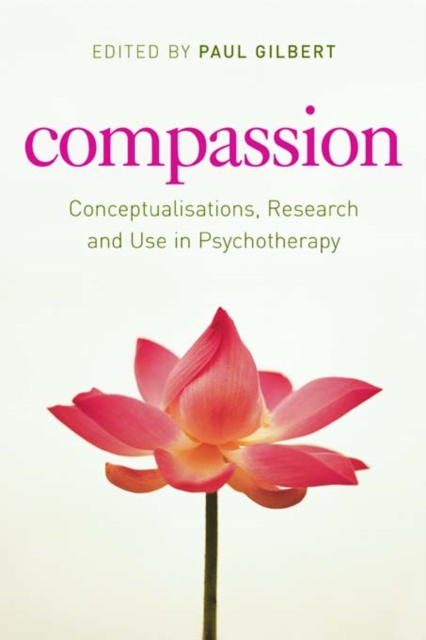
Compassion: Conceptualisations, Research and Use in Psychotherapy
What is compassion, how does it affect the quality of our lives and how can we develop compassion for ourselves and others?Humans are capable of extreme cruelty but also considerable compassion. Often neglected in Western psychology, this book looks at how compassion may have evolved, and is linked to various capacities such as sympathy, empathy, forgiveness and warmth. Exploring the effects of early life experiences with families and peers, this book outlines how developing compassion for self and others can be key to helping people change, recover and develop ways of living that increase well-being.Focusing on the multi-dimensional nature of compassion, international contributors: explore integrative evolutionary, social constructivist, cognitive and Buddhist approaches to compassion consider how and why cruelty can flourish when our capacities for compassion are turned off, especially in particular environments focus on how therapists bring compassion into their therapeutic relationship, and examine its healing effects describe how to help patients develop inner warmth and compassion to help alleviate psychological problems. Compassion provides detailed outlines of interventions that are of particular value to psychotherapists and counsellors interested in developing compassion as a therapeutic focus in their work. It is also of value to social scientists interested in pro-social behaviour, and those seeking links between Buddhist and Western psychology.
eBook

Development and Validation of a Brief Version of the Difficulties in Emotion Regulation Scale: The DERS-16
The Difficulties in Emotion Regulation Scale (DERS) is a widely-used, theoretically-driven, and psychometrically-sound self-report measure of emotion regulation difficulties. However, at 36-items, the DERS may be challenging to administer in some situations or settings (e.g., in the course of patient care or large-scale epidemiological studies). Consequently, there is a need for a briefer version of the DERS. The goal of the present studies was to develop and evaluate a 16-item version of the DERS – the DERS-16. The reliability and validity of the DERS-16 were examined in a clinical sample (N = 96) and two large community samples (Ns = 102 and 482). The validity of the DERS-16 was evaluated comparing the relative strength of the association of the two versions of the DERS with measures of emotion regulation and related constructs, psychopathology, and clinically-relevant behaviors theorized to stem from emotion regulation deficits. Results demonstrate that the DERS-16 has retained excellent internal consistency, good test-retest reliability, and good convergent and discriminant validity. Further, the DERS-16 showed minimal differences in its convergent and discriminant validity with relevant measures when compared to the original DERS. In conclusion, the DERS-16 offers a valid and brief method for the assessment of overall emotion regulation difficulties.
Journal Article

Internet-Delivered Psychological Treatments for Mood and Anxiety Disorders: A Systematic Review of Their Efficacy, Safety, and Cost-Effectiveness
Greater access to evidence-based psychological treatments is needed. This review aimed to evaluate whether internet-delivered psychological treatments for mood and anxiety disorders are efficacious, noninferior to established treatments, safe, and cost-effective for children, adolescents and adults.
We searched the literature for studies published until March 2013. Randomized controlled trials (RCTs) were considered for the assessment of short-term efficacy and safety and were pooled in meta-analyses. Other designs were also considered for long-term effect and cost-effectiveness. Comparisons against established treatments were evaluated for noninferiority. Two reviewers independently assessed the relevant studies for risk of bias. The quality of the evidence was graded using an international grading system.
A total of 52 relevant RCTs were identified whereof 12 were excluded due to high risk of bias. Five cost-effectiveness studies were identified and three were excluded due to high risk of bias. The included trials mainly evaluated internet-delivered cognitive behavioral therapy (I-CBT) against a waiting list in adult volunteers and 88% were conducted in Sweden or Australia. One trial involved children. For adults, the quality of evidence was graded as moderate for the short-term efficacy of I-CBT vs. waiting list for mild/moderate depression (d = 0.83; 95% CI 0.59, 1.07) and social phobia (d = 0.85; 95% CI 0.66, 1.05), and moderate for no efficacy of internet-delivered attention bias modification vs. sham treatment for social phobia (d = -0.04; 95% CI -0.24, 0.35). The quality of evidence was graded as low/very low for other disorders, interventions, children/adolescents, noninferiority, adverse events, and cost-effectiveness.
I-CBT is a viable treatment option for adults with depression and some anxiety disorders who request this treatment modality. Important questions remain before broad implementation can be supported. Future research would benefit from prioritizing adapting treatments to children/adolescents and using noninferiority designs with established forms of treatment.
Journal Article

Predicting and Changing Behavior
This book describes the reasoned action approach, an integrative framework for the prediction and change of human social behavior. It provides an up-to-date review of relevant research, discusses critical issues related to the reasoned action framework, and provides methodological and conceptual tools for the prediction and explanation of social behavior and for designing behavior change interventions.
eBook
Higher- and lower-order personality traits and cluster subtypes in social anxiety disorder
Social anxiety disorder (SAD) can come in different forms, presenting problems for diagnostic classification. Here, we examined personality traits in a large sample of patients (N = 265) diagnosed with SAD in comparison to healthy controls (N = 164) by use of the Revised NEO Personality Inventory (NEO-PI-R) and Karolinska Scales of Personality (KSP). In addition, we identified subtypes of SAD based on cluster analysis of the NEO-PI-R Big Five personality dimensions. Significant group differences in personality traits between patients and controls were noted on all Big Five dimensions except agreeableness. Group differences were further noted on most lower-order facets of NEO-PI-R, and nearly all KSP variables. A logistic regression analysis showed, however, that only neuroticism and extraversion remained significant independent predictors of patient/control group when controlling for the effects of the other Big Five dimensions. Also, only neuroticism and extraversion yielded large effect sizes when SAD patients were compared to Swedish normative data for the NEO-PI-R. A two-step cluster analysis resulted in three separate clusters labelled Prototypical (33%), Introvert-Conscientious (29%), and Instable-Open (38%) SAD. Individuals in the Prototypical cluster deviated most on the Big Five dimensions and they were at the most severe end in profile analyses of social anxiety, self-rated fear during public speaking, trait anxiety, and anxiety-related KSP variables. While additional studies are needed to determine if personality subtypes in SAD differ in etiological and treatment-related factors, the present results demonstrate considerable personality heterogeneity in socially anxious individuals, further underscoring that SAD is a multidimensional disorder.
Journal Article
Doing well-being: Self-reported activities are related to subjective well-being
Activities and Subjective Well-Being (SWB) have been shown to be intricately related to each other. However, no research to date has shown whether individuals understand how their everyday activities relate to their SWB. Furthermore, the assessment of activities has been limited to predefined types of activities and/or closed-ended questions. In two studies, we examine the relationship between self-reported everyday activities and SWB, while allowing individuals to express their activities freely by allowing open-ended responses that were then analyzed with state-of-the-art ( transformers-based ) Natural Language Processing. In study 1 ( N = 284), self-reports of Yesterday’s Activities did not significantly relate to SWB, whereas activities reported as having the most impact on SWB in the past four weeks had small but significant correlations to most of the SWB scales ( r = .14 –.23, p < .05). In Study 2 (N = 295), individuals showed strong agreement with each other about activities that they considered to increase or decrease SWB (AUC = .995). Words describing activities that increased SWB related to physically and cognitively active activities and social activities (“football”, “meditation”, “friends”), whereas words describing activities that decreased SWB were mainly activity features related to imbalance (“too”, “much”, “enough”). Individuals reported both activities and descriptive words that reflect their SWB, where the activity words had generally small but significant correlations to SWB ( r =. 17 –.33, p < .05) and the descriptive words had generally strong correlations to SWB ( r = .39–63, p < .001). We call this correlational gap the well-being/activity description gap and discuss possible explanations for the phenomenon.
Journal Article

Knowledge hoarding: antecedent or consequent of negative acts? The mediating role of trust and justice
Purpose
The purpose of this paper is to investigate whether and how knowledge hoarding, functions as antecedent and consequent of work related negative acts, as a measure of bullying. The authors investigate the relation as mediated by trust and justice.
Design/methodology/approach
Data stem from a longitudinal study in which questionnaire responses were collected twice from 1,650 employees in 52 workplaces. Structural equation modelling was used to analyse the two models. Design-based corrections were made to accommodate the multi-level structure of data.
Findings
The analyses showed that knowledge hoarding was both an antecedent and a consequent of negative acts. First, over time, knowledge hoarding was indirectly related to negative acts mediated by trust and justice. Second, negative acts were both directly and indirectly related to knowledge hoarding over time. The study thus points to the existence of a vicious circle of negative acts, psychological states of trust and justice, and knowledge hoarding behaviours, which presumably will affect both individual and organizational outcomes negatively.
Research limitations/implications
The use of already collected, self-report data, single-item measures, and the two-year time lag could pose potential limitations to the study.
Practical implications
Preventive and repair actions could potentially impact both negative acts and knowledge hoarding by focusing on increasing the social exchange quality at work unit level.
Originality/value
This paper combines two strands of research, that of bullying at work and that of knowledge management, within which research on knowledge hoarding has been an under-researched area.
Journal Article

Neuropsychological outcome after cardiac arrest: results from a sub-study of the targeted hypothermia versus targeted normothermia after out-of-hospital cardiac arrest (TTM2) trial
Background
Cognitive impairment is common following out-of-hospital cardiac arrest (OHCA), but the nature of the impairment is poorly understood. Our objective was to describe cognitive impairment in OHCA survivors, with the hypothesis that OHCA survivors would perform significantly worse on neuropsychological tests of cognition than controls with acute myocardial infarction (MI). Another aim was to investigate the relationship between cognitive performance and the associated factors of emotional problems, fatigue, insomnia, and cardiovascular risk factors following OHCA.
Methods
This was a prospective case–control sub-study of The Targeted Hypothermia versus Targeted Normothermia after Out-of-Hospital Cardiac Arrest (TTM2) trial. Eight of 61 TTM2-sites in Sweden, Denmark, and the United Kingdom included adults with OHCA of presumed cardiac or unknown cause. A matched non-arrest control group with acute MI was recruited. At approximately 7 months post-event, we administered an extensive neuropsychological test battery and questionnaires on anxiety, depression, fatigue, and insomnia, and collected information on the cardiovascular risk factors hypertension and diabetes.
Results
Of 184 eligible OHCA survivors, 108 were included, with 92 MI controls enrolled. Amongst OHCA survivors, 29% performed
z
-score ≤ − 1 (at least borderline–mild impairment) in ≥ 2 cognitive domains, 14% performed
z
-score ≤ − 2 (major impairment) in ≥ 1 cognitive domain while 54% performed without impairment in any domain. Impairment was most pronounced in episodic memory, executive functions, and processing speed. OHCA survivors performed significantly worse than MI controls in episodic memory (mean difference, MD = − 0.37, 95% confidence intervals [− 0.61, − 0.12]), verbal (MD = − 0.34 [− 0.62, − 0.07]), and visual/constructive functions (MD = − 0.26 [− 0.47, − 0.04]) on linear regressions adjusted for educational attainment and sex. When additionally adjusting for anxiety, depression, fatigue, insomnia, hypertension, and diabetes, executive functions (MD = − 0.44 [− 0.82, − 0.06]) were also worse following OHCA. Diabetes, symptoms of anxiety, depression, and fatigue were significantly associated with worse cognitive performance.
Conclusions
In our study population, cognitive impairment was generally mild following OHCA. OHCA survivors performed worse than MI controls in 3 of 6 domains. These results support current guidelines that a post-OHCA follow-up service should screen for cognitive impairment, emotional problems, and fatigue.
Trial registration
ClinicalTrials.gov, NCT03543371. Registered 1 June 2018.
Journal Article

Shared mental representations underlie metaphorical sound concepts
Communication between sound and music experts is based on the shared understanding of a metaphorical vocabulary derived from other sensory modalities. Yet, the impact of sound expertise on the mental representation of these sound concepts remains blurry. To address this issue, we investigated the acoustic portraits of four metaphorical sound concepts (brightness, warmth, roundness, and roughness) in three groups of participants (sound engineers, conductors, and non-experts). Participants (N = 24) rated a corpus of orchestral instrument sounds (N = 520) using Best–Worst Scaling. With this data-driven method, we sorted the sound corpus for each concept and population. We compared the population ratings and ran machine learning algorithms to unveil the acoustic portraits of each concept. Overall, the results revealed that sound engineers were the most consistent. We found that roughness is widely shared while brightness is expertise dependent. The frequent use of brightness by expert populations suggests that its meaning got specified through sound expertise. As for roundness and warmth, it seems that the importance of pitch and noise in their acoustic definition is the key to distinguishing them. These results provide crucial information on the mental representations of a metaphorical vocabulary of sound and whether it is shared or refined by sound expertise.
Journal Article