
Catalogue Search | MBRL


Are you sure you want to remove the book from the shelf?

{{itemTitle}}
10,185
result(s) for
"Public health Congresses."
Sort by:


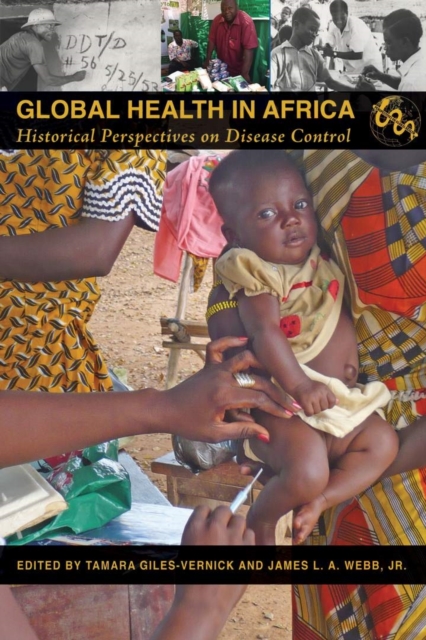
Global Health in Africa
Global Health in Africa is a first exploration of selected histories of global health initiatives in Africa. The collection addresses some of the most important interventions in disease control, including mass vaccination, large-scale treatment and/or prophylaxis campaigns, harm reduction efforts, and nutritional and virological research.The chapters in this collection are organized in three sections that evaluate linkages between past, present, and emergent. Part I, \"Looking Back, \" contains four chapters that analyze colonial-era interventions and reflect upon their implications for contemporary interventions. Part II, \"The Past in the Present, \" contains essays exploring the historical dimensions and unexamined assumptions of contemporary disease control programs. Part III, \"The Past in the Future, \" examines two fields of public health intervention in which efforts to reduce disease transmission and future harm are premised on an understanding of the past.
This much-needed volume brings together international experts from the disciplines of demography, anthropology, and historical epidemiology. Covering health initiatives from smallpox vaccinations to malaria control to HIV campaigns, Global Health in Africa offers a first comprehensive look at some of global health's most important challenges.
eBook

Strengthening national public health preparedness and response to chemical, biological and radiological agent threats
Ensuring a coordinated public health, laboratory, and medical response to a natural disaster, an accidental release or a deliberate use of a chemical, biological, and radiological (CBR) agent is a high priority for all countries. This publication contains the proceedings of the North Atlantic Treaty Organization (NATO) and Advanced Study Institute (ASI). The ASI, and this publication, provides NATO and its allies with ways to enhance their national preparedness and response plans to CBR threats. The recommendations should be of interest to clinicians, researchers, and other scientists motivated by special interest in public health preparedness, as well as by national and NATO leaders and policy makers who are positioned to make a difference. Public health response to emergencies requires extensive, coordinated, considered efforts of the combined military and civilian public health resources of all NATO nations and NATO Partner nations.
eBook

How's Life?
Every person aspires to a good life. But what does “a good or a better life” mean? This report looks at the most important aspects that shape people’s lives and well-being: income, jobs, housing, health, work and life-balance, education, social connections, civic engagement and governance, environment, personal security and subjective well-being. It paints a comprehensive picture of well-being in OECD countries and other major economies, by looking at people’s material living conditions and quality of life across the population. The report responds to the needs of citizens for better information on well-being and of policy makers to give a more accurate picture of societal progress.The report finds that well-being has increased on average over the past fifteen years: people are richer and more likely to be employed; they enjoy better housing conditions and are exposed to lower air pollution; they live longer and are more educated; they are also exposed to fewer crimes. But differences across countries are large. Furthermore, some groups of the population, particularly less educated and low-income people, tend to fare systematically worse in all dimensions of well-being considered in this report: for instance they live shorter lives and report greater health problems; their children obtain worse school results; they participate less in political activities; they can rely on lower social networks in case of needs; they are more exposed to crime and pollution; they tend to be less satisfied with their life as a whole than more educated and higher-income people.How’s Life? is part of the OECD Better Life Initiative, launched by the Organization on the occasion of its 50th Anniversary. The OECD Better Life Initiative aims to promote “Better Policies for Better Lives”, in line with the OECD’s overarching mission. One of the other pillars of the OECD Better Life Initiative is the Your Better Life Index ( www.oecdbetterlifeindex.org ), an interactive composite index of well-being that aims at involving citizens in the debate on societal progress.
eBook
Ensuring an infectious disease workforce : education and training needs for the 21st century : workshop summary
The Forum on Microbial Threats (previously named the Forum on Emerging Infections) was created in 1996 in response to a request from the Centers for Disease Control and Prevention (CDC) and the National Institutes of Health (NIH).
eBook

Violence in America : a public health approach
The USA is said to be a violent nation. Historically, violence and infectious disease have been the two leading causes of premature death, yet until recently the field of public health has given little attention to violent behaviour. This book presents the first full epidemiological picture of violence in American society. The aim of this volume is to draw together what is known about violence in our society, and to lead the way towards involving health professionals in education, prevention, and intervention. The authors, all experts in their fields, examine child, spouse, and elder abuse; sexual assault and rape; suicide; assaultive violence; and homicide. To each topic they bring an analysis of key issues in epidemiology, causal and risk factors, outcomes, and interventions.
eBook
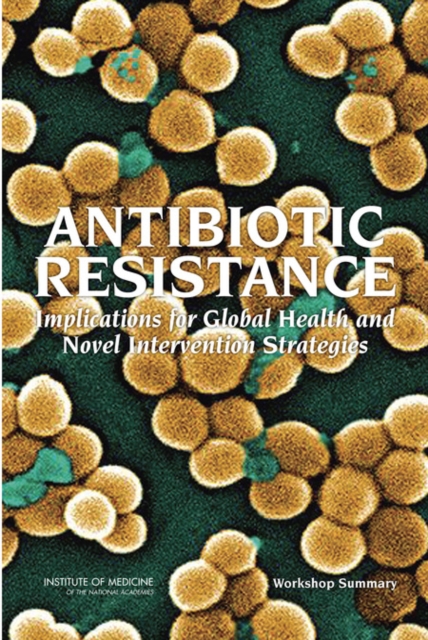
Antibiotic Resistance
Years of using, misusing, and overusing antibiotics and other antimicrobial drugs has led to the emergence of multidrug-resistant 'superbugs.' The IOM's Forum on Microbial Threats held a public workshop April 6-7 to discuss the nature and sources of drug-resistant pathogens, the implications for global health, and the strategies to lessen the current and future impact of these superbugs.
eBook