
Catalogue Search | MBRL


Are you sure you want to remove the book from the shelf?

{{itemTitle}}
836
result(s) for
"Public health United States History 19th century."
Sort by:


Revolutionary Medicine
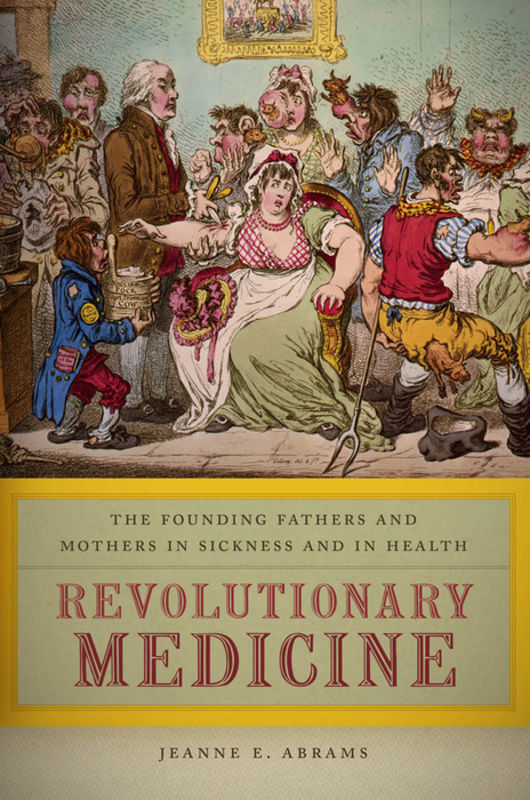
Before the advent of modern antibiotics, one's life could be abruptly shattered by contagion and death, and debility from infectious diseases and epidemics was commonplace for early Americans, regardless of social status. Concerns over health affected the founding fathers and their families as it did slaves, merchants, immigrants, and everyone else in North America. As both victims of illness and national leaders, the Founders occupied a unique position regarding the development of public health in America.Revolutionary Medicinerefocuses the study of the lives of George and Martha Washington, Benjamin Franklin, Thomas Jefferson, John and Abigail Adams, and James and Dolley Madison away from the usual lens of politics to the unique perspective of sickness, health, and medicine in their era.For the founders, republican ideals fostered a reciprocal connection between individual health and the health of the nation. Studying the encounters of these American founders with illness and disease, as well as their viewpoints about good health, not only provides us with a richer and more nuanced insight into their lives, but also opens a window into the practice of medicine in the eighteenth century, which is at once intimate, personal, and first hand. Perhaps most importantly, today's American public health initiatives have their roots in the work of America's founders, for they recognized early on that government had compelling reasons to shoulder some new responsibilities with respect to ensuring the health and well-being of its citizenry.The state of medicine and public healthcare today is still a work in progress, but these founders played a significant role in beginning the conversation that shaped the contours of its development.Jeanne E. Abramsis Professor at Penrose Library and the Center for Judaic Studies at the University of Denver. She is the author ofJewish Women Pioneering the Frontier Trail: A History in the American West(NYU Press 2006) andDr. Charles David Spivak: A Jewish Immigrant and the American Tuberculosis Movement, as well as numerous articles in the fields of American, Jewish and medical history which have appeared in scholarly journals and popular magazines.
eBook


Lotions, Potions, Pills, and Magic
Health in early America was generally good. The food was plentiful, the air and water were clean, and people tended to enjoy strong constitutions as a result of this environment. Practitioners of traditional forms of health care enjoyed high social status, and the cures they offered - from purging to mere palliatives - carried a powerful authority. Consequently, most American doctors felt little need to keep up with Europe's medical advances relying heavily on their traditional depletion methods. However, in the years following the American Revolution as poverty increased and America's water and air became more polluted, people grew sicker. Traditional medicine became increasingly ineffective. Instead, Americans sought out both older and newer forms of alternative medicine and people who embraced these methods: midwives, folk healers, Native American shamans, African obeahs and the new botanical and water cure advocates.In this overview of health and healing in early America, Elaine G. Breslaw describes the evolution of public health crises and solutions. Breslaw examines ethnic borrowings (of both disease and treatment) of early American medicine and the tension between trained doctors and the lay public. While orthodox medicine never fully lost its authority, Lotions, Potions, Pills, and Magic argues that their ascendance over other healers didn't begin until the early twentieth century, as germ theory finally migrated from Europe to the United States and American medical education achieved professional standing.
eBook

Health and wellness in 19th-century America
\"This book provides a comprehensive description of what being sick and receiving \"medical care\" was like in 19th-century America, allowing modern readers to truly appreciate the scale of the improvements in healthcare theory and practice\"-- Provided by publisher.
Book

Marrow of Tragedy
Soldiers lay wounded or sick as both sides struggled to get them fit to return to battle. Winner, George Rosen Prize, American Association for the History of Medicine The Civil War was the greatest health disaster the United States has ever experienced, killing more than a million Americans and leaving many others invalided or grieving. Poorly prepared to care for wounded and sick soldiers as the war began, Union and Confederate governments scrambled to provide doctoring and nursing, supplies, and shelter for those felled by warfare or disease. During the war soldiers suffered from measles, dysentery, and pneumonia and needed both preventive and curative food and medicine. Family members—especially women—and governments mounted organized support efforts, while army doctors learned to standardize medical thought and practice. Resources in the north helped return soldiers to battle, while Confederate soldiers suffered hunger and other privations and healed more slowly, when they healed at all. In telling the stories of soldiers, families, physicians, nurses, and administrators, historian Margaret Humphreys concludes that medical science was not as limited at the beginning of the war as has been portrayed. Medicine and public health clearly advanced during the war—and continued to do so after military hostilities ceased.
eBook

Fit to Be Citizens?
Meticulously researched and beautifully written, Fit to Be Citizens? demonstrates how both science and public health shaped the meaning of race in the early twentieth century. Through a careful examination of the experiences of Mexican, Japanese, and Chinese immigrants in Los Angeles, Natalia Molina illustrates the many ways local health officials used complexly constructed concerns about public health to demean, diminish, discipline, and ultimately define racial groups. She shows how the racialization of Mexican Americans was not simply a matter of legal exclusion or labor exploitation, but rather that scientific discourses and public health practices played a key role in assigning negative racial characteristics to the group. The book skillfully moves beyond the binary oppositions that usually structure works in ethnic studies by deploying comparative and relational approaches that reveal the racialization of Mexican Americans as intimately associated with the relative historical and social positions of Asian Americans, African Americans, and whites. Its rich archival grounding provides a valuable history of public health in Los Angeles, living conditions among Mexican immigrants, and the ways in which regional racial categories influence national laws and practices. Molina's compelling study advances our understanding of the complexity of racial politics, attesting that racism is not static and that different groups can occupy different places in the racial order at different times.
eBook

Foul Bodies
A nation's standards of private cleanliness reveal much about its ideals of civilization, fears of disease, and expectations for public life, says Kathleen Brown in this unusual cultural history. Starting with the shake-up of European practices that coincided with Atlantic expansion, she traces attitudes toward \"dirt\" through the mid-nineteenth century, demonstrating that cleanliness-and the lack of it-had moral, religious, and often sexual implications. Brown contends that care of the body is not simply a private matter but an expression of cultural ideals that reflect the fundamental values of a society.
The book explores early America's evolving perceptions of cleanliness, along the way analyzing the connections between changing public expectations for appearance and manners, and the backstage work of grooming, laundering, and housecleaning performed by women. Brown provides an intimate view of cleanliness practices and how such forces as urbanization, immigration, market conditions, and concerns about social mobility influenced them. Broad in historical scope and imaginative in its insights, this book expands the topic of cleanliness to encompass much larger issues, including religion, health, gender, class, and race relations.
eBook

Mothers and Medicine
In the nineteenth century, infants were commonly breast-fed; by the middle of the twentieth century, women typically bottle-fed their babies on the advice of their doctors. In this book, Rima D. Apple discloses and analyzes the complex interactions of science, medicine, economics, and culture that underlie this dramatic shift in infant-care practices and women’s lives. As infant feeding became the keystone of the emerging specialty of pediatrics in the twentieth century, the manufacture of infant food became a lucrative industry. More and more mothers reported difficulty in nursing their babies. While physicians were establishing themselves and the scientific experts and the infant-food industry was hawking the scientific bases of their products, women embraced “scientific motherhood,” believing that science could shape child care practices. The commercialization and medicalization of infant care established an environment that made bottle feeding not only less feared by many mothers, but indeed “natural” and “necessary.” Focusing on the history of infant feeding, this book clarifies the major elements involved in the complex and sometimes contradictory interaction between women and the medical profession, revealing much about the changing roles of mothers and physicians in American society. “The strength of Apple’s book is her ability to indicate how the mutual interests of mothers, doctors, and manufacturers led to the transformation of infant feeding. . . . Historians of science will be impressed with the way she probes the connections between the medical profession and the manufacturers and with her ability to demonstrate how medical theories were translated into medical practice.”—Janet Golden,
Isis
eBook