
Catalogue Search | MBRL


Are you sure you want to remove the book from the shelf?

{{itemTitle}}
4,159
result(s) for
"Public history Canada."
Sort by:

Nature, place, and story : rethinking historic sites in Canada
\"National historic sites commemorate decisive moments in the making of Canada. But when seen through an environmental lens, these sites become artifacts of the occupation and transformation of nature into a nation. In an age of pressing discussions about environmental sustainability, there is a growing need to know more about the history of our relationship with the natural world and what lessons these places of public history, regional identity, and national narrative can teach us. Nature, Place, and Story provides new interpretations for five of Canada's largest and most iconic historic sites: L'Anse aux Meadows, Newfoundland; Grand Pré, Nova Scotia; Fort William, Ontario; the Forks of the Red River, Manitoba; and the Bar U Ranch, Alberta. At each location, Claire Campbell rewrites public history as environmental history, revealing the country's debt to the power and fragility of the natural world, and the relevance of the past to understanding climate change, agricultural sustainability, wilderness protection, urban reclamation, and fossil fuel extraction. From the medieval Atlantic to modern ranch lands, environmental history speaks directly to contemporary questions about the health of Canada's habitat. Bringing together public and environmental history in an entirely new way, Nature, Place, and Story is a lively and ambitious call for a new way to view and comprehend natural heritage.\"--Site de l'éditeur.
Book

Branding Canada
Evan Potter analyses how the federal government has used the instruments of public diplomacy - cultural programs, international education, international broadcasting, trade, and investment promotion - to exercise Canada's soft power internationally. He argues that protecting and nurturing a distinct national identity are essential to Canada's sovereignty and prosperity, and suggests ways to achieve this through the strategic exercise of public diplomacy, at home and abroad. In offering the first comprehensive overview of the origins, development, and implementation of the country's public diplomacy, Branding Canada offers policy advice on Canada's approach and advances the thinking on public diplomacy in general.
eBook

Learning to school : federalism and public schooling in Canada
\"Among countries in the industrialized world, Canada is the only one without a national department of education, national standards for education, and national regulations for elementary or secondary schooling. For many observers, the system seems impractical and almost incoherent. But despite a total lack of federal oversight, the educational policies of all ten provinces are very similar today. Without intervention from Ottawa, the provinces have fashioned what amounts to a de facto pan-Canadian system.
Book

The red man's on the warpath : the image of the \Indian\ and the Second World War
This book explores how wartime symbolism and imagery propelled the \"Indian problem\" onto the national agenda, and why assimilation remained the goal of post-war Canadian Indian policy - even though the war required that it be rationalized in new ways.
eBook

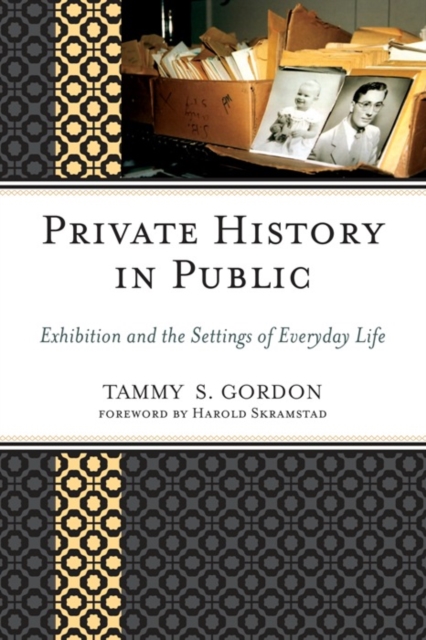
Private history in public
In small community museums, truck stops, restaurants, bars, barbershops, schools, and churches, people create displays to tell the histories that matter to them. Much of this history is personal: family history, community history, history of a trade, or the history of something considered less than genteel. It is often history based on the historical record, but also based on feelings, beliefs, and memory. It is neglected history. Private History in Public is about those history exhibits that complicate the public/private dichotomy, exhibits that serve to explain communities, families, and individuals to outsiders and tie insiders together through a shared narrative of historical experience. Tammy S. Gordon looks beyond the large professionalized museum exhibits that have dominated scholarship in museum studies and public history and offers a new way of understanding the broad spectrum of exhibition types in the United States.
eBook

Commemorating Canada : history, heritage, and memory, 1850s-1990s
\"Commemorating Canada is a concise narrative overview of the development of history and commemoration in Canada, designed for use in courses on public history, historical memory, heritage preservation, and related areas. Examining why, when, where, and for whom historical narratives have been important, Cecilia Morgan describes the growth of historical pageantry, popular history, textbooks, historical societies, museums, and monuments through the nineteenth and twentieth centuries. Showing how Canadians have clashed over conflicting interpretations of history and how they have come together to create shared histories, she demonstrates the importance of history in shaping Canadian identity. Though public history in both French and English Canada was written predominantly by white, middle-class men, Morgan also discusses the activism and agency of women, immigrants, and Indigenous peoples. The book concludes with a brief examination of present-day debates over Canada's history and Canadians' continuing interest in their pasts\"-- Provided by publisher.
Book

Contributing Citizens
A social and political history of Community Chests, and the development of Canada's welfare state.
eBook


The Information Front
The first book on the public relations efforts of the Canadian Army during the Second World War.
eBook