
Catalogue Search | MBRL


Are you sure you want to remove the book from the shelf?

{{itemTitle}}
131
result(s) for
"Public libraries -- Collection development -- United States"
Sort by:

Developing an outstanding core collection
In this practical handbook, newly updated for 2010, Carol Alabaster focuses on developing a collection with high-quality materials while saving time and money. She addresses key collection development questions, including What criteria are used to identify a core title? What is the process for making selections? How is a collection maintained and improved? How are core titles tracked in the library's acquisition and circulation systems? Packed with selection resources and sample core lists in seven subject areas, this soup-to-nuts manual will be useful whether you are starting from scratch or revitalizing an existing collection.
eBook
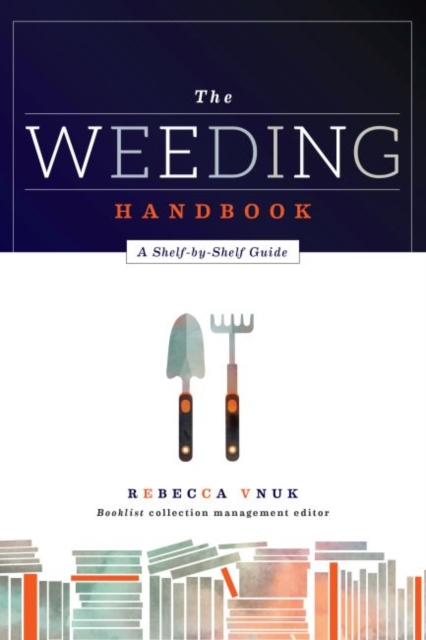
The weeding handbook
A library is an ever-changing organism; when done the right way, weeding helps a library thrive by focusing its resources on those parts of the collection that are the most useful to its users. This handbook takes the guesswork out of this delicate but necessary process, giving public and school library staff the knowledge and the confidence to effectively weed any collection, of any size.
eBook

Developing an outstanding core collection : a guide for libraries / Carol Alabaster
Libraries face challenges in selecting a nucleus of best books, while making sure their \"best of\" are actually used by library customers. This handbook offers step-by-step instructions on not only how to build a core collection from scratch but also how to maintain and revitalize an existing collection. Building on the basics, it offers advice on developing a collection policy statement, selecting user-appropriate sources and ultimately serving your constituency with the best possible collection.
eBook

Developing an outstanding core collection : a guide for libraries / Carol Alabaster
\"In this practical handbook, newly updated for 2010, Carol Alabaster focuses on developing a collection with high-quality materials while saving time and money. She addresses key collection development questions, including: What criteria are used to identify a core title? ; What is the process for making selections? ; How is a collection maintained and improved? ; How are core titles tracked in the library's acquisition and circulation systems? Packed with selection resources and sample core lists in seven subject areas, this soup-to-nuts manual will be useful whether you are starting from scratch or revitalizing an existing collection.\"--Page 4 of cover.
eBook

Studying Community Librarianship through Historical Writings on Public Library Programming Activities: American, British, and Anglo-Scandinavian Perspectives
This paper offers a historical perspective on community librarianship, diving into historical writings on programs and programming activities in a public library context since the 1920s from an American, a British, and a Scandinavian perspective. The paper aims to inform the understanding of programs and programming activities, identifying the underlying objectives and ideologies that have shaped this central part of community librarianship. By employing a synoptic approach to the study of these texts, the paper bridges terminological and conceptual differences, encompassing the educational, cultural, social, and informational aspects of public library programming. Based on the literature studied, four main objectives are identified: inspirational, educational, recreational, and relational. Moreover, the paper highlights how librarians have played a central role in driving the development of these services, stressing the importance of the interests and motivation of individuals. Reflecting on how such activities have been subjects of value-based discussions within the library professional field for over a century, this paper offers new insights into community librarianship. As such, it constitutes foundational work for future research and discussions within this field of study.
Journal Article
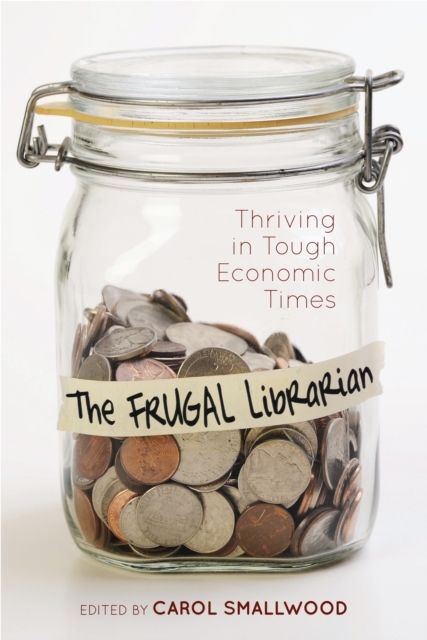
The frugal librarian
Fewer employees, shorter hours, diminished collection budgets, reduced programs and services all at a time of record library usage. Don t fret and fritter away scarce resources. Be frugal! In this book, library expert Smallwood persuasively demonstrates that the necessity of doing business differently can be positive. Presenting creative and resourceful solutions to universal concerns from dozens of librarians, representing a wide variety of institutions, this collection helps overtaxed library professionals * Find supplementary funding sources, including grants * Save money by sharing resources, using tiered staffing for technical services, and implementing green IT * Tap into grassroots movements to save neighborhood libraries * Preserve and enhance important library functions like programming, outreach, and staff development, despite a tight budget Partnering, sharing, innovating these are the watchwords for contemporary librarians in tough economic times, and this book offers plenty of ideas that can be implemented immediately.
eBook
Managing and analyzing your collection
If you can follow a cookbook, you can use these simple \"recipes\"—calculations, formulas, and measurements—to come up with statistics for analysis and management of your collection. Using measures of timeliness, relevancy, use percentages, user profiles, and comparisons, you can determine in quantitative ways the quality of your library's collection. From there, you can communicate its value to your customers and that's the name of the game!
eBook
