
Catalogue Search | MBRL


Are you sure you want to remove the book from the shelf?

{{itemTitle}}
2,289,612
result(s) for
"Public life"
Sort by:

Tips for public speaking
\"The ability to speak in front of an audience is a crucial skill in school, career, and life. Both the content of a good speech and the ways to conquer stage fright are examined in this guide to public speaking. Helpful tips in fact boxes, bulleted lists, and a colorful design will appeal to readers.\"--Amazon.com.
Book

Separated by Their Sex
InSeparated by Their Sex, Mary Beth Norton offers a bold genealogy that shows how gender came to determine the right of access to the Anglo-American public sphere by the middle of the eighteenth century. Earlier, high-status men and women alike had been recognized as appropriate political actors, as exemplified during and after Bacon's Rebellion by the actions of-and reactions to-Lady Frances Berkeley, wife of Virginia's governor. By contrast, when the first ordinary English women to claim a political voice directed group petitions to Parliament during the Civil War of the 1640s, men relentlessly criticized and parodied their efforts. Even so, as late as 1690 Anglo-American women's political interests and opinions were publicly acknowledged.
Norton traces the profound shift in attitudes toward women's participation in public affairs to the age's cultural arbiters, including John Dunton, editor of the Athenian Mercury, a popular 1690s periodical that promoted women's links to husband, family, and household. Fittingly, Dunton was the first author known to apply the word \"private\" to women and their domestic lives. Subsequently, the immensely influential authors Richard Steele and Joseph Addison (in the Tatler and the Spectator) advanced the notion that women's participation in politics-even in political dialogues-was absurd. They and many imitators on both sides of the Atlantic argued that women should confine themselves to home and family, a position that American women themselves had adopted by the 1760s. Colonial women incorporated the novel ideas into their self-conceptions; during such \"private\" activities as sitting around a table drinking tea, they worked to define their own lives. On the cusp of the American Revolution, Norton concludes, a newly gendered public-private division was firmly in place.
eBook


Power, participation, and patriarchy: a mixed-methods study of Palestinian women in political and public life with insights on health
Background
This study examines the extent and nature of Palestinian women’s political participation and leadership, highlighting the challenges they encounter in accessing and exercising power within political and public arenas. Despite formal policy advances, ongoing occupation, entrenched patriarchy, and political fragmentation continue to create significant barriers to meaningful political inclusion. Grounded in feminist institutionalism, the research analyzes how formal institutional frameworks and informal socio-cultural norms interact to shape women’s political engagement, while assessing the impact of gender equality policies within this complex socio-political landscape.
Methods
This study employs a qualitatively-driven mixed-methods design to examine women’s political participation in Palestine. Semi-structured interviews were conducted with a purposive sample of twenty Palestinian women—including politicians, activists, and policy experts—representing diverse backgrounds. Thematic analysis, using Braun and Clarke’s six-step framework, identified key themes related to barriers, enablers, and the perceived impact of gender-related policies. To contextualize these findings, quantitative data from official sources—such as the Palestinian Central Bureau of Statistics and the Central Elections Commission—were used to map national trends in women’s political representation.
Results
Findings reveal that while gender equality policies such as the creation of the Ministry of Women’s Affairs and legislative quotas have yielded formal achievements, these measures remain largely superficial and symbolic. Political power continues to be concentrated within patriarchal and elite networks, limiting genuine representation and influence of women, especially grassroots activists. Legal ambiguities and political repression further undermine women’s political engagement. Nevertheless, Palestinian women demonstrate resilience through creative resistance and continued activism in civil society and public spaces.
Conclusions
The study highlights the gap between formal gender equality policies and substantive political empowerment of women in Palestine, emphasizing the need for structural reforms that address institutional, cultural, and political barriers. Strengthening women’s political involvement is crucial not only for advancing gender justice but also for fostering inclusive governance in a fragmented and conflict-affected society. Future efforts should focus on amplifying grassroots voices, enhancing legal protections, and challenging patriarchal norms embedded within political institutions.
Journal Article


Physical Activity During Lockdowns Associated with the COVID-19 Pandemic: A Systematic Review and Multilevel Meta-analysis of 173 Studies with 320,636 Participants
Background
Many countries have restricted public life in order to contain the spread of the novel coronavirus (SARS-CoV2). As a side effect of related measures, physical activity (PA) levels may have decreased.
Objective
We aimed (1) to quantify changes in PA and (2) to identify variables potentially predicting PA reductions.
Methods
A systematic review with random-effects multilevel meta-analysis was performed, pooling the standardized mean differences in PA measures before and during public life restrictions.
Results
A total of 173 trials with moderate methodological quality (modified Downs and Black checklist) were identified. Compared to pre-pandemic, total PA (SMD − 0.65, 95% CI − 1.10 to − 0.21) and walking (SMD − 0.52, 95% CI − 0.29 to − 0.76) decreased while sedentary behavior increased (SMD 0.91, 95% CI: 0.17 to 1.65). Reductions in PA affected all intensities (light: SMD − 0.35, 95% CI − 0.09 to − 0.61,
p
= .013; moderate: SMD − 0.33, 95% CI − 0.02 to − 0.6; vigorous: SMD − 0.33, − 0.08 to − 0.58, 95% CI − 0.08 to − 0.58) to a similar degree. Moderator analyses revealed no influence of variables such as sex, age, body mass index, or health status. However, the only continent without a PA reduction was Australia and cross-sectional trials yielded higher effect sizes (
p
< .05).
Conclusion
Public life restrictions associated with the COVID-19 pandemic resulted in moderate reductions in PA levels and large increases in sedentary behavior. Health professionals and policy makers should therefore join forces to develop strategies counteracting the adverse effects of inactivity.
Journal Article

Trainweck : the women we love to hate, mock, and fear... and why /
\"From Mary Wollstonecraft--who, for decades after her death, was more famous for her illegitimate child and suicide attempts than for A Vindication of the Rights of Woman--to Charlotte Brontèe, Billie Holiday, Sylvia Plath, and even Hillary Clinton, [this book] dissects a centuries-old phenomenon and asks what it means now, in a time when we have unprecedented access to celebrities and civilians alike, and when women are pushing harder than ever against the boundaries of what it means to 'behave'\"--Amazon.com.
Book
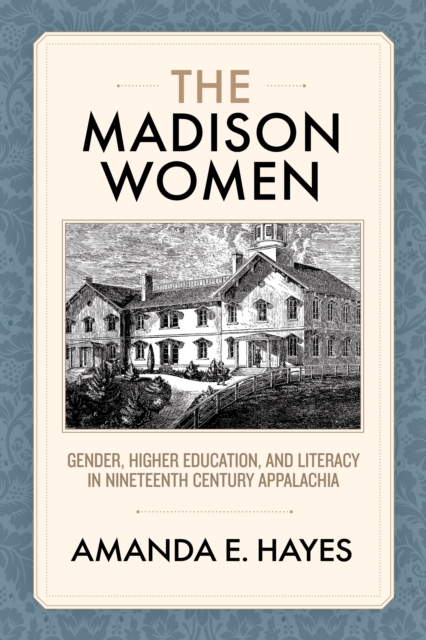
The Madison Women
By uncovering how higher education and gender roles evolved in Appalachia over time, The Madison Women delivers a history that contradicts the stereotype of the region as hostile to education, highlighting colleges that proliferated the area in the 19th century. Indeed, many of these colleges were either coeducational or even specifically for women, ultimately contradicting another stereotype--that Appalachia is a region particularly hostile toward women. Incorporating captivating mini-biographies of women who attended Madison College and who went on to change their communities in ways large and small, this book reveals how the lives of its students impart lessons about history, regional culture, and how we can shape the Appalachia's future.
eBook

I know places around town
\"Everyone has their favorite places around the community, whether it's the library or the ice cream shop. In this attractive book, readers visit the important--and fun!--places found in many towns and cities, including the police station and the playground. Vocabulary is reinforced as readers consider what these places look like where they live and which theyd like to visit.\"--Publisher's description.
Book

Genocide Lives in Us
In the aftermath of the 1994 genocide, Rwandan women faced the impossible—resurrecting their lives amidst unthinkable devastation. Haunted by memories of lost loved ones and of their own experiences of violence, women rebuilt their lives from “less than nothing.” Neither passive victims nor innate peacemakers, they traversed dangerous emotional and political terrain to emerge as leaders in Rwanda today. This clear and engaging ethnography of survival tackles three interrelated phenomena—memory, silence, and justice—and probes the contradictory roles women played in postgenocide reconciliation. Based on more than a decade of intensive fieldwork,
Genocide Lives in Us provides a unique grassroots perspective on a postconflict society. Anthropologist Jennie E. Burnet relates with sensitivity the heart-wrenching survival stories of ordinary Rwandan women and uncovers political and historical themes in their personal narratives. She shows that women’s leading role in Rwanda’s renaissance resulted from several factors: the dire postgenocide situation that forced women into new roles; advocacy by the Rwandan women’s movement; and the inclusion of women in the postgenocide government. Honorable Mention, Aidoo-Snyder Book Prize, Women’s Caucus of the African Studies Association
eBook