
Catalogue Search | MBRL


Are you sure you want to remove the book from the shelf?

{{itemTitle}}
527
result(s) for
"Puppet plays."
Sort by:

The three billy goats Gruff : a make & play production
Hear ye! Hear ye! Sock Puppet Theater Presents The Three Billy Goats Gruff! Now it's a snap to make simple, adorable puppets, key props, and the perfect stage for bringing this classic fairy tale to life. But that's not all! As an added bonus, this book also includes a fun starter script, helpful acting and performance tips, and clever suggestions for making your play truly unique. With Sock Puppet Theater, you hold in your hands everything needed to get your puppeteer career started on the right foot!
Book
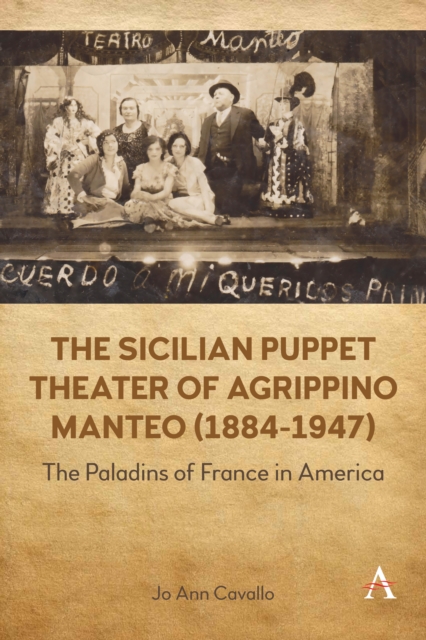
The Sicilian Puppet Theater of Agrippino Manteo (1884-1947)
Sicilian puppet theater was the predominant form of cultural expression for working-class southern Italians and Sicilians from the early 1800s until the proliferation of television in the 1950s. This form of dramatic prose theater also flourished in diasporic Italian urban communities, bringing immigrants together for nightly performances of the same deeply cherished chivalric stories. Agrippino Manteo's scripts, examined for the first time in this study, are testimony to the rich substance of the Paladins of France narratives dramatized on the traditional opera dei pupistage. Even beyond their historical and aesthetic value, the alternating episodes of love, enchantment, adventure, and warfare invite us to relive the passion, heartbreak, excitement, and magic of knights and damsels from around the globe – from Europe to North Africa to East Asia – who share the stage with a host of wizards, fairies, giants, and monsters. This study reconstructs the history of the Manteo family marionette theater in New York City across seven decades and three generations, provides translations of eight selected plays and 270 extant summaries, and offers comparative analyses uncovering the creative process of adaptation from Italian Renaissance masterpieces of chivalric poetry to nineteenth-century prose compilations to Agrippino Manteo's opera dei pupi dramatizations.
eBook

Margaret Hillert's Let's have a play
\"On a rainy day, two children decide to make paper-bag puppets and put on a play for themselves and their parents\"--Provided by publisher.
Book

Chinese Shadow Theatre
Chinese Shadow Theatre includes several rare transcriptions of oral performances, including a didactic play on the Eighteen Levels of Hell, and Investiture of the Gods, a sacred saga, and translations of three rare, hand-copied shadow plays featuring religious themes and women warrior characters.
eBook

Making puppets
In this book, readers learn how to create their very own puppets out of materials that are easily accessible, such as socks, spoons, and cups. Brilliant color photographs detail each step in the process, as readers learn how to turn basic materials into lion, bear, and fish puppets, and even a mermaid marionette. Straightforward text and step-by-step instructions help readers gain an understanding of the craft and how it's made.
Book


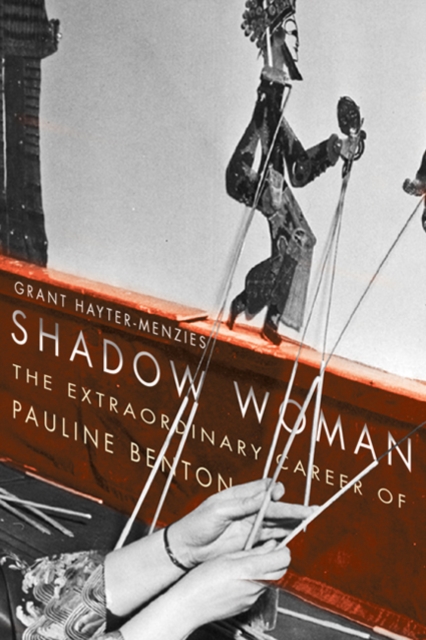
Shadow Woman
Kansas-born Pauline Benton (1898-1974) was encouraged by her father, one of America's earliest feminist male educators, to reach for the stars. Instead, she reached for shadows. In 1920s Beijing, she discovered shadow theatre (piyingxi), a performance art where translucent painted puppets are manipulated by highly trained masters to cast coloured shadows against an illuminated screen. Finding that this thousand-year-old forerunner of motion pictures was declining in China, Benton believed she could save the tradition by taking it to America. Mastering the male-dominated art form in China, Benton enchanted audiences eager for the exotic in Depression-era America. Her touring company, Red Gate Shadow Theatre, was lauded by theatre and art critics and even performed at Franklin Roosevelt's White House. Grant Hayter-Menzies traces Benton's performance history and her efforts to preserve shadow theatre as a global cultural treasure by drawing on her unpublished writings, the recollections of her colleagues, the testimonies of shadow masters who survived China's Cultural Revolution, as well as young innovators who have carried on Benton's pioneering work.
eBook

Mozart, the wonder child : a puppet play in three acts
Provides an innovative artistic approach to present the life and career of the composer Wolfgang Mozart.
BOOK

The Victorian Marionette Theatre
In this fascinating and colorful book, researcher and performer John McCormick focuses on the marionette world of Victorian Britain between its heyday after 1860 and its waning years from 1895 to 1914. Situating the rich and diverse puppet theatre in the context of entertainment culture, he explores both the aesthetics of these dancing dolls and their sociocultural significance in their life and time.
The history of marionette performances is interwoven with live-actor performances and with the entire gamut of annual fairs, portable and permanent theatres, music halls, magic lantern shows, waxworks, panoramas, and sideshows. McCormick has drawn upon advertisements in theEra, an entertainment paper, between the 1860s and World War I, and articles in theWorld's Fair, a paper for showpeople, in the first fifty years of the twentieth century, as well as interviews with descendants of the marionette showpeople and close examinations of many of the surviving puppets.
McCormick begins his study with an exploration of the Victorian marionette theatre in the context of other theatrical events of the day, with proprietors and puppeteers, and with the venues where they performed. He further examines the marionette's position as an actor not quite human but imitating humans closely enough to be considered empathetic; the ways that physical attributes were created with wood, paint, and cloth; and the dramas and melodramas that the dolls performed. A discussion of the trick figures and specialized acts that each company possessed, as well as an exploration of the theatre's staging, lighting, and costuming, follows in later chapters. McCormick concludes with a description of the last days of marionette theatre in the wake of changing audience expectations and the increasing popularity of moving pictures.
This highly enjoyable and readable study, often illuminated by intriguing anecdotes such as that of the Armenian photographer who fell in love with and abducted the Holden company's Cinderella marionette in 1881, will appeal to everyone fascinated by the magic of nineteenth-century theatre, many of whom will discover how much the marionette could contribute to that magic.
eBook