
Catalogue Search | MBRL


Are you sure you want to remove the book from the shelf?

{{itemTitle}}
3,874
result(s) for
"Puppets"
Sort by:

Louie
Susie and Roberto's puppet show is temporarily interrupted when Louis becomes fascinated by one of the puppets.
Book
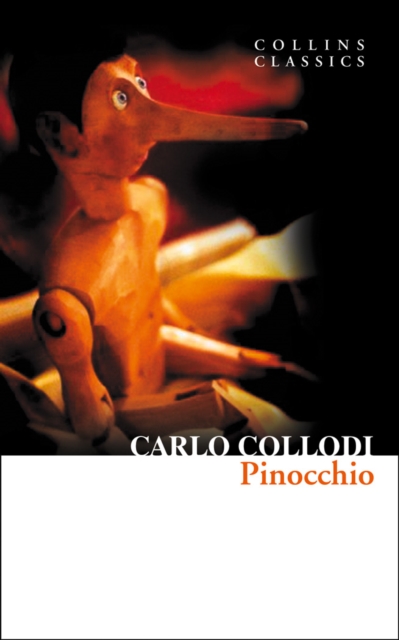
Pinocchio
HarperCollins is proud to present its incredible range of best-loved, essential classics.\"But I am not like other boys! I always tell the truth.\"The story of Pinocchio has remained one of the best-loved children's tales for over a century. However, the original 1883 novel about the adventures of the mischievous marionette on his quest to become a real boy began as a sophisticated story for both adults and children, and includes political satire, slapstick humour and questions about the role of tradition and society. From the moment Geppetto decides to carve himself a son from a magical piece of wood, the tale lurches from one fantastical episode to another, in one of the most enchanting fables of all time.
eBook

Pinocchio
Presents the adventures of Pinocchio, a mischievous wooden puppet, who wants more than anything else to become a real boy.
Book

Shadow Woman
Kansas-born Pauline Benton (1898-1974) was encouraged by her father, one of America's earliest feminist male educators, to reach for the stars. Instead, she reached for shadows. In 1920s Beijing, she discovered shadow theatre (piyingxi), a performance art where translucent painted puppets are manipulated by highly trained masters to cast coloured shadows against an illuminated screen. Finding that this thousand-year-old forerunner of motion pictures was declining in China, Benton believed she could save the tradition by taking it to America. Mastering the male-dominated art form in China, Benton enchanted audiences eager for the exotic in Depression-era America. Her touring company, Red Gate Shadow Theatre, was lauded by theatre and art critics and even performed at Franklin Roosevelt's White House. Grant Hayter-Menzies traces Benton's performance history and her efforts to preserve shadow theatre as a global cultural treasure by drawing on her unpublished writings, the recollections of her colleagues, the testimonies of shadow masters who survived China's Cultural Revolution, as well as young innovators who have carried on Benton's pioneering work.
eBook

The monster at the end of this book
Grover worries page by page about meeting the monster at the end of this book.
Book
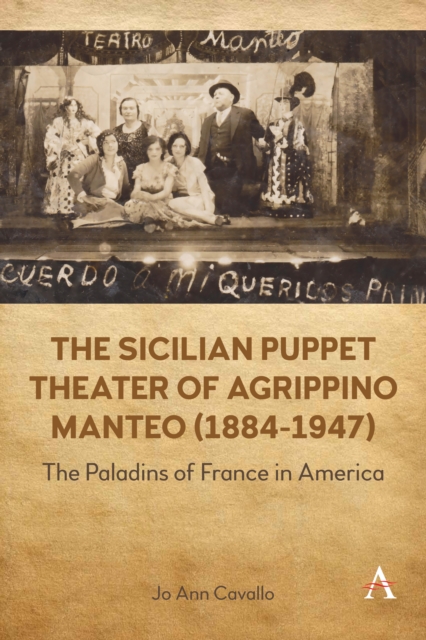
The Sicilian Puppet Theater of Agrippino Manteo (1884-1947)
Sicilian puppet theater was the predominant form of cultural expression for working-class southern Italians and Sicilians from the early 1800s until the proliferation of television in the 1950s. This form of dramatic prose theater also flourished in diasporic Italian urban communities, bringing immigrants together for nightly performances of the same deeply cherished chivalric stories. Agrippino Manteo's scripts, examined for the first time in this study, are testimony to the rich substance of the Paladins of France narratives dramatized on the traditional opera dei pupistage. Even beyond their historical and aesthetic value, the alternating episodes of love, enchantment, adventure, and warfare invite us to relive the passion, heartbreak, excitement, and magic of knights and damsels from around the globe – from Europe to North Africa to East Asia – who share the stage with a host of wizards, fairies, giants, and monsters. This study reconstructs the history of the Manteo family marionette theater in New York City across seven decades and three generations, provides translations of eight selected plays and 270 extant summaries, and offers comparative analyses uncovering the creative process of adaptation from Italian Renaissance masterpieces of chivalric poetry to nineteenth-century prose compilations to Agrippino Manteo's opera dei pupi dramatizations.
eBook

Making puppets
Provides step-by-step instructions for making a variety of puppets, including finger puppets, sock puppets, and marionettes.
Book


I spy : a game to read and play
The reader is asked to guess what is being described in different illustrations featuring Sesame Street characters.
Book

How infants and toddlers react to antisocial others
Although adults generally prefer helpful behaviors and those who perform them, there are situations (in particular, when the target of an action is disliked) in which overt antisocial acts are seen as appropriate, and those who perform them are viewed positively. The current studies explore the developmental origins of this capacity for selective social evaluation. We find that although 5-mo-old infants uniformly prefer individuals who act positively toward others regardless of the status of the target, 8-mo-old infants selectively prefer characters who act positively toward prosocial individuals and characters who act negatively toward antisocial individuals. Additionally, young toddlers direct positive behaviors toward prosocial others and negative behaviors toward antisocial others. These findings constitute evidence that the nuanced social judgments and actions readily observable in human adults have their foundations in early developing cognitive mechanisms.
Journal Article