
Catalogue Search | MBRL


Are you sure you want to remove the book from the shelf?

{{itemTitle}}
157
result(s) for
"Puppets Poetry."
Sort by:

I think that it is wonderful : and other poems from Sesame Street
The Muppets present thirteen poems about happiness, embarrassment, solitude, and imagination.
Book

Chinese Shadow Theatre
Chinese Shadow Theatre includes several rare transcriptions of oral performances, including a didactic play on the Eighteen Levels of Hell, and Investiture of the Gods, a sacred saga, and translations of three rare, hand-copied shadow plays featuring religious themes and women warrior characters.
eBook

The performing arts in medieval Islam : shadow play and popular poetry in Ibn Dāniyāl's Mamluk Cairo
Drawing on medieval Arabic sources and earlier scholarship, this book is a study of the life and work of Ibn Dāniyāl (d. 1310). It also presents the first full English translation of his shadow play \"The Phantom.\".
eBook

Wayang Kulit Kelantan: A Study of Characterization and Puppets
This paper examines the principal characters of the Malay versions (Hikayat Seri Rama and Hikayat Maharaja Wana) of the Hindu epic Ramayana, which provides the source material for the Malaysian shadow play, wayang kulit kelantan. The characters are organized into several categories according to whether they are gods, human beings, demons, apes, or lesser creatures. Following that, the paper makes an analysis of eleven characters selected from the categories mentioned, as well as puppets representing them, through the Indonesian-Malay halus-kasar (refined-coarse) theory of aesthetics. Although important and appropriate to proper appreciation of Indonesian and Malay arts forms, the theory has not previously been applied to wayang kulit kelantan. Ghulam-Sawar Yousof is a noted specialist who wntes extensively on traditional Southeast Asian theatre. He set up Malaysia's first performing arts program at the Science University of Malaysia in Penang in 1970 and has lectured in many other institutions. He joined the Cultural Centre, University of Malaya, as a professor in 2002 and is currently an adjunct professor there. He is director of the Asian Cultural Heritage Centre Berhad, a private research initiative to promote research in traditional Asian cultures. Kheng-Kia Khor is an assistant professor in the Faculty of Arts and Social Science at Universiti Tunku Abdul Rahman in Perak, Malaysia. He holds a doctorate in visual arts from the University of Malaya, where his dissertation focused on applications of computer-generated imagery to capture wayang kulit kelantan performance.
Journal Article

\The workman, sir! The artificer!\: Artifice, Theater, and Puppets Performing in Ben Jonson's \Bartholomew Fair\ and \A Tale of A Tub\
Framed by an examination of Ben Jonson’s collaborations with Inigo Jones and the puppet show in Bartholomew Fair , this article examines the shadow puppet masque at the end of A Tale of a Tub (1633). In this puppet-masque, Jonson engages with the problem of the artificiality of the stage and the intrinsic link between art and artifice in performance. Despite his attempts to render a separation between the two, A Tale of a Tub ultimately fails to reconcile Jonson’s artistic vision of a poet separated from the craftsman who builds the spectacle.
Journal Article

The Arab Aristophanes
The author discusses the work and life of 13th-century Egyptian poet and playwright Ibn Daniyal, already known for his poetry written in Arabic, but now rediscovered for his works for puppet theater. Carlson also considers Ibn Daniyal's third play \"The Love-Stricken One and the Lost One Who Inspires Passion\" focusing on its parallels with the structure of plays by Aristophanes. He questions whether it was possible that Aristophanes' work actually influenced that of Ibn Daniyal.
Journal Article

The Monk's Daughter and Her Suitor: An Egyptian Shadow Play of Interfaith Romance and Insanity
The Egyptian shadow play commonly known asʿAlam wa-Taʿādīrtells the story of a Coptic monk whose daughter falls in love with a Muslim merchant. Since its initial discovery in the 1900s, this remarkable play has slipped into oblivion. This article presents a survey of earlier research, an outline of the layers of the composite text based on all known textual and visual testimonies, an analysis of the building blocks—themedzajalsong-cycles—and a summary of the sole working script that features dialogue as well. These findings will hopefully form a solid foundation for future research into this work, which in many ways is representative of Egyptian shadow plays in the Ottoman and early modern times.
Journal Article

Rilke's Fourth Duino Elegy as Philo-poetic Dialectic
Rilke's Fourth Duino Elegy (1915) offers a poetic solution to the philosophical problem of self-consciousness posed by Kleist's 1810 essay “On the Marionette Theater” (“Über das Marionettentheater”). Although it is well known that philosophical concepts inform Rilke's poetry, most criticism has failed to pay adequate attention to the poet's contributions to philosophical inquiry. After all, it is simpler to present a poetic interpretation “from” a philosophical perspective than to present one that speaks to a philosophical problem. However, a close examination of Elegy IV demonstrates not merely a poetic reinterpretation of a philosophical problem but a significant contribution to and reconfiguration of one.
Journal Article

WRITING & PERFORMANCE
In a special issue commemorating 50 years of the arts community in downtown New York City, artists, curators, academics and critics that have worked in the area over the period outline their thinking about the relationship between writing and performance, with particular reference to its reflection in the work and creative process.
Journal Article
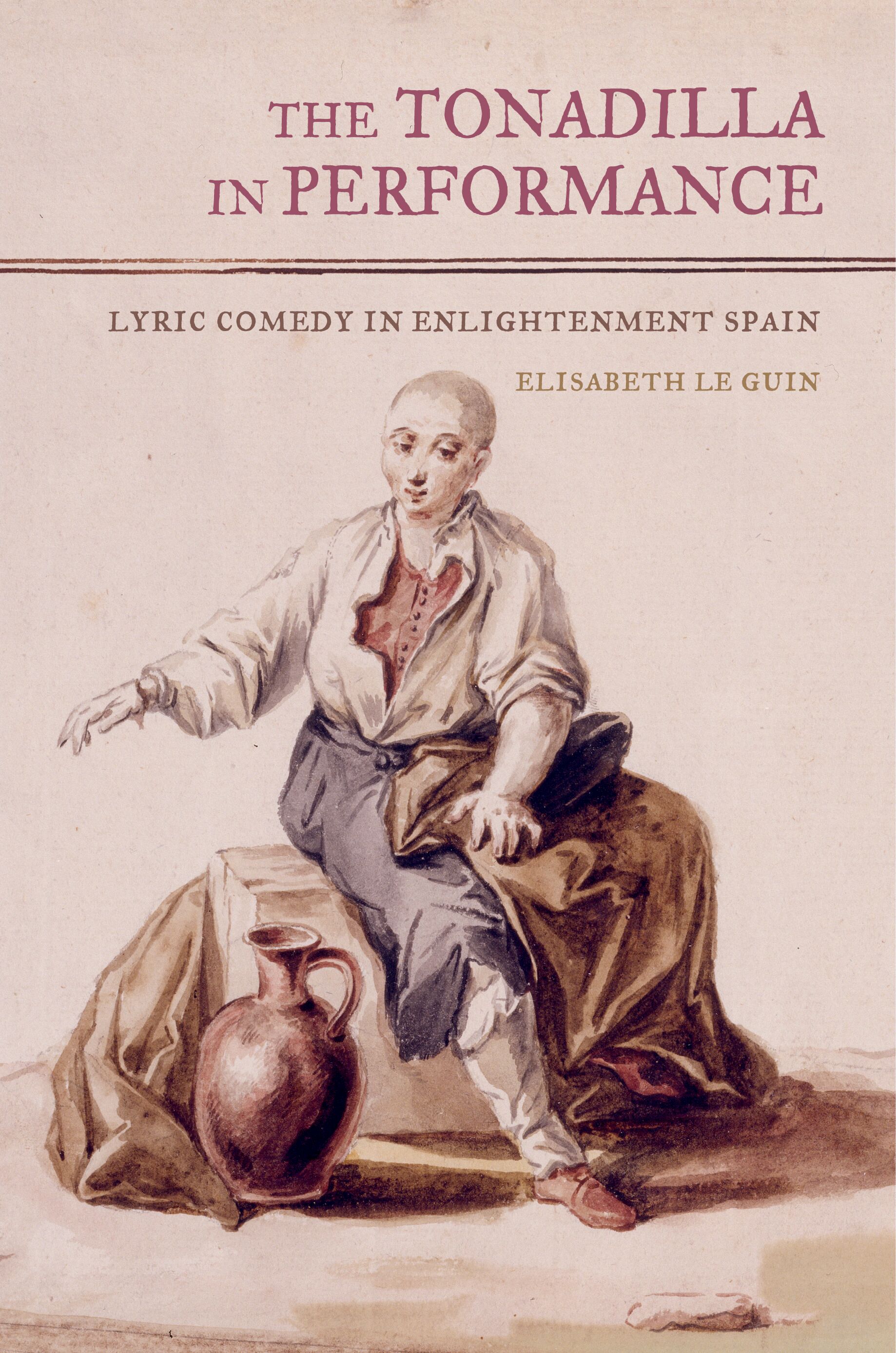
The tonadilla in performance
The tonadilla, a type of satiric musical skit popular on the public stages of Madrid during the late Enlightenment, has played a significant role in the history of music in Spain. This book, the first major study of the tonadilla in English, examines the musical, theatrical, and social worlds that the tonadilla brought together and traces the lasting influence this genre has had on the historiography of Spanish music. The tonadillas' careful constructions of musical populism provide a window onto the tensions among Enlightenment modernity, folkloric nationalism, and the politics of representation; their diverse, engaging, and cosmopolitan music is an invitation to reexamine tired old ideas of musical \"Spanishness.\" Perhaps most radically of all, their satirical stance urges us to embrace the labile, paratextual nature of comic performance as central to the construction of history.
eBook