
Catalogue Search | MBRL


Are you sure you want to remove the book from the shelf?

{{itemTitle}}
22
result(s) for
"Puritans -- Massachusetts -- History -- 17th century"
Sort by:

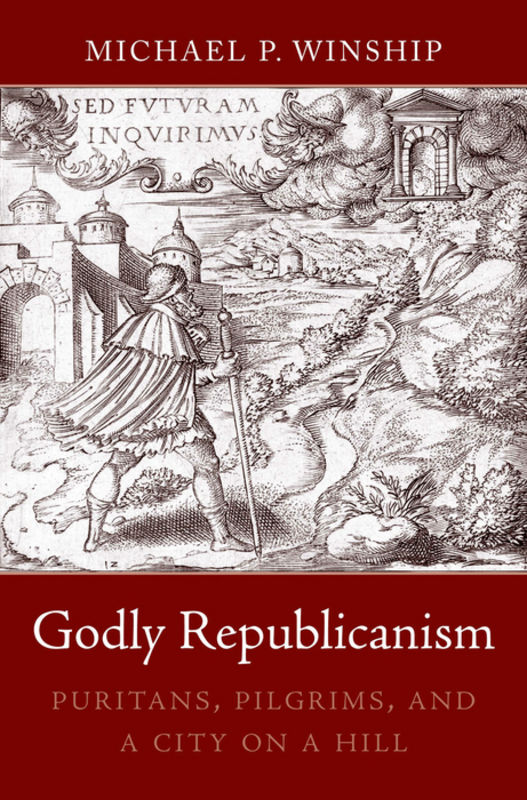
Godly republicanism : puritans, pilgrims, and a city on a hill
Puritans did not find a life free from tyranny in the New World--they created it there. Massachusetts emerged a republic as they hammered out a vision of popular participation and limited government in church and state, spurred by Plymouth Pilgrims. Godly Republicanism underscores how pathbreaking yet rooted in puritanism's history the project was.
eBook

Faithful bodies : performing religion and race in the Puritan Atlantic
\"In the seventeenth-century English Atlantic, religious beliefs and practices played a central role in creating racial identity. English Protestantism provided a vocabulary and structure to describe and maintain boundaries between insider and outsider. In this path-breaking study, Heather Miyano Kopelson peels back the layers of conflicting definitions of bodies and competing practices of faith in the Puritan Atlantic, demonstrating how the categories of 'white,' 'black,' and 'Indian' developed alongside religious boundaries between 'Christian' and 'heathen' and between 'Catholic' and 'Protestant.' Faithful Bodies focuses on three communities of Protestant dissent in the Atlantic World: Bermuda, Massachusetts, and Rhode Island. In this 'Puritan Atlantic,' religion determined insider and outsider status: at times Africans and Natives could belong as long as they embraced the Protestant faith, while Irish Catholics and English Quakers remained suspect. Colonists' interactions with indigenous peoples of the Americas and with West Central Africans shaped their understandings of human difference and its acceptable boundaries. Prayer, religious instruction, sexual behavior, and other public and private acts became markers of whether or not Blacks and Indians were sinning Christians or godless heathens. As slavery became law, transgressing people of color counted less and less as sinners in English Puritans' eyes, even as some of them made Christianity an integral part of their communities. As Kopelson shows, this transformation proceeded unevenly but inexorably during the long seventeenth century\"-- Provided by publisher.
Book

John Winthrop
John Winthrop's effort to create a Puritan \"City on a Hill\" has had a lasting effect on American values, and many remember this phrase famously quoted by the late Ronald Reagan. However, most know very little about the first American to speak these words.Here, Francis J. Bremer draws on over a decade of research to offer a superb biography of Winthrop, who, more than anyone else shaped the culture of early New England. Bremer provides a path-breaking treatment of the first governor of the Massachusetts Bay Colony's family background, youthful development, and English career. His dissatisfaction with the decline of the \"godly kingdom of the Stour Valley\" in which he had been raised led him on his errand to rebuild such a society in a new England. We see the personal side of Winthrop--the doubts and concerns of the spiritual pilgrim and his everyday labors and pleasures. Bremer also sheds much light on important historical moments in England and America, such as the Reformation and the rise of Puritanism, and colonial relations with Native Americans.
eBook

They Knew They Were Pilgrims
An ambitious new history of the Pilgrims and Plymouth Colony, published for the 400th anniversary of theMayflower's landing In 1620, separatists from the Church of England set sail across the Atlantic aboard theMayflower. Understanding themselves as spiritual pilgrims, they left to preserve their liberty to worship God in accordance with their understanding of the Bible. There exists, however, an alternative, more dispiriting version of their story. In it, the Pilgrims are religious zealots who persecuted dissenters and decimated the Native peoples through warfare and by stealing their land. The Pilgrims' definition of liberty was, in practice, very narrow. Drawing on original research using underutilized sources, John G. Turner moves beyond these familiar narratives in his sweeping and authoritative new history of Plymouth Colony. Instead of depicting the Pilgrims as otherworldly saints or extraordinary sinners, he tells how a variety of English settlers and Native peoples engaged in a contest for the meaning of American liberty.
eBook

Transgressing the bounds : subversive enterprises among the Puritan elite in Massachusetts, 1630-1692
This book examines the divisions in Massachusetts over the colony's social and religious boundaries and its relationship to the transatlantic world in the period 1638–92. Central actors are leading men who congregated in the Artillery Company of Massachusetts, an organization that attracted a heterogeneous yet prominent membership – a membership whose diversity and cosmopolitanism contrasted with the social and religious ideals of the cultural majority. Focusing on elite men – not marginalized outsiders – who endeavored to stretch the intellectual and social bounds of orthodoxy, the book demonstrates that the dangers posed by the outside world and various sorts of “others” were perceived in very similar terms over the course of the seventeenth century. The tendency to form opposing factions, insisting both on isolation from that world and involvement in its growing diversity, also remained relatively constant, from the antinomian controversy of the 1630s through the witchcraft epidemic of 1692. The old declension model suggested that Massachusetts fell away from its original purity as alien outside forces impinged ever more heavily on its residents. This study argues rather that dueling versions of the good life, which pitted localism against cosmopolitanism and homogeneity against heterogeneity, competed with one another persistently throughout the century and beyond.
eBook
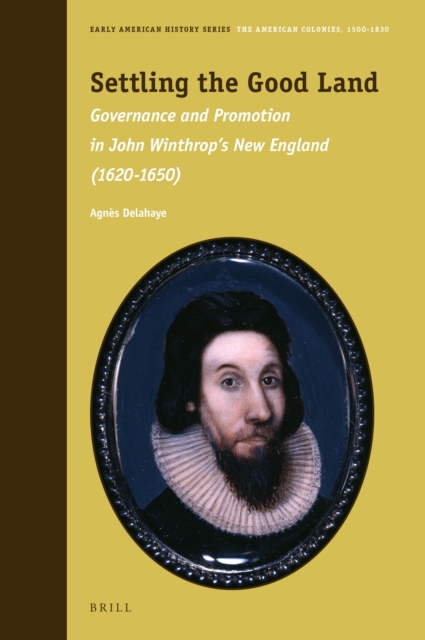
Settling the good land : governance and promotion in John Winthrop's New England (1620-1650)
\"Settling the Good Land: Governance and Promotion in John Winthrop's New England (1620-1650) is the first institutional history of the Massachusetts Bay Company, cornerstone of early modern English colonisation in North America. Agnès Delahaye analyses settlement as a form of colonial innovation, to reveal the political significance of early New England sources, above and beyond religion. John Winthrop was not just a Puritan, but a settler governor who wrote the history of the expansion of his company as a record of successful and enduring policy. Delahaye argues that settlement, as the action and the experience of appropriating the land, is key to understanding the role played by Winthrop's writings in American historiography, before independence and in our times\"--.
eBook
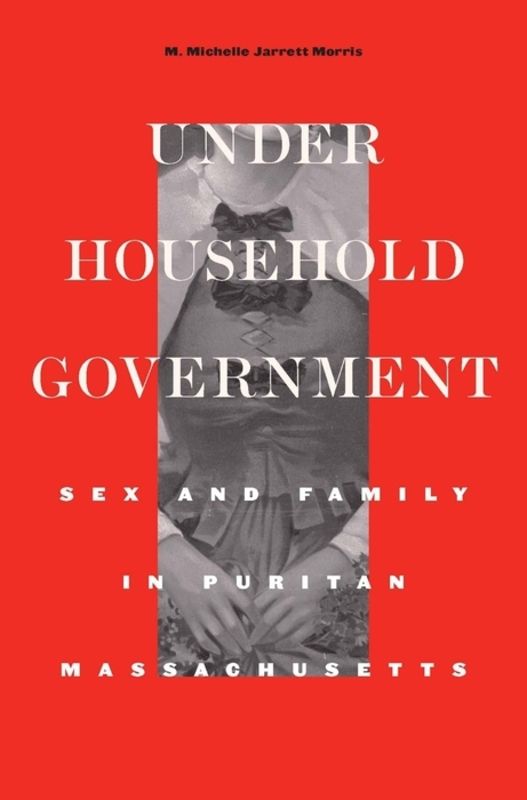
Under household government : sex and family in Puritan Massachusetts
The Puritans were not as busy policing their neighbors' behavior as Nathaniel Hawthorne or many early American historians would have us believe. Keeping their own households in line occupied too much of their time. Under Household Government reveals that family members took on the role of watchdogs in matters of sexual indiscretion.
eBook


Faithful Bodies
In the seventeenth-century English Atlantic, religious beliefs and practices played a central role in creating racial identity. English Protestantism provided a vocabulary and structure to describe and maintain boundaries between insider and outsider. In this path-breaking study, Heather Miyano Kopelson peels back the layers of conflicting definitions of bodies and competing practices of faith in the puritan Atlantic, demonstrating how the categories of white, black, and Indian developed alongside religious boundaries between Christian and heathen and between Catholic and Protestant.Faithful Bodiesfocuses on three communities of Protestant dissent in the Atlantic World: Bermuda, Massachusetts, and Rhode Island. In this puritan Atlantic, religion determined insider and outsider status: at times Africans and Natives could belong as long as they embraced the Protestant faith, while Irish Catholics and English Quakers remained suspect. Colonists interactions with indigenous peoples of the Americas and with West Central Africans shaped their understandings of human difference and its acceptable boundaries. Prayer, religious instruction, sexual behavior, and other public and private acts became markers of whether or not blacks and Indians were sinning Christians or godless heathens. As slavery became law, transgressing people of color counted less and less as sinners in English puritans eyes, even as some of them made Christianity an integral part of their communities. As Kopelson shows, this transformation proceeded unevenly but inexorably during the long seventeenth century.
eBook