
Catalogue Search | MBRL


Are you sure you want to remove the book from the shelf?

{{itemTitle}}
125
result(s) for
"Pushtuns."
Sort by:

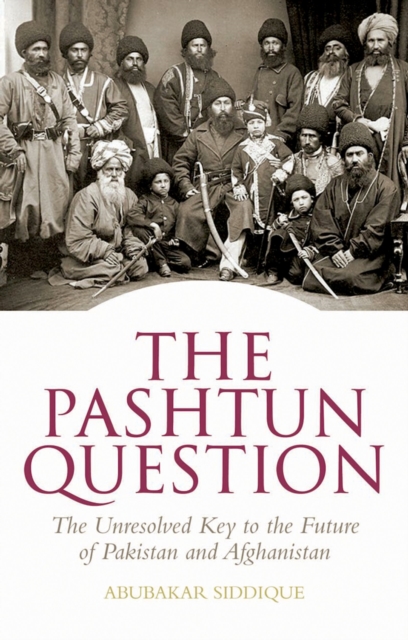
Pashtun Question: The Unresolved Key to the Future of Pakistan and Afghanistan: The Unresolved Key to the Future of Pakistan and Afghanistan
Most contemporary journalistic and scholarly accounts of the instability gripping Afghanistan and Pakistan have argued that violent Islamic extremism, including support for the Taliban and related groups, is either rooted in Pashtun history and culture, or finds willing hosts among their communities on both sides of the Afghanistan-Pakistan border. Abubakar Siddique sets out to demonstrate that the failure, or even unwillingness, of both Afghanistan and Pakistan to absorb the Pashtuns into their state structures and to incorporate them into the economic and political fabric is central to these dynamics, and a critical failure of nation- and state-building in both states. In his book he argues that religious extremism is the product of these critical failures and that responsibility for the situation lies to some degree with the elites of both countries. Partly an eye-witness account and partly meticulously researched scholarship, The Pashtun Question describes a people whose destiny will shape the future of Pakistan and Afghanistan.
eBook


Association of IAPOE/I Variants with Myocardial Infarction in the Pashtun Ethnic Population of Khyber Pakhtunkhwa, Pakistan
Coronary Artery Diseases (CAD) remains the top among Non-communicable Diseases (NCDs). Variations in Apolipoprotein E (APOE) and Paroxonase 1 (PON1) have been associated with Myocardial Infarction (MI) in several populations. However, despite the high prevalence of CAD, no such study has been reported in the Pashtun ethnic population of Pakistan. We have conducted a two-stage (i.e., screening and validation) case-control study in which 200 cases and 100 control subjects have been recruited. In the first stage, Whole Exome Sequencing (WES) was used to screen for pathogenic variants of Myocardial Infarction (MI). In the second stage, selected variants of both APOE and PON1 genes (rs7412, rs429358, rs854560, and rs662) were analyzed through MassARRAY genotyping. Risk Allele Frequencies (RAFs) distribution and association of the selected SNPs with MI were determined using the Chi-square test and logistic regression analysis. WES identified a total of 12 sequence variants in APOE and 16 in PON1. Genotyping results revealed that APOE variant rs429358 (ɛ4 allele and ɛ3/ɛ4 genotype) showed significant association in MI patients (OR = 2.11, p value = 0.03; 95% CI = 1.25–2.43); whereas no significant difference (p˃ 0.05) was observed for rs7412. Similarly, the R allele of PON1 Q192R (rs662) was significantly associated with cases (OR = 1.353, p value = 0.048; 95% CI = 0.959–1.91), with particular mention of RR genotype (OR = 1.523, p value = 0.006; 95% CI = 1.087–2.132). Multiple logistic regression analysis showed that rs429358 (C allele) and rs662 (R allele) have a significantly higher risk of MI after adjustment for the conventional risk factors. Our study findings suggested that the rs429358 variant of APOE and PON1 Q192R are associated with MI susceptibility in the Pashtun ethnic population of Pakistan.
Journal Article

Crafting masculine selves : culture, war, and psychodynamics among Afghan Pashtuns
Against the backdrop of four decades of continuous conflict in Afghanistan, the Pashtun male protagonists of this book carry out their daily effort to internally negotiate, adjust (if at all), and respond to the very strict cultural norms and rules of masculinity that their androcentric social environment enjoins on them. Yet, in a widespread context of war, displacement, relocation, and social violence, cultural expectations and stringent tenets on how to comport oneself as a \"real man\" have a profound impact on the psychological equilibrium and emotional dynamics of these individuals. This book is a close investigation into these private and at times contradictory aspects of subjectivity. Stemming from five years of research in a southeastern province of Afghanistan, it presents a long-term, psychodynamic engagement with a select group of male Pashtun individuals, which results in a multilayered dive not only into their inner lives, but also into the cultural and social environment in which they live and develop. Behind the screen of what often seems like outward conformity, Andrea Chiovenda is able to point to areas of strong inner conflict, ambivalence, and rebellion, which in turn will serve as the seeds for cultural and social change. These dynamics play out in a setting in which what was considered legitimate and justifiable violence on the battlefield has now spilled over into everyday life, even among non-combatants.
Book


Arc of the journeyman : Afghan migrants in England
\"A monumental account of one migrant community's everyday lives, struggles, and aspirations\"-- Provided by publisher.
BOOK

Crafting Masculine Selves
Crafting Masculine Selves represents a journey into the culture and psychological dynamics of a select group of Afghan Pashtun men. The book is based on eighteen months of fieldwork in a volatile area of Afghanistan, adjoining the border with Pakistan, carried out between 2009 and 2013. In addition to participant observation, the author employed a person-centered ethnographic methodology, wherein he conducted long-term, one-on-one interview sessions with four male individuals, and analyzed four additional life trajectories. The book unveils and chronicles how the creation and use of multiple subjectivities, and the unconscious, dissociative interplay that the individual maintains between them, is one of the “stratagems” with which individuals manage to make sense of what happens to them in real life, and to pragmatically inhabit personal circumstances that are often marred by conflict and violence, both at the interpersonal and at the political level. The main cultural thread the book investigates is that of masculinity, a crucial idiom in a very androcentric Pashtun society. Virtually all the interlocutors the book presents have to navigate deep private conflicts and contradictions related to how society expects them to be appropriate, proper men, against the backdrop of a sociopolitical Afghan context heavily impacted by almost forty years of uninterrupted war. Feeling constrained by the strict norms about a severe and honor-bound masculinity in a quickly changing Afghanistan, but equally striving to be culturally validated by their own peers, these men struggle to create and publicly legitimize their own, idiosyncratic way of being appropriate men. While they suffer at times the stern rebuke of their social environment, all the same they represent the seeds for a change of those very cultural norms.
eBook

The defiant border : the Afghan-Pakistan borderlands in the era of decolonization, 1936-65
\"The Defiant Border explores why the Afghan-Pakistan borderlands have remained largely independent of state controls from the colonial period into the twenty-first century. This book looks at local Pashtun tribes' modes for evading first British colonial, then Pakistani, governance; the ongoing border dispute between Pakistan and Afghanistan; and continuing interest in the region from Indian, US, British, and Soviet actors. It reveals active attempts first by British, then by Pakistani, agents to integrate the tribal region, ranging from development initiatives to violent suppression. The Defiant Border also considers the area's influence on relations between Pakistan, Afghanistan, and India, as well as its role in the United States' increasingly global Cold War policies. Ultimately, the book considers how a region so peripheral to major centers of power has had such an impact on political choices throughout the eras of empire, decolonization, and superpower competition, up to the so-called 'War on Terror.' One of the only historical studies of Pakistan's Pashtun tribal area (post-1947), which complements existing anthropological literature on the region and histories of the colonial era to provide readers with a fuller understanding of the region. Integrates histories of South Asia, decolonization, and the global Cold War, which provides readers with a holistic view of the region by recognizing the interconnections between international diplomacy, regional developments, subaltern movements, and colonial legacies. Considers the impact of non-state actors--Pashtun tribes--on South Asian state-building, which complements work done on state-building in India, extends understanding of the impact of peripheral areas on state power and practice, and expands understanding of the history of Pakistan\"--From publisher's website.
Book

The Pashtun Question
Author argues that the failure of Pakistan and Afghanistan to absorb Pashtuns into their sate structures and societies has been a critical failure of nation- and state-building.
eBook