
Catalogue Search | MBRL


Are you sure you want to remove the book from the shelf?

{{itemTitle}}
656,320
result(s) for
"Putin, Vladimir"
Sort by:

Putin kitsch in America
\"Vladimir Putin's image functions as a political talisman far outside of the borders of his own country. By studying material objects, fan fiction and digital media, this book traces the satirical uses of Putin's public persona, notably how he stands as a foil for other world leaders. It argues that the internet is crucial to the creation of contemporary Putin memorabilia and that these items show a continued political engagement by young people, even as some political scientists and media experts decry what they see as the opposite. The book further addresses the ways in which explicit sexual references about government officials are being used as everyday political commentary in the United States. Turning a critical eye to Putin kitsch shows how the number of such references skyrocketed during the 2016 US Presidential election campaign, and suggests that the phenomenon is likely to still be important when Americans next return to the polls. Finally, the internet makes possible a totally new kind of kitsch - the virtual kind. An examination of how the Russian president's image circulates via memes and parodies, as well as through apps and games, suggests that political culture has become increasingly participatory in the last decade.\"-- Provided by publisher.
BOOK

Can Russia Modernise?
In this original, bottom-up account of the evolution of contemporary Russia, Alena Ledeneva seeks to reveal how informal power operates. Concentrating on Vladimir Putin's system of governance - referred to as sistema - she identifies four key types of networks: his inner circle, useful friends, core contacts and more diffuse ties and connections. These networks serve sistema but also serve themselves. Reliance on networks enables leaders to mobilise and to control, yet they also lock politicians, bureaucrats and businessmen into informal deals, mediated interests and personalised loyalty. This is the 'modernisation trap of informality': one cannot use the potential of informal networks without triggering their negative long-term consequences for institutional development. Ledeneva's perspective on informal power is based on in-depth interviews with sistema insiders and enhanced by evidence of its workings brought to light in court cases, enabling her to draw broad conclusions about the prospects for Russia's political institutions.
eBook

The Putin mystique : inside Russia's power cult
\"The Putin Mystique takes the reader on a journey through the Russia of Vladimir Putin, named by Forbes magazine in 2013 as the most powerful man in the world. It is a neo-feudal world where iPads, WTO membership, and Brioni business suits conceal a power structure straight out of the Middle Ages, where the Sovereign is perceived as both divine and demonic, where a man's riches are determined by his proximity to the Kremlin, and where large swathes of the populace live in precarious complacency interrupted by bouts of revolt. Where does that kind of power come from? The answer lies not in the leader, but in the people: from the impoverished worker who appeals directly to Putin for aid, to the businessmen, security officers and officials in Putin's often dysfunctional government who look to their leader for instruction and protection. In her writing career, Anna Arutunyan has travelled throughout Russia to report on modern politics. She has interviewed oligarchs and policemen, bishops and politicians, and many ordinary Russians. Her book, which has been translated into 10 languages, is a vivid and revealing exploration of the way in which myth, power and even religion interact to produce the love-hate relationship between the Russian people and Vladimir Putin\"--Provided by publisher.
BOOK

State Building in Putin’s Russia
This book argues that Putin's strategy for rebuilding the state was fundamentally flawed. Taylor demonstrates that a disregard for the way state officials behave toward citizens - state quality - had a negative impact on what the state could do - state capacity. Focusing on those organizations that control state coercion, what Russians call the 'power ministries', Taylor shows that many of the weaknesses of the Russian state that existed under Boris Yeltsin persisted under Putin. Drawing on extensive field research and interviews, as well as a wide range of comparative data, the book reveals the practices and norms that guide the behavior of Russian power ministry officials (the so-called siloviki), especially law enforcement personnel. By examining siloviki behavior from the Kremlin down to the street level, State Building in Putin's Russia uncovers the who, where and how of Russian state building after communism.
eBook

كل جيش الكرملين : موجز تاريخ روسيا المعاصرة
من المتعارف عليه في روسيا، أن القرارات يتخذها شخص واحد ؛ فلاديمير بوتين، هذا صحيح جزئيا، في الحقيقة جميع القرارات يتخذها بوتين، لكن بوتين ليس شخصا واحدا، إنه عقل جمعي كبير، عشرات بل ومئات من الناس يخمنون يوميا ما هي القرارات التي يجب أن يتخذها بوتين وفلاديمير بوتين نفسه يخمن، طيلة الوقت، ما هي القرارات التي عليه اتخاذها ليكون ذا شعبية، كي يكون مفهوما ويحظى بتأييد. فلاديمير بوتين الجمعي الكبير إن الوقائع والأحداث وآراء شخصيات الكتاب، المجتمعة في كل واحد، تشكل لوحة كاملة لحياة الكرملين، التي يفهم منها للمرة الأولى منطق تحولات فلاديمير بوتين : كيف ولماذا تحول من رئيس ليبيرالي ميال للغرب في بداية الألفين، ليصبح حاكما استبداديا وأحد ألد أعداء الغرب.
Book

Not by Bread Alone
Since its independence in 1991, Russia has struggled with the growing pains of defining its role in international politics. After Vladimir Putin ascended to power in 2000, the country undertook grandiose foreign policy projects in an attempt to delineate its place among the world's superpowers. With this in mind, Robert Nalbandov examines the milestones of Russia's international relations since the turn of the twenty-first century. He focuses on the specific goals, engagement practices, and tools used by Putin's administration to promote Russia's vital national and strategic interests in specific geographic locations. His findings illuminate Putin's foreign policy objective of reinstituting Russian global strategic dominance. Nalbandov argues that identity-based politics have dominated Putin's tenure and that Russia's east/west split is reflected in Asian-European politics.
Nalbandov's analysis shows that unchecked domestic power, an almost exclusive application of hard power, and determined ambition for unabridged global influence and a defined place as a world superpower are the keys to Putin's Russia.
eBook


The Future of the Soviet Past
In post-Soviet Russia, there is a persistent trend to
repress, control, or even co-opt national history. By reshaping
memory to suit a politically convenient narrative, Russia has
fashioned a good future out of a \"bad past.\"
While Putin's regime has acquired nearly complete control over
interpretations of the past, The Future of the Soviet Past
reveals that Russia's inability to fully rewrite its Soviet history
plays an essential part in its current political agenda. Diverse
contributors consider the many ways in which public narrative
shapes Russian culture-from cinema, television, and music to
museums, legislature, and education-as well as how patriotism
reflected in these forms of culture implies a casual acceptance of
the valorization of Stalin and his role in World War II.
The Future of the Soviet Past provides effective and
nuanced examples of how Russia has reimagined its Soviet history as
well as how that past still influences Russia's policymaking.
eBook
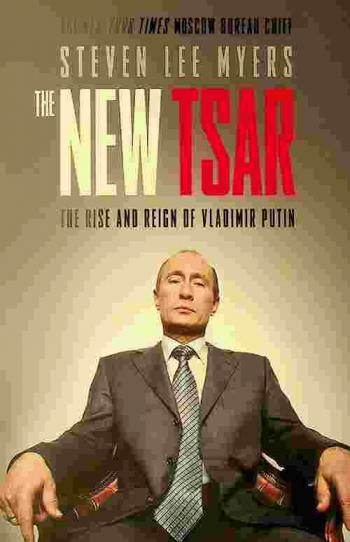
The new tsar : the rise and reign of Vladimir Putin
An epic tale of the path to power of Vladimir Putin, who emerged from obscurity to become one of the world's most conflicted and important leaders. Vladimir Putin rose out of Soviet deprivation to the pinnacle of influence in the new Russian nation. He came to office in 2000 as a reformer, cutting taxes and expanding property rights, bringing a measure of order and eventually prosperity to millions whose only experience of democracy in the early years following the Soviet collapse was instability, poverty and criminality. But soon Putin orchestrated the preservation of a new kind of authoritarianism, consolidating power, reasserting his country's might, brutally crushing revolts and swiftly dispatching dissenters, even as he retained the support of many. New York Times Moscow Bureau Chief, Steven Lee Myers follows Putin's path in a gripping, page-turning narrative about Russian power and prestige, elucidating the cool and calculating leader whose ambitions are as great as Peter's, his means as ruthless as Ivan the Terrible's. It's a path that mirrors the growing pains of a nation stretching from the ends of Europe to the Pacific Ocean, and is key to understanding the new Russian Colossus.

Putin as Celebrity and Cultural Icon
Though in recent months Putin's popularity has frayed at the edges, the dearth of comparably powerful and experienced political leaders leaves no doubt that he will continue to be a key political figure. During his tenure as Russia's President and subsequently as Prime Minister, Putin transcended politics, to become the country's major cultural icon. This book examines the nature of his iconic status. It explores his public persona as glamorous hero, endowed with vision, wisdom, moral and physical strength-the man uniquely capable of restoring Russia's reputation as a global power. In analysing cultural representations of Putin, the book assesses the role of the media in constructing and disseminating this image and weighs the Russian populace's contribution to the extraordinary acclamation he enjoyed throughout the first decade of the new millennium, challenged only by a tiny minority.
eBook