
Catalogue Search | MBRL


Are you sure you want to remove the book from the shelf?

{{itemTitle}}
6
result(s) for
"Pylos (Greece)"
Sort by:
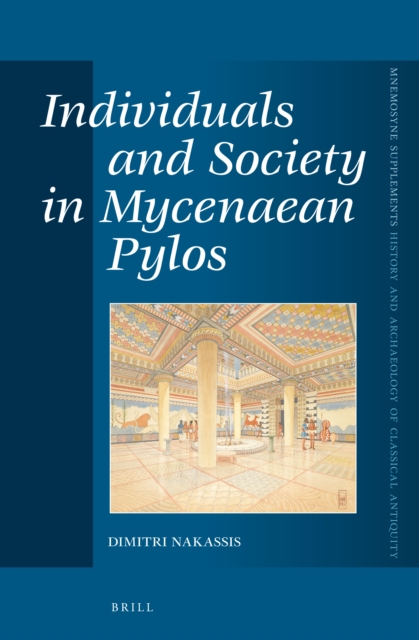
Individuals and Society in Mycenaean Pylos
This book revises our understanding of Mycenaean society through a detailed prosopographical analysis of individuals attested in the administrative texts from the Palace of Nestor at Pylos in southwestern Greece, ca. 1200 BC.
eBook

Victims of a Human Tragedy or “Objects” of Migrant Smuggling? Media Framing of Greece’s Deadliest Migrant Shipwreck in Pylos’ Dark Waters
Refugee and migration crises has been an integral part of the continuous and successive crises that the world has been experiencing. Media has played a crucial role in shaping public opinion over migration and asylum-seeking. Within this context, this paper aims to discuss Greek media coverage of the migrant shipwreck off the Greek coast of Pylos, in June 2023, in which more than 600 people mostly from Syria, Egypt, and Pakistan are thought to have drowned. Based on data from a quantitative content analysis and a sample of news stories stemming from the online version of five Greek news media outlets, representing diverse political spaces, a broader set of criteria for content analysis, including the absence of refugee and migrant voice in media content, dehumanization, absence of solutions and context, among many others, was used in order to explore how the Greek media framed what has been labeled as one of the deadliest migrant shipwrecks in the Mediterranean. Results revealed (i) frames of dehumanization, (ii) insufficient reporting of injustice and discrimination stemming from (state) structures and practices, and an (iii) overemphasis on migrant smuggling.
Journal Article

δ-Thalassemic phenotype due to two \novel\ δ-globin gene mutations: CD11GTC → GGC (A8)-HbA2-pylos and CD 85 TTT → TCT (F1)-HbA2-etolia
δ‐Thalassemia reduces the expected HbA2 percentage, altering the normal as well as the β‐thalassemia trait phenotype. An attempt to elucidate the molecular basis of δ‐thalassemia in the Greek population, revealed two cases with unknown molecular defects that presented low levels of HbA2 (about 1.5%). DNA sequence analysis of δ‐globin gene identified two “novel” mutations in the coding regions of the gene; the cd11 (GTC→GGC) resulting in the substitution of valine for glycine (:HbA2‐Pylos) and the cd85 (TTT→TCT) resulting in the substitution of phenylalanine for serine (:HbA2‐Etolia). Because these mutations are localized at the helical positions A8 and F1 of the HbA2 respectively, they potentially cause molecular instability of the tetramer, thus leading to reduced HbA2 percentage. Hum Mutat 9:344–347, 1997. © 1997 Wiley‐Liss, Inc.
Journal Article

Drinking and Dining
This chapter contains sections titled:
Introduction
The Changing Role of Dining from the Bronze Age to the Classical Period
The Symposion: A Definition
The Development of the Symposion
Sympotic Equipment
Decoration on Sympotic Vases
The Export Market
Drinking, Dining, and Greek Culture
Further Reading
Book Chapter
