
Catalogue Search | MBRL


Are you sure you want to remove the book from the shelf?

{{itemTitle}}
100
result(s) for
"Pyrites History."
Sort by:

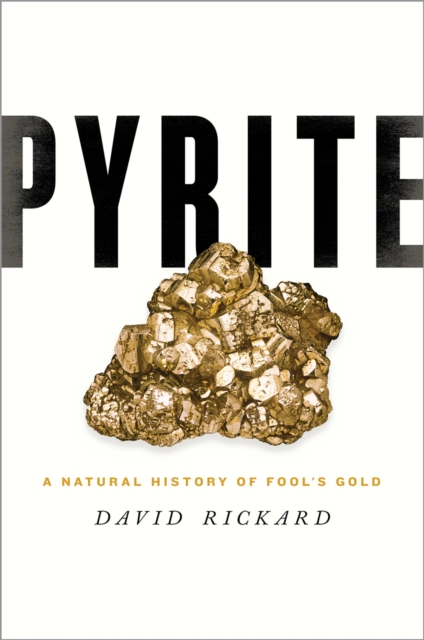
Pyrite
Most people have heard of pyrite, the brassy yellow mineral sometimes known as fool's gold. Pyrite behaves like stone and shines like metal, and its dual nature makes it a source of both metals and sulfur. Despite being the most common sulfide mineral on the earth's surface, pyrite's bright crystals have attracted the attention of many different cultures, and its nearly identical visual appearance to gold has led to tales of fraud, trickery, and claims of alchemy. Pyrite occupies a unique place in human history: it became an integral part of mining culture in America during the 19th century, and it has a presence in ancient Sumerian texts, Greek philosophy, and medieval poetry, becoming a symbol for anything overvalued. In Pyrite, geochemist and author David Rickard blends basic science and historical narrative to describe the many unique ways pyrite is integral to our world. He explains the basic science of oxidation, showing us why the mineral looks like gold, and inspects death zones of present oceans where pyrite-related hydrogen sulfide destroys oxygen in the waters. Rickard analyzes pyrite's role in manufacturing sulfuric acid and discusses the significant appearance of the mineral in literature, history, and the development of societies. The mineral's influence extends from human evolution and culture, through science and industry, to our understanding of ancient, modern, and future earth environments. Energetic and accessible, Pyrite is the first book to show readers the history and science of a mineral that helped make the modern world.
eBook

The pyrite-type high-pressure form of FeOOH
The pyrite-type high-pressure form of FeOOH is predicted from first principles, and found experimentally to be stable under the conditions at the base of the mantle, with implications for transport of water within Earth’s deep interior.
Hydroxide remains stable under pressure
Hydroxide, FeOOH, was recently reported to decompose under the conditions of the middle region of the lower mantle to form FeO
2
and release H
2
. This would suggest the upward migration of hydrogen and large fluctuations in the oxygen distribution in the Earth system. In contrast, Masayuki Nishi
et al
. report the stability of FeOOH under deep-lower-mantle pressure and temperature conditions, based on first-principles calculations and
in situ
X-ray diffraction experiments. The authors predict that pyrite-type FeOOH would be much denser than the surrounding mantle and conclude that it might stabilize as a solid solution with other hydrous minerals in deeply subducted slabs. This could potentially lead to the incorporation of hydrogen into the outer core.
Water transported into Earth’s interior by subduction strongly influences dynamics such as volcanism and plate tectonics
1
,
2
,
3
. Several recent studies have reported hydrous minerals to be stable at pressure and temperature conditions representative of Earth’s deep interior, implying that surface water may be transported as far as the core–mantle boundary
4
,
5
,
6
,
7
,
8
. However, the hydrous mineral goethite, α-FeOOH, was recently reported
9
to decompose under the conditions of the middle region of the lower mantle to form FeO
2
and release H
2
, suggesting the upward migration of hydrogen and large fluctuations in the oxygen distribution within the Earth system. Here we report the stability of FeOOH phases at the pressure and temperature conditions of the deep lower mantle, based on first-principles calculations and
in situ
X-ray diffraction experiments. In contrast to previous work suggesting the dehydrogenation of FeOOH into FeO
2
in the middle of the lower mantle
9
, we report the formation of a new FeOOH phase with the pyrite-type framework of FeO
6
octahedra, which is much denser than the surrounding mantle and is stable at the conditions of the base of the mantle. Pyrite-type FeOOH may stabilize as a solid solution with other hydrous minerals in deeply subducted slabs, and could form in subducted banded iron formations. Deep-seated pyrite-type FeOOH eventually dissociates into Fe
2
O
3
and releases H
2
O when subducted slabs are heated at the base of the mantle. This process may cause the incorporation of hydrogen into the outer core by the formation of iron hydride, FeH
x
, in the reducing environment of the core–mantle boundary.
Journal Article

Sulfur isotopes track the global extent and dynamics of euxinia during Cretaceous Oceanic Anoxic Event 2
The Mesozoic Era is characterized by numerous oceanic anoxic events (OAEs) that are diagnostically expressed by widespread marine organic-carbon burial and coeval carbon-isotope excursions. Here we present coupled high-resolution carbon- and sulfur-isotope data from four European OAE 2 sections spanning the Cenomanian–Turonian boundary that show roughly parallel positive excursions. Significantly, however, the interval of peak magnitude for carbon isotopes precedes that of sulfur isotopes with an estimated offset of a few hundred thousand years. Based on geochemical box modeling of organic-carbon and pyrite burial, the sulfur-isotope excursion can be generated by transiently increasing the marine burial rate of pyrite precipitated under euxinic (i.e., anoxic and sulfidic) water-column conditions. To replicate the observed isotopic offset, the model requires that enhanced levels of organic-carbon and pyrite burial continued a few hundred thousand years after peak organic-carbon burial, but that their isotope records responded differently due to dramatically different residence times for dissolved inorganic carbon and sulfate in seawater. The significant inference is that euxinia persisted post-OAE, but with its global extent dwindling over this time period. The model further suggests that only ∼5% of the global seafloor area was overlain by euxinic bottom waters during OAE 2. Although this figure is ∼30× greater than the small euxinic fraction present today (∼0.15%), the result challenges previous suggestions that one of the best-documented OAEs was defined by globally pervasive euxinic deep waters. Our results place important controls instead on local conditions and point to the difficulty in sustaining whole-ocean euxinia.
Journal Article

Pathways for Neoarchean pyrite formation constrained by mass-independent sulfur isotopes
It is generally thought that the sulfate reduction metabolism is ancient and would have been established well before the Neoarchean. It is puzzling, therefore, that the sulfur isotope record of the Neoarchean is characterized by a signal of atmospheric mass-independent chemistry rather than a strong overprint by sulfate reducers. Here, we present a study of the four sulfur isotopes obtained using secondary ion MS that seeks to reconcile a number of features seen in the Neoarchean sulfur isotope record. We suggest that Neoarchean ocean basins had two coexisting, significantly sized sulfur pools and that the pathways forming pyrite precursors played an important role in establishing how the isotopic characteristics of each of these pools was transferred to the sedimentary rock record. One of these pools is suggested to be a soluble (sulfate) pool, and the other pool (atmospherically derived elemental sulfur) is suggested to be largely insoluble and unreactive until it reacts with hydrogen sulfide. We suggest that the relative contributions of these pools to the formation of pyrite depend on both the accumulation of the insoluble pool and the rate of sulfide production in the pyrite-forming environments. We also suggest that the existence of a significant nonsulfate pool of reactive sulfur has masked isotopic evidence for the widespread activity of sulfate reducers in the rock record.
Journal Article
Uncovering the Ediacaran phosphorus cycle
Phosphorus is a limiting nutrient that is thought to control oceanic oxygen levels to a large extent
1
–
3
. A possible increase in marine phosphorus concentrations during the Ediacaran Period (about 635–539 million years ago) has been proposed as a driver for increasing oxygen levels
4
–
6
. However, little is known about the nature and evolution of phosphorus cycling during this time
4
. Here we use carbonate-associated phosphate (CAP) from six globally distributed sections to reconstruct oceanic phosphorus concentrations during a large negative carbon-isotope excursion—the Shuram excursion (SE)—which co-occurred with global oceanic oxygenation
7
–
9
. Our data suggest pulsed increases in oceanic phosphorus concentrations during the falling and rising limbs of the SE. Using a quantitative biogeochemical model, we propose that this observation could be explained by carbon dioxide and phosphorus release from marine organic-matter oxidation primarily by sulfate, with further phosphorus release from carbon-dioxide-driven weathering on land. Collectively, this may have resulted in elevated organic-pyrite burial and ocean oxygenation. Our CAP data also seem to suggest equivalent oceanic phosphorus concentrations under maximum and minimum extents of ocean anoxia across the SE. This observation may reflect decoupled phosphorus and ocean anoxia cycles, as opposed to their coupled nature in the modern ocean. Our findings point to external stimuli such as sulfate weathering rather than internal oceanic phosphorus–oxygen cycling alone as a possible control on oceanic oxygenation in the Ediacaran. In turn, this may help explain the prolonged rise of atmospheric oxygen levels.
Reconstruction of oceanic phosphorus concentrations during a large negative carbon-isotope excursion co-occurring with global oceanic oxygenation and evolution of some of Earth’s earliest animals suggests that decoupled phosphorus and ocean anoxia cycles during the Ediacaran may have prolonged the rise of atmospheric oxygen.
Journal Article

SQUID–SIMS is a useful approach to uncover primary signals in the Archean sulfur cycle
Many aspects of Earth’s early sulfur cycle, from the origin of mass-anomalous fractionations to the degree of biological participation, remain poorly understood—in part due to complications from postdepositional diagenetic and metamorphic processes. Using a combination of scanning high-resolution magnetic superconducting quantum interference device (SQUID) microscopy and secondary ion mass spectrometry (SIMS) of sulfur isotopes (³²S, ³³S, and ³⁴S), we examined drill core samples from slope and basinal environments adjacent to a major Late Archean (∼2.6–2.5 Ga) marine carbonate platform from South Africa. Coupled with petrography, these techniques can untangle the complex history of mineralization in samples containing diverse sulfur-bearing phases. We focused on pyrite nodules, precipitated in shallow sediments. These textures record systematic spatial differences in both mass-dependent and mass-anomalous sulfur-isotopic composition over length scales of even a few hundred microns. Petrography and magnetic imaging demonstrate that mass-anomalous fractionations were acquired before burial and compaction, but also show evidence of postdepositional alteration 500 million y after deposition. Using magnetic imaging to screen for primary phases, we observed large spatial gradients in Δ ³³S (>4‰) in nodules, pointing to substantial environmental heterogeneity and dynamic mixing of sulfur pools on geologically rapid timescales. In other nodules, large systematic radial δ ³⁴S gradients (>20‰) were observed, from low values near their centers increasing to high values near their rims. These fractionations support hypotheses that microbial sulfate reduction was an important metabolism in organic-rich Archean environments—even in an Archean ocean basin dominated by iron chemistry.
Journal Article
Ocean oxygenation in the wake of the Marinoan glaciation
Data are presented that support the idea of an oxygenation event in the immediate aftermath of the Marinoan glaciation, pre-dating previous estimates for post-Marinoan oxygenation by more than 50 million years.
A breath of oxygen for the early metazoans
Macroscopic metazoans first appeared in the fossil record shortly after the termination of the late Cryogenian (Marinoan) glaciation about 635 million years ago. It has been suggested that an oxygenation event at about this time was the driving factor behind the rise of the metazoans, but current estimates suggest that oxygenation occurred between 580 million and 550 million years ago, well after initial animal diversification. New geochemical data from early Ediacaran organic-rich black shales of the basal Doushantuo Formation in South China now suggest that the oxidation event occurred more than 50 million years earlier, in the immediate aftermath of the Marinoan glaciation. The data provide evidence for a significant postglacial oxygenation and support a link between the most severe glaciations in Earth's history, the oxygenation of Earth's surface and the earliest emergence of complex animals.
Metazoans are likely to have their roots in the Cryogenian period
1
,
2
,
3
, but there is a marked increase in the appearance of novel animal and algae fossils shortly after the termination of the late Cryogenian (Marinoan) glaciation about 635 million years ago
4
,
5
,
6
. It has been suggested that an oxygenation event in the wake of the severe Marinoan glaciation was the driving factor behind this early diversification of metazoans and the shift in ecosystem complexity
7
,
8
. But there is little evidence for an increase in oceanic or atmospheric oxygen following the Marinoan glaciation, or for a direct link between early animal evolution and redox conditions in general
9
. Models linking trends in early biological evolution to shifts in Earth system processes thus remain controversial
10
. Here we report geochemical data from early Ediacaran organic-rich black shales (∼635–630 million years old) of the basal Doushantuo Formation in South China. High enrichments of molybdenum and vanadium and low pyrite sulphur isotope values (Δ
34
S values ≥65 per mil) in these shales record expansion of the oceanic inventory of redox-sensitive metals and the growth of the marine sulphate reservoir in response to a widely oxygenated ocean. The data provide evidence for an early Ediacaran oxygenation event, which pre-dates the previous estimates for post-Marinoan oxygenation
11
,
12
,
13
by more than 50 million years. Our findings seem to support a link between the most severe glaciations in Earth’s history, the oxygenation of the Earth’s surface environments, and the earliest diversification of animals.
Journal Article

Reductive dissolution of pyrite by methanogenic archaea
The formation and fate of pyrite (FeS
2
) modulates global iron, sulfur, carbon, and oxygen biogeochemical cycles and has done so since early in Earth’s geological history. A longstanding paradigm is that FeS
2
is stable at low temperature and is unavailable to microorganisms in the absence of oxygen and oxidative weathering. Here, we show that methanogens can catalyze the reductive dissolution of FeS
2
at low temperature (≤38 °C) and utilize dissolution products to meet cellular iron and sulfur demands associated with the biosynthesis of simple and complex co-factors. Direct access to FeS
2
is required to catalyze its reduction and/or to assimilate iron monosulfide that likely forms through coupled reductive dissolution and precipitation, consistent with close associations observed between cells and FeS
2
. These findings demonstrate that FeS
2
is bioavailable to anaerobic methanogens and can be mobilized in low temperature anoxic environments. Given that methanogens evolved at least 3.46 Gya, these data indicate that the microbial contribution to the iron and sulfur cycles in ancient and contemporary anoxic environments may be more complex and robust than previously recognized, with impacts on the sources and sinks of iron and sulfur and other bio-essential and thiophilic elements such as nickel and cobalt.
Journal Article

Genesis of the Jinying gold deposit, southern Jilin Province, NE China: Constraints from geochronology and isotope geochemistry
The Jinying gold deposit is located in southern Jilin Province in northeast China and is representative of the large Early Cretaceous gold deposits in this area. To better understand ore genesis of this deposit, a multi-isotope integrated analysis of U–Pb–Rb–Sr–He–Ar–S has been carried out. Laser ablation inductively coupled plasma–mass spectrometry (LA–ICP–MS) dating of zircons from the granodiorite porphyry and dioritic porphyrite in the study area yields ages of 172.1 ± 1.2 Ma and 122.5 ± 0.8 Ma, suggesting that corresponding intrusion occurred in the Middle Jurassic and the Early Cretaceous. Rb–Sr dating of the pyrite yields an isochron age of 120 ± 3 Ma, suggesting that gold mineralization occurred in the Early Cretaceous. The fluid inclusions in pyrite yield 3He/4He ratios clustered within a small range from 0.08 to 0.13 Ra, 40Ar/36Ar ratios between 331.6 and 351.3, and mantle He in the range of 1.0–1.6%, indicating that the ore-forming fluids originated from a mixed crustal and mantle source. The in situ S isotopic values of pyrite vary between + 0.1 ‰ and + 2.8 ‰, suggesting that the ore-related sulphur came from the deep magmatic source. Combined with the geological history of the study area, it can be concluded that the gold mineralization was possibly related to the extensional setting associated with the rollback of the Palaeo-Pacific Plate.
Journal Article