
Catalogue Search | MBRL


Are you sure you want to remove the book from the shelf?

{{itemTitle}}
11,313
result(s) for
"Python"
Sort by:

Learn web development with Python : Get hands-on with Python Programming and Django web development
If you want to develop complete Python web apps with Django, this Learning Path is for you. It will walk you through Python programming techniques and guide you in implementing them when creating 4 professional Django projects, teaching you how to solve common problems and develop RESTful web services with Django and Python. You will learn how to build a blog application, a social image bookmarking website, an online shop, and an e-learning platform.
Book
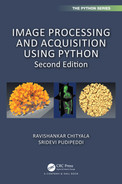
Image Processing and Acquisition using Python, 2nd Edition
This book provides readers with a sound foundation in both image acquisition and image processing—one of the first books to integrate these topics together. This updated edition includes new chapters on neural networks, convolutional neural networks, affine transform and many new algorithms.
eBook

Python for teenagers : learn to program like a superhero!
Discover everything you need to know about Python to turn your passion of programming into a job you'll love. Fueled by fun and practical examples, this book gives high schoolers who want to learn an easy programming language ideas for how to leverage them in the workforce. Start with the basics and before you know it, you'll be building your own web sites, doing white-hat hacking, finding code bugs and errors, and creating games, including using Python to roll characters for RPGs. Every chapter is relaxed and informal, like learning with a cool teacher all the time.
BOOK
Python GUI Programming - A Complete Reference Guide
Explore Python's GUI frameworks and create visually stunning and feature-rich applications Key Features Integrate stunning data visualizations using Tkinter Canvas and Matplotlib Understand the basics of 2D and 3D animation in GUI applications Explore PyQt's powerful features to easily design and customize your GUI applications Book Description A responsive graphical user interface (GUI) helps you interact with your application, improves user experience, and enhances the efficiency of your applications. With Python, you'll have access to elaborate GUI frameworks that you can use to build interactive GUIs that stand apart from the rest. This Learning Path begins by introducing you to Tkinter and PyQt, before guiding you through the application development process. As you expand your GUI by adding more widgets, you'll work with networks, databases, and graphical libraries that enhance its functionality. You'll also learn how to connect to external databases and network resources, test your code, and maximize performance using asynchronous programming. In later chapters, you'll understand how to use the cross-platform features of Tkinter and Qt5 to maintain compatibility across platforms. You'll be able to mimic the platform-native look and feel, and build executables for deployment across popular computing platforms. By the end of this Learning Path, you'll have the skills and confidence to design and build high-end GUI applications that can solve real-world problems. This Learning Path includes content from the following Packt products: Python GUI Programming with Tkinter by Alan D. Moore Qt5 Python GUI Programming Cookbook by B. M. Harwani What you will learn Visualize graphs in real time with Tkinter's animation capabilities Use PostgreSQL authentication to ensure data security for your application Write unit tests to avoid regression when updating code Handle different signals generated on mouse clicks using QSpinBox and sliders Employ network concepts, internet browsing, and Google Maps in UI Use graphics rendering to implement animations in your GUI Who this book is for If you're an intermediate Python programmer looking to enhance your coding skills by writing powerful GUIs in Python using PyQT and Tkinter, this is an ideal Learning Path for you. A strong understanding of the Python language is a must to grasp the concepts explained in this book.
eBook

Learn Python Programming - Second Edition
Learn Python Programming: The no-nonsense, beginner's guide to programming introduces you to Python in a practical and engaging way. Through this book, you will become proficient in Python programming, gain insight into data science tools like Jupyter, and even create powerful web applications using Django. What this Book will help me do Master the core concepts of Python programming, including syntax, control flow, and functions. Learn how to handle and manipulate data effectively using Python's built-in libraries and tools. Get hands-on experience developing a fully functional web application using Django. Understand fundamental data science techniques and implement them in Python using industry-standard tools. Develop strong debugging and testing habits to ensure your Python code is robust and reliable. Author(s) None Romano is an experienced software engineer and educator with years of experience in software development and teaching Python. Known for their clear writing style, None brings their expertise directly to the reader, making complicated topics straightforward with practical examples and real-world applications. Who is it for? This book is aimed at individuals who are new to programming and want to start with Python, as well as those seeking to transition into the technical field by adding Python to their skillset. If you aspire to become proficient at programming, tackle data science projects, or build impressive web applications, this book is tailored for you.
eBook

Python Penetration Testing Essentials - Second Edition
In \"Python Penetration Testing Essentials,\" you will dive into the exciting world of ethical hacking using Python. This book provides comprehensive guidance on using Python for penetration testing, with a focus on network security, web vulnerabilities, and automated exploit creation. Through well-structured examples, you'll strengthen your skills to identify and address potential security risks. What this Book will help me do Master techniques for network penetration testing, including network scanning and packet sniffing. Understand and analyze wireless protocols to identify vulnerabilities and protect against common attack vectors. Develop scripts in Python to automate detection of web vulnerabilities such as SQL injections and XSS attacks. Learn web server footprinting techniques and how to assess application security by identifying weaknesses. Implement methodologies for detecting and addressing threats to establish robust security defenses. Author(s) Mohit Raj brings years of experience in cybersecurity and Python programming. As a seasoned security researcher, he has conducted extensive work in penetration testing and ethical hacking. His practical knowledge and teaching approach make this book valuable for learners. Mohit's passion for bridging the gap between Python and security shines throughout the book. Who is it for? This book is perfect for Python developers looking to expand their skill set to include penetration testing and ethical hacking. It also appeals to cybersecurity professionals aiming to integrate Python into their security toolkit. Beginners in ethical hacking will find this resource approachable and instructional. If you're keen to improve system security and learn modern techniques, this book is an excellent fit.
eBook

Impractical Python projects : playful programming activities to make you smarter
\"A book of fun coding projects for readers who know a little Python already and want to expand their skills. Simulate volcanoes, map Mars, and more, while gaining experience using free modules like Tkinter, matplotlib, Cprofile, Pylint, Pygame, Pillow, and Python-Docx\"-- Provided by publisher.
Book
Functional Python Programming - Second Edition
Unlock the power of functional programming in Python with 'Functional Python Programming.' Dive into Python's functional programming capabilities to write cleaner, more expressive code. This book covers all the essential concepts including generators, decorators, lazy evaluation, and advanced library functionalities, equipping you with the tools to solve complex programming challenges more effectively. What this Book will help me do Understand and effectively use Python's generator functions and expressions for lazy evaluation. Master using Python's itertools, functools, and multiprocessing libraries for functional programming tasks. Design and implement decorators to modularize your code and create higher-order functionality. Apply functional programming concepts to data analysis, improving both clarity and performance in your workflow. Learn functional patterns like recursion, reductions, and working with iterators to handle common programming tasks elegantly. Author(s) The author is a seasoned programmer and educator with extensive experience in Python and functional programming paradigms. With years of practice in crafting robust solutions and guiding programmers, their approach to teaching combines clear explanations, practical examples, and an emphasis on applying techniques to real-world problems effectively. Who is it for? This book is for Python developers eager to adopt functional programming principles to enhance their programming workflow and problem-solving techniques. It is particularly suited to those who have a basic understanding of Python and want to explore more expressive and efficient ways of writing code. If you'd like to improve your software performance and learn techniques like lazy evaluation and higher-order functions, this book is for you.
eBook