
Catalogue Search | MBRL


Are you sure you want to remove the book from the shelf?

{{itemTitle}}
44,881
result(s) for
"Qaddafi, Muammar."
Sort by:

The dictator's last night
Written under a pen name by the Algerian author Mohammed Moulessehoul, a fictionalized version of history describes the final hours of the life of President Muammar Gaddafi in October 2011 during the last days of the Libyan civil war.
BOOK
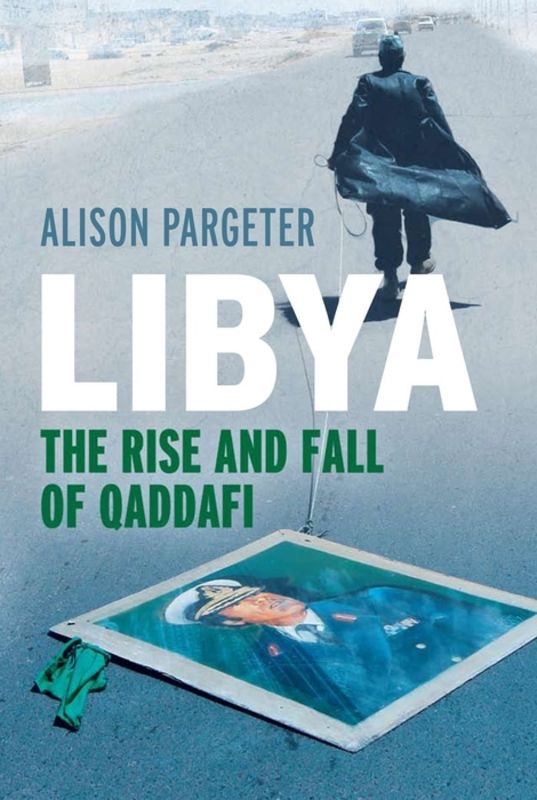
Libya
For a reader unfamiliar with the history of Libya, Muammar Qaddafi might be mistaken for a character in fiction. His eccentric leadership as the nation's \"Brother Leader,\" his repressive regime, sponsorship of terrorist violence, unique vision of the state, and relentless hold on power all seem implausibly extreme. This riveting book documents the extraordinary reality of Qaddafi's rise and 42-year reign. It also explores the tenacious popular uprising that finally defeated him and the possibilities for Libya as the future unfolds.
Alison Pargeter, an author with deep understanding of Libya's history and people, explains what led up to Qaddafi's bloodless coup in 1969 and how he proceeded to translate his highly personalized vision into political, economic, and social policy. She discusses his tight-knit networks, the crises he overcame-including sanctions after the Lockerbie bombing in 1988-as well as his astounding maneuverings in the early 2000s to restore tattered relations with the West. Pargeter provides a thoroughly fascinating analysis of the 2011 revolt and uncovers the full details of Qaddafi's downfall. She concludes by introducing the new power brokers in post-Qaddafi Libya as well as the variety of knotty challenges that now confront them.
eBook

Qaddafi: Dead for Over a Decade but Still a Hero
Many Libyans today believe their country is worse off than it was back in 2011 when Col. Muammar Qaddafi was in charge. To the majority, Qaddafi was the \"guarantor\" of social stability, eco nomic prosperity and above all \"security despite all his shortcom ings and policy failures,\" said Musbah, a high school teacher who does not want his family name published. \"We really miss the man.\" To prove his point, Musbah referred to the thousands of people who celebrated the 55th anniversary of Qaddafi's coming to power on Sept. 1, 1969. This year's celebrations of al-Fateh Revolution, or the coup de tat that brought the 27-year-old Col. Qaddafi to power, have been notable for two reasons: they were widespread across Libya, making the event nosier, more jubilant and more center stage; and they were attended by large numbers of people, most of whom were children 13 years ago. They hardly knew Qaddafi let alone experienced life under his rule.
Journal Article

Africanus Princeps? The Emperor Caracalla and the Question of His African Heritage
This article responds to a recent publication in the Journal of Black Studies regarding the emperor Caracalla, who ruled the Roman Empire between AD 211 and 217, following the murder of his younger brother, Geta. In addition to offering an exploration of his career, the recent essay attempts to investigate the importance of Caracalla's African heritage to the historical portrait of him that survives into modernity, claiming that both ancient sources and modern scholars have downplayed the emperor's origin and ancestry. Unfortunately, the publication is beset by factual errors that serve to undermine its case. This article addresses these shortcomings and attempts to explain the scholarly approach to Caracalla's ethnicity, showing that there was some recognition of Caracalla's African roots, even in antiquity. Furthermore, this article considers the question of modern Africa's relationship with the emperor, noting the symbolism of the Severan family within Libya under the dictator Muammar Gaddafi.
Journal Article

Muammar Gaddafi's Legacy: A Domestic Intellectual Approach
This work aims to offer an approach to the legacy of Muammar Gaddafi as one of the most significant political figures for the modern history of Libya, and as one of the most influential regional leaders. The analysis is presented and studied under three main scopes: the legacy of Gaddafi under a State level scope, exposing him as a sponsor of State terror and violent acts towards Libyan and international population, his legacy, reflected from the political angle, opens the guidelines to identify a wide range of consequences directed from the political spheres, which significative impacted Libyan population; the his legacy at the domestic level, where a reflection and approach is carried out about its relevance through the analysis of Libyan social development indicators data during his administration, exposing a fragmented society; and on his legacy though his written works an analysis is made around the presence of crossed identities and internal conflicts expressed through their stories.
Journal Article

Unclear Physics
Many authoritarian leaders want nuclear weapons, but few manage
to acquire them. Autocrats seeking nuclear weapons fail in
different ways and to varying degrees-Iraq almost managed it; Libya
did not come close. In Unclear Physics , Målfrid
Braut-Hegghammer compares the two failed nuclear weapons programs,
showing that state capacity played a crucial role in the trajectory
and outcomes of both projects. Braut-Hegghammer draws on a rich set
of new primary sources, collected during years of research in
archives, fieldwork across the Middle East, and interviews with
scientists and decision makers from both states. She gained access
to documents and individuals that no other researcher has been able
to consult. Her book tells the story of the Iraqi and Libyan
programs from their origins in the late 1950s and 1960s until their
dismantling.
This book reveals contemporary perspectives from scientists and
regime officials on the opportunities and challenges facing each
project. Many of the findings challenge the conventional wisdom
about clandestine weapons programs in closed authoritarian states
and their prospects of success or failure. Braut-Hegghammer
suggests that scholars and analysts ought to pay closer attention
to how state capacity affects nuclear weapons programs in other
authoritarian regimes, both in terms of questioning the actual
control these leaders have over their nuclear weapons programs and
the capability of their scientists to solve complex technical
challenges.
Many authoritarian leaders want nuclear weapons, but few manage
to acquire them. Autocrats seeking nuclear weapons fail in
different ways and to varying degrees-Iraq almost managed it; Libya
did not come close. In Unclear Physics , Malfrid
Braut-Hegghammer compares the two failed nuclear weapons programs,
showing that state capacity played a crucial role in the trajectory
and outcomes of both projects. Braut-Hegghammer draws on a rich set
of new primary sources, collected during years of research in
archives, fieldwork across the Middle East, and interviews with
scientists and decision makers from both states. She gained access
to documents and individuals that no other researcher has been able
to consult. Her book tells the story of the Iraqi and Libyan
programs from their origins in the late 1950s and 1960s until their
dismantling.This book reveals contemporary perspectives from
scientists and regime officials on the opportunities and challenges
facing each project. Many of the findings challenge the
conventional wisdom about clandestine weapons programs in closed
authoritarian states and their prospects of success or failure.
Braut-Hegghammer suggests that scholars and analysts ought to pay
closer attention to how state capacity affects nuclear weapons
programs in other authoritarian regimes, both in terms of
questioning the actual control these leaders have over their
nuclear weapons programs and the capability of their scientists to
solve complex technical challenges.
eBook

The Impact of Non-State Armed Groups on Libya's Peace and Political Transition Between 2011–20
This briefing argues that non-state armed groups' monopoly of state power and resources and the foreign politico-military backing they secured largely account for Libya's protracted political and security crisis. Their meteoric rise since the February 2011 Revolution has significantly undermined national efforts to stabilize the country and establish a legitimate political system.
Journal Article

Uncovering the complex relationships between political risk and MNE firm legitimacy: Insights from Libya
Using the before-after natural experiment occasioned by the Arab Spring in Libya, we explore how market and non-market activity affect foreign firm legitimacy in times of political turmoil. Although all MNEs in Libya had to cultivate strong ties to Qadhafi to succeed during his 40 years of rule, we found that those that also invested in social-benefit projects and in social ties with families with few ties to the Qadhafi family earned a broad-based legitimacy that helped them survive Qadhafi's overthrow. Our findings contribute to the political risk and political behavior literature the notion that the pursuit of firm legitimacy in general, and especially in the eyes of social-sector actors, is an effective hedge against political risk. More theoretically, our findings support the addition of a social-sector-based path to firm legitimacy in the host country that complements and may at times substitute for, the government-based path to foreign firm legitimacy. Practically, our findings suggest that MNEs' facing severe political risk can improve their prospects for survival by investing in relationships with influential social groups and by offering goods or services that are perceived as socially valuable.
Journal Article

The Rush to Personalize: Power Concentration after Failed Coups in Dictatorships
How do failed coups influence power personalization in dictatorships? While scholars have studied the mechanisms of personalism in dictatorships in detail, little attention has been paid to the timing and determinants of surges in personalism levels. In this article, we propose that personalism can evolve non-linearly, and show that large, quite rapid increases in personalization by dictators occur after a failed coup attempt. The logic is that failed coups are information-revealing events that provide the dictator with strong motives and ample opportunities to accumulate power. The leader uses this window of opportunity to rapidly consolidate his power at the expense of the ruling coalition. We test the theory using time-series, cross-sectional data on dictatorships in 114 countries in the period between 1946 and 2010. Two placebo tests indicate that disruptive events by regime outsiders – failed assassination attempts and civil war onsets – do not promote the rush to personalize.
Journal Article

YEAR FOUR: The Arab Spring Proved Everyone Wrong
Shortly after the Arab Spring broke out at the tail end of 2010, two narratives took hold in the West. Optimists hailed a region-wide birth of democracy, as though the Middle East and North Africa were following the path blazed in Eastern Europe during the anti-communist revolutions of 1989. Pessimists fretted that the Arab world was following Iran's example in 1979 and replacing secular tyrants with even more repressive Islamist regimes. Both narratives turned out to be wrong, and not just because their adherents had the wrong narrative. Any narrative superimposed over this series of events was doomed to be wrong. The Arab Spring isn't one thing. Many countries in the Middle East and North Africa are experiencing wrenching change, but unlike in Eastern Europe after the fall of the Berlin Wall, each affected country is moving in different and sometimes opposing directions. Each has its own history, its own narrative.
Journal Article