
Catalogue Search | MBRL


Are you sure you want to remove the book from the shelf?

{{itemTitle}}
8,414
result(s) for
"Qatar"
Sort by:


Demystifying Doha
Over the past decade or so, the wealth produced by Qatar's oil and gas exports has generated a construction development boom in its capital city of Doha and the surrounding vicinity. Since the late 1990s, the number of inhabitants has grown from less than 400,000 to more than 1.7 million today. In many respects, Doha is portrayed as an important emerging global capital in the Gulf region, which has been positioning and re-inventing itself on the map of international architecture and urbanism, with a global image of building clusters of glass office towers, as well as cultural and educational facilities. While focusing on the architectural and planning aspects of Doha's intensive urbanization, this first comprehensive examination of the city sets this within the socio-political and economic context of the wider Arabian Peninsula. 'Demystifying Doha - On Architecture and Urbanism in an Emerging City' features a comprehensive discussion on contemporary architecture and urbanism of Doha as an emerging regional metropolis. It provides a critical analysis of the evolution of architecture and urbanism as products of the contemporary global condition. Issues that pertain to emerging service hubs, decentralised urban governance, integrated urban development strategies, image-making practices, urban identity, the dialectic relations between the city and its society and sustainable urbanism are all examined to elucidate the urban evolution and the contemporary condition of Doha. 'Demystifying Doha - On Architecture and Urbanism in an Emerging City' concludes by suggesting a framework for future studies of the city as well as for investigating the future of similar cities, setting out an agenda for sustainable urban growth, while invigorating the multiple roles urban planners and architects can play in shaping this future.
eBook


Political Reforms in Qatar: From Authoritarianism to Political Grey Zone
In the past decade, Qatar has emerged as one of the world’s most proactive mediators in the international arena. It has also experienced a number of domestic changes to its economic infrastructure, welfare system and political system, along with material improvement in its citizens’ standard of living. Nonetheless, despite such radical and rapid advances, political reform in Qatar has proved to be relatively tentative. This book examines political reforms in Qatar from an analytical, normative and ideological perspective. It applies the main concepts and theories found in the literature on democratic transition. Five elements are discussed as the reason of why the political reform process in Qatar has stagnated in the political “Grey Zone\": (1) Absolute power of the ruler over the political institutions, (2) Tribal social structure in Qatar, (3) Rentier style social contract, (4) Lack of public demand for reforms and politically apathetic society, and (5) New regional and international atmosphere, emerging after Arab Spring
eBook

Qatar 1975/76-2019
The fourth in this series, the Contemporary Archive of the Islamic World (CAIW), draws on the resources of Cambridge-based World of Information. The discovery of substantial oil and gas deposits, changed Qatar and its people beyond recognition.
eBook

The Fragmentary City
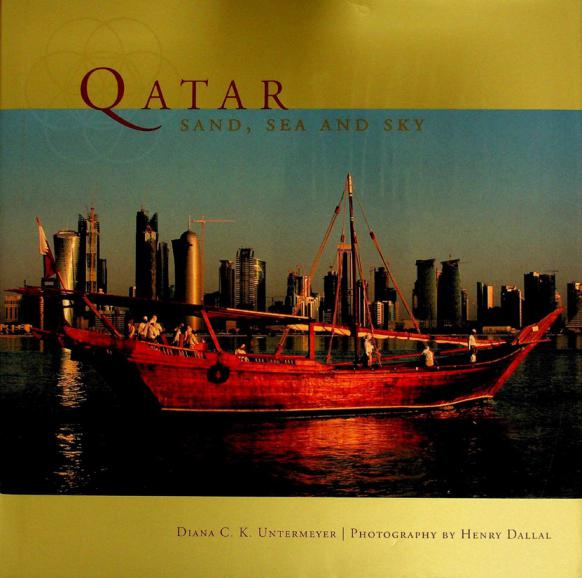
As Andrew M. Gardner explains in The Fragmentary City, in Qatar and elsewhere on the Arabian Peninsula, nearly nine out of every ten residents are foreign noncitizens. Many of these foreigners reside in the cities that have arisen in Qatar and neighboring states. The book provides an overview of the gulf migration system with its diverse migrant experiences. Gardner focuses on the ways that demography and global mobility have shaped the city of Doha and the urban characteristics of the Arabian Peninsula in general. Building on those migrant experiences, the book turns to the spatial politics of the modern Arabian city, exploring who is placed where in the city and how this social landscape came into historical existence. The author reflects on what we might learn from these cities and the societies that inhabit them. In The Fragmentary City, Andrew M. Gardner frames the contemporary cities of the Arabian Peninsula not as poor imitations of Western urban modernity, but instead as cities on the frontiers of a global, neoliberal, and increasingly urban future.
eBook

Qatar : evidence of the Palaeolithic earliest people revealed
Qatar: Evidence of the Palaeolithic Earliest People Revealed, with full text in both English and Arabic, tells the story of the long and difficult search to discover the identity of the first people to inhabit the sovereign State of Qatar, which is situated on a peninsula, that extends into the Arabian Gulf. The book synthesises the results of extensive fieldwork by the PADMAC Unit with the many diverse historical records and reports of investigations, beginning with Holgar Kapel?s, in the early 1950s.00The archaeology of the State of Qatar is an important part of the cultural heritage of the world. The loss of archaeological sites to urban and industrial development since the 1950s has been inevitable but the loss of over 30 years of Palaeolithic research in Qatar, an area of prehistoric significance, as a result of academic dissension, is certainly regrettable. The work of the PADMAC Unit in Qatar now marks the end of this Palaeolithic research hiatus.
Book
