
Catalogue Search | MBRL


Are you sure you want to remove the book from the shelf?

{{itemTitle}}
102,507
result(s) for
"Qualifications"
Sort by:

Ethics & issues in contemporary nursing : nursing ethics in the 21st century
Learn how to think beyond the theoretical in any environment. \"Ethics & Issues in Contemporary Nursing, 1st Edition\" examines the latest trends, principles, theories, and models in patient care to help you learn how to make ethically sound decisions in complex and often controversial situations. Written from a global perspective, examples throughout the text reflect current national and international issues inviting you to explore cases considering socio-cultural influences, personal values, and professional ethics. Historical examples demonstrate how to think critically while upholding moral and professional standards, as well as the law. Key topics throughout explore advocacy and rights, diversity, nurse burnout, mass casualty events, social media, violence in the workplace, medication error prevention, opioid and other substance use, HIPAA, and healthcare reform. In addition, this new title contains supplemental case studies and review questions to further challenge and prepare you to make morally sound decisions in any healthcare setting. -- From product description.


Academic (dis)qualifications of Turkish rectors
In this study, the current rectors of 197 universities (127 public and 70 non-profit foundation universities) in Turkey were examined in terms of their sociodemographic characteristics, career development, and academic qualifications (the number of published articles and citations and H-index). The data were collected via a prosopograhical approach from the official websites of the universities and the presidents, as well as the Web of Science and Scopus databases. The findings suggest that the presidents may be classified into two groups based on their sociodemographic characteristics, career development, and academic qualifications. In the first group are those rectors who are dominantly male, are graduates of Turkish universities, and have lower academic qualifications in terms of the number of published articles, citations of their published works, and their H-index. The social media posts of the members of this group show intense loyalty and support to Turkey’s governing ideology, and the academic performance of the universities managed by these rectors is poor. The second group of rectors is also maledominant and is comprised of graduates of foreign universities. These individuals generally have backgrounds in engineering, medicine or administrative science, and higher academic qualifications in terms of the number of published articles, citations of their published works and their H-index. Their social media posts often include news related to students and their academic and scientific achievements. The academic performance of the universities managed by these rectors was also found to be high.
Journal Article

The paradox of skills : widening participation, academic literacy & students' skills centres
The objectives underpinning the policies to expand and widen participation have impacted on university provision to help students improve their general literacy and academic writing skills. This book examines how and why Students' Skills Centres, (SSCs), gained such a hold in the sector, despite the contentious nature of the research evidence that challenges the notion of the applicability of generic writing skills.
Book

Perfect for the Job? Overqualification of Immigrants and their Descendants in the Norwegian Labor Market
Compared to the majority population, studies have shown that non-western immigrants are more likely to work in jobs for which they are overqualified. These findings are based on coarse measures of jobs, and an important question is how sensitive these findings are to the definition of jobs. By using detailed information from Norwegian register data 2014, we provide a methodological innovation in comparing individuals working in the same occupation, industry, sector, firm, and municipality. In this way, we measure the degree of overqualification among workers within more than 653,000 jobs. We differentiate between immigrants and their descendants originating from Western Europe, the New EU countries, other Western countries, the Middle East and North Africa (MENA), Africa and Asia (except MENA countries), and South and Central America, and compare their outcomes with the majority population holding the same jobs. We find that immigrants from all country of origin groups are more likely to be overqualified compared to the majority population and to descendants of immigrants. However, the prevalence of overqualification decreases with time since immigration.
Journal Article

Professional pathways to the presidency
\"During presidential elections a quadrennial debate emerges which, although it differs in the particulars, reflects the same structure in each reincarnation. Although the issue positions taken by the candidates vary over the years, their claim to qualification for the presidency follows a common pattern. Each candidate discusses his or her prior experience as preparation for one or more of the requirements of the office and then lays claim to the legacy of one of the great presidents who followed the same trajectory to the White House.Missing from this debate is a systematic analysis of how different job experiences prepared the population of all presidents for service. For each of the greats who followed a particular pathway to the presidents there is a failure who shared the pathway. In this book I combine the quantitative evaluation of presidential performance with mixture of qualitative and quantitative analyses of professional qualifications. The recent C-SPAN surveys provide us with a nuanced measure of presidential performance by asking historians to rate the Presidents on ten constituent attributes of: Public Persuasion, Moral Authority, Relations with Congress, Performance within Context of Times, Crisis Leadership, International Relations, Vision/Setting an Agenda, Economic Management, Administrative Skills, and Pursued Equal Justice for All. The sub-score for 'Relations with Congress' measures how well the president performs as 'legislator-in-chief' so that I can see whether former legislators work better with congress. Similarly the measure of 'Administrative Skills' indicates whether experience as a governor leads to better performance as the national chief executive. The evaluation of 'Economic Management' looks at whether those presidents with business experience do a better job in dealing with the economy. C-SPAN's nuanced measure of presidential performance allows a more careful evaluation of how prior experience affects particular aspects of presidential greatness than was previously possible\"-- Provided by publisher.
Book

Extending the European Competence Framework for Quantum Technologies: new proficiency triangle and qualification profiles
With the increasing industrial relevance of quantum technologies (QTs), a new quantum workforce with special qualification will be needed. Building this workforce requires educational efforts, ranging from short term training to degree programs. In order to plan, map and compare such efforts, personal qualifications or job requirements, standardization is necessary. The European Competence Framework for Quantum Technologies (CFQT) provides a common language for QT education. The 2024 update to version 2.5 extends it by the new proficiency triangle and qualification profiles: The proficiency triangle proposes six proficiency levels for three proficiency areas, specifying knowledge and skills for each level. Nine qualification profiles show prototypical qualifications or job roles relevant to the quantum industry, with the required proficiency, examples, and suggestions. This is an important step towards the standardization of QT education. The CFQT update is based on the results of an analysis of 34 interviews on industry needs. The initial findings from the interviews were complemented by iterative refinement and expert consultation.
Journal Article
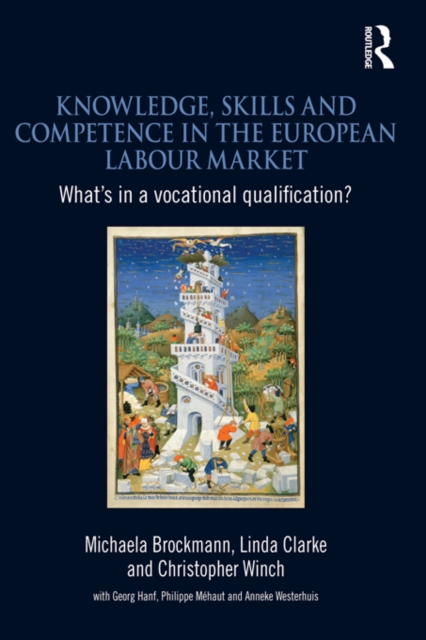
Knowledge, skills and competence in the European labour market
\"For the free movement of labour across the European Union, establishing transparency and comparability of qualifications across member states is vital. This book examines how qualifications, knowledge, skills and competences are understood in different national contexts and trans-nationally and reveals a complex picture of differences and similarities both within and between countries. Against the background of EU policy initiatives, and in particular the European Qualifications Framework, an important focus is on the prospects and difficulties of establishing cross-national recognition of qualifications. Drawing on case studies of particular sectors and occupations in England, France, Germany and the Netherlands, the book, written by leading academics in the field, will be a vital resource for students and researchers involved with vocational education and training, continuing professional development, human resource management and European Union policy.\" (Author's abstract, IAB-Doku); Contents: Foreword (Tim Oates) Michaela Brockmann, Linda Clark, Christopher Winch, Georg Hanf, Philippe Mehaut, Anneke Westerhuis: Introduction - Cross-National Equivalence of Skills and Qualifications across Europe? (1-21); Philippe Méhaut and Christopher Winch: EU Initiatives in Cross-National Recognition of Skills and Qualifications (22-35); Philippe Méhaut: Savoir - The Organizing Principle of French VET (36-49); Georg Hanf: The Changing Relevance of the Beruf (50-67); Anneke Westerhuis: The Meaning of Competence (68-84); Christopher Winch: Skill - A Concept Manufactured in England? (85-101); Linda Clarke: Trade? Job? Or Occupation?: The Development of Occupational Labour Markets for Bricklaying and Lorry Driving (102-119); Michaela Brockmann: Higher Education Qualifications: Convergence and Divergence in Software Engineering and Nursing (120-135); Linda Clarke, Anneke Westerhuis: Establishing Equivalence through Zones of Mutual Trust (136-148); Michaela Brockmann, Linda Clarke, Christopher Winch, Georg Hanf, Philippe Méhaut, Anneke Westerhuis: Interpretive Dictionary Competences, qualification, education, knowledge (149-184). Forschungsmethode: empirisch; Querschnitt; deskriptive Studie.
eBook
Gig qualifications for the gig economy: micro-credentials and the 'hungry mile'
This paper argues that micro-credentials are gig credentials for the gig economy. Micro-credentials are short competency-based industry-aligned units of learning, while the gig economy comprises contingent work by individual ‘suppliers’. Both can be facilitated by (often the same) digital platforms, and both are underpinned by social relations of precariousness in the labour market and in society. They are mutually reinforcing and each has the potential to amplify the other. Rather than presenting new opportunities for social inclusion and access to education, they contribute to the privatisation of education by unbundling the curriculum and blurring the line between public and private provision in higher education. They accelerate the transfer of the costs of employment preparation, induction, and progression from governments and employers to individuals. Micro-credentials contribute to ‘disciplining’ higher education in two ways: first by building tighter links between higher education and workplace requirements (rather than whole occupations), and through ensuring universities are more ‘responsive’ to employer demands in a competitive market crowded with other types of providers. Instead of micro-credentials, progressive, democratic societies should seek to ensure that all members of society have access to a meaningful qualification that has value in the labour market and in society more broadly, and as a bridge to further education. This is a broader vision of education in which the purpose of education is to prepare individuals to live lives they have reason to value, and not just in the specifics required of particular jobs.
Journal Article