
Catalogue Search | MBRL


Are you sure you want to remove the book from the shelf?

{{itemTitle}}
1,306
result(s) for
"Quantitative research Data processing."
Sort by:

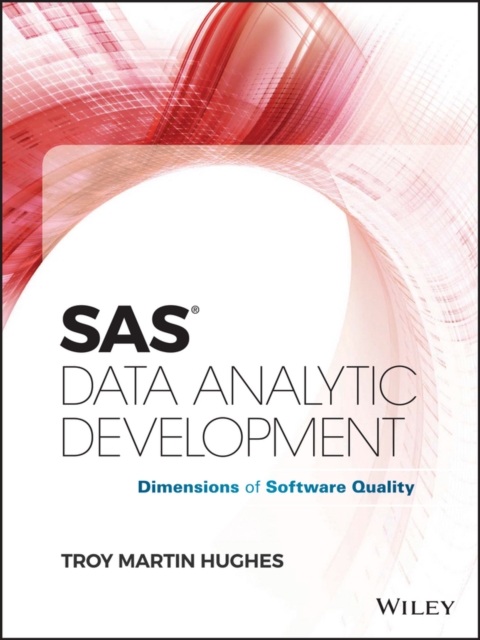
SAS data analytic development : dimensions of software quality
Design quality SAS software and evaluate SAS software quality SAS Data Analytic Development is the developer's compendium for writing better-performing software and the manager's guide to building comprehensive software performance requirements. The text introduces and parallels the International Organization for Standardization (ISO) software product quality model, demonstrating 15 performance requirements that represent dimensions of software quality, including: reliability, recoverability, robustness, execution efficiency (i.e., speed), efficiency, scalability, portability, security, automation, maintainability, modularity, readability, testability, stability, and reusability. The text is intended to be read cover-to-cover or used as a reference tool to instruct, inspire, deliver, and evaluate software quality. A common fault in many software development environments is a focus on functional requirements-the what and how-to the detriment of performance requirements, which specify instead how well software should function (assessed through software execution) or how easily software should be maintained (assessed through code inspection). Without the definition and communication of performance requirements, developers risk either building software that lacks intended quality or wasting time delivering software that exceeds performance objectives-thus, either underperforming or gold-plating, both of which are undesirable. Managers, customers, and other decision makers should also understand the dimensions of software quality both to define performance requirements at project outset as well as to evaluate whether those objectives were met at software completion. As data analytic software, SAS transforms data into information and ultimately knowledge and data-driven decisions. Not surprisingly, data quality is a central focus and theme of SAS literature; however, code quality is far less commonly described and too often references only the speed or efficiency with which software should execute, omitting other critical dimensions of software quality. SAS® software project definitions and technical requirements often fall victim to this paradox, in which rigorous quality requirements exist for data and data products yet not for the software that undergirds them. By demonstrating the cost and benefits of software quality inclusion and the risk of software quality exclusion, stakeholders learn to value, prioritize, implement, and evaluate dimensions of software quality within risk management and project management frameworks of the software development life cycle (SDLC). Thus, SAS Data Analytic Development recalibrates business value, placing code quality on par with data quality, and performance requirements on par with functional requirements.
eBook

Cloud based multi-modal information analytics : a hands-on approach
\"Cloud based Multi-Modal Information Analytics: A Hands-on Approach discusses the various modalities of data and provide an aggregated solutions using cloud. It includes the fundamentals of neural networks, different types and how it can be used for the multi-modal information analytics. The various application areas that are image-centric and video are also presented with deployment solutions in the cloud\"-- Provided by publisher.
Book

Applied Modeling Techniques and Data Analysis 1
BIG DATA, ARTIFICIAL INTELLIGENCE AND DATA ANALYSIS SET Coordinated by Jacques Janssen
Data analysis is a scientific field that continues to grow enormously, most notably over the last few decades, following rapid growth within the tech industry, as well as the wide applicability of computational techniques alongside new advances in analytic tools. Modeling enables data analysts to identify relationships, make predictions, and to understand, interpret and visualize the extracted information more strategically.
This book includes the most recent advances on this topic, meeting increasing demand from wide circles of the scientific community. Applied Modeling Techniques and Data Analysis 1 is a collective work by a number of leading scientists, analysts, engineers, mathematicians and statisticians, working on the front end of data analysis and modeling applications. The chapters cover a cross section of current concerns and research interests in the above scientific areas. The collected material is divided into appropriate sections to provide the reader with both theoretical and applied information on data analysis methods, models and techniques, along with appropriate applications.
eBook


Minding the machines
Organize, plan, and build an exceptional data analytics team within your organization In Minding the Machines: Building and Leading Data Science and Analytics Teams , AI and analytics strategy expert Jeremy Adamson delivers an accessible and insightful roadmap to structuring and leading a successful analytics team.
eBook

Applications of artificial neural networks for nonlinear data
\"This book is a collection of research on the contemporary nature of artificial neural networks and their specific implementations within data analysis\"-- Provided by publisher.
Book
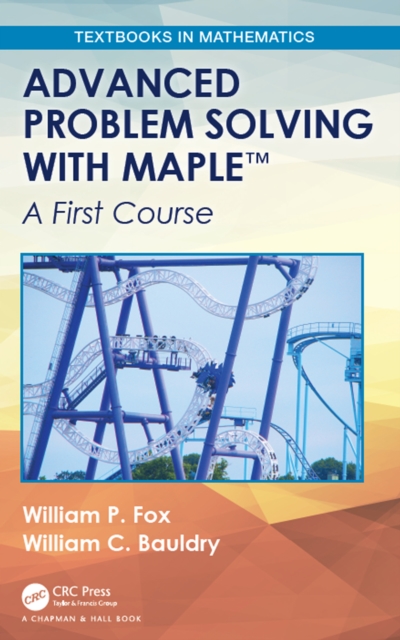
Advanced Problem Solving with Maple
Problem Solving is essential to solve real-world problems. Advanced Problem Solving with Maple: A First Course applies the mathematical modeling process by formulating, building, solving, analyzing, and criticizing mathematical models. It is intended for a course introducing students to mathematical topics they will revisit within their further studies.
The authors present mathematical modeling and problem-solving topics using Maple as the computer algebra system for mathematical explorations, as well as obtaining plots that help readers perform analyses. The book presents cogent applications that demonstrate an effective use of Maple, provide discussions of the results obtained using Maple, and stimulate thought and analysis of additional applications.
Highlights:
The book’s real-world case studies prepare the student for modeling applications
Bridges the study of topics and applications to various fields of mathematics, science, and engineering
Features a flexible format and tiered approach offers courses for students at various levels
The book can be used for students with only algebra or calculus behind them
About the authors:
Dr. William P. Fox is an emeritus professor in the Department of Defense Analysis at the Naval Postgraduate School. Currently, he is an adjunct professor, Department of Mathematics, the College of William and Mary. He received his Ph.D. at Clemson University and has many publications and scholarly activities including twenty books and over one hundred and fifty journal articles.
William C. Bauldry , Prof. Emeritus and Adjunct Research Prof. of Mathematics at Appalachian State University, received his PhD in Approximation Theory from Ohio State. He has published many papers on pedagogy and technology, often using Maple, and has been the PI of several NSF-funded projects incorporating technology and modeling into math courses. He currently serves as Associate Director of COMAP’s Math Contest in Modeling (MCM).
*Please note that the Maple package, \"PSM\", is now on the public area of the Maple Cloud. To access it:
• From the web:
1. Go to the website https://maple.cloud
2. Click on \"packages\" in the left navigation pane
3. Click on \"PSM\" in the list of packages.
4. Click the \"Download\" button to capture the package.
• From Maple:
1. Click on the Maple Cloud icon (far right in the Maple window toolbar).
Or click on the Maple Cloud button on Maple's Start page to go to the website.
2. Click on the \"packages\" in the navigation pane
3. Click on \"PSM\" in the list of packages.
The package then downloads into Maple directly.
Introduction to Problem Solving and Maple
Problem Solving
Introduction to Maple
The Structure of Maple
General Introduction to Maple
Maple Training
Maple Applications Center
Introduction, Basic Concepts, and Techniques in Problem Solving with First Order, Ordinary Differential Equations
Introduction
Applied First Order Differential Equations and Solution Methods
Slope Fields and Qualitative Assessments
Analytical Solution of 1 st Order ODEs
First Order ODEs and Maple
Numerical Methods for 1 st Order ODEs
Introduction, Basic Concepts, and Techniques in Problem Solving with Systems of Ordinary Differential Equations
Systems of Differential Equations
Applied Systems of Differential Equations
Phase Portraits and Qualitative Assessment
Solving Homogeneous and Non-Homogeneous Systems of ODEs
Numerical Solutions to Systems of Ordinary Differential Equations
Problem Solving with Linear, Integer, and Mixed Integer Programming
Formulating Linear Programming Problems
Understanding Two-Variable Linear Programming: A Graphical Simplex
Solving the Linear Program: The Simplex Method and Maple
Linear Programming with Internal Maple Commands
Sensitivity Analysis with Maple
Integer and Mixed Integer Problems with Maple
Model Fitting and Linear Regression
Introduction The Different Curve Fitting Criterion Plotting the Residuals for a Least-Squares Fit Case Studies
Statistical and Probabilistic Problem Solving with Maple Introduction Basic Statistics: Univariate Data Introduction to Classical Probability Reliability in Engineering and Business Case Study: Airlines Overbooking Model The Normal Distribution Confidence Intervals and Hypothesis Testing
Problem Solving with Simulation
Introduction
Monte Carlo Simulation
Probability and Monte Carlo Simulation Using Deterministic Behavior
Probability and Monte Carlo Simulation: Using Probabilistic Behavior
Case Studies: Applied Simulation Models
Index
Dr. William P. Fox is an emeritus professor in the Department of Defense Analysis at the Naval Postgraduate School. Currently, he is an adjunct professor, Department of Mathematics, the College of William and Mary. He received his Ph.D. at Clemson University and has many publications and scholarly activities including twenty books and over one hundred and fifty journal articles.
William C. Bauldry , Prof. Emeritus and Adjunct Research Prof. at Appalachian State University, received his PhD in Approximation Theory from Ohio State. He has published many papers on pedagogy and technology, often using Maple, and has been the PI of several NSF-funded projects incorporating technology and modeling into math courses. He currently serves as Associate Director of COMAP’s Math Contest in Modeling (MCM).
eBook

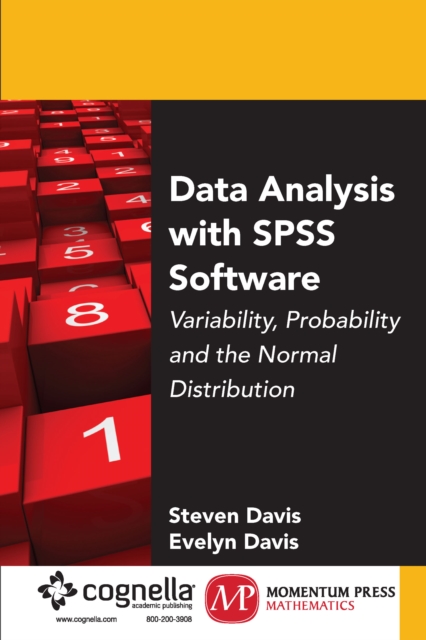
Data analysis with SPSS software
Building on the tools and techniques found in the popular statistics computer program, SPSS, this series of six books introduces the reader to the concepts of data, their categorical types, how data can be organized and manipulated, and how they can be put to practical use in solving everyday problems in science, business and technology. This second of 6 books introduces the basic principles of probability and various types of probability problems including geometric and hypergeometric probability. It covers the challenges of how to count complex groups and numbers, using things like power series to extrapolate large quantities. The book also introduces the concept and uses of the Normal Distribution as well as the Central Limit Theorem. Worked out exercises help to clarify the principles explained in the book.
eBook