
Catalogue Search | MBRL


Are you sure you want to remove the book from the shelf?

{{itemTitle}}
3,888
result(s) for
"Quaternary climates"
Sort by:

Quaternary Glaciations - Extent and Chronology
The book presents an up-to-date, detailed overview of the Quaternary glaciations all over the world, not only with regard to stratigraphy but also with regard to major glacial landforms and the extent of the respective ice sheets.The locations of key sites are included.
eBook
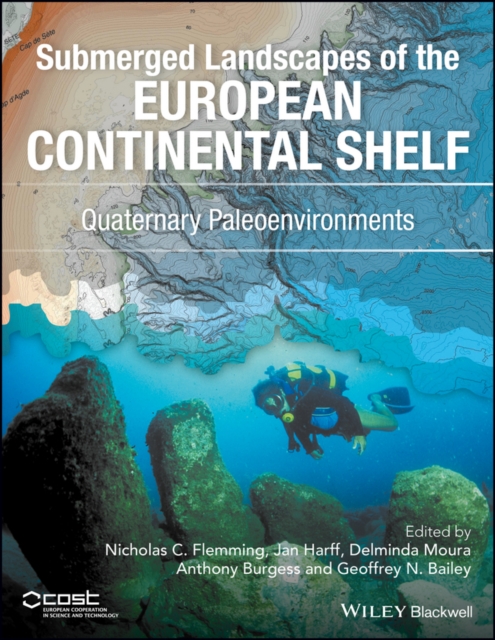
Submerged Landscapes of the European Continental Shelf
Quaternary Paleoenvironments examines the drowned landscapes exposed as extensive and attractive territory for prehistoric human settlement during the Ice Ages of the Pleistocene, when sea levels dropped to 120m-135m below their current levels.
eBook

Species and phylogenetic endemism in angiosperm trees across the Northern Hemisphere are jointly shaped by modern climate and glacial–interglacial climate change
Aims Phylogenetic endemism describes the extent to which unique phylogenetic lineages are constrained to restricted geographic areas. Previous studies indicate that species endemism is related to both past and modern climate, but studies of phylogenetic endemism are relatively rare and mainly focused on smaller regions. Here, we provide the first assessment of the patterns of species and phylogenetic endemism in angiosperm trees across the Northern Hemisphere as well as the relative importance of modern climate and glacial–interglacial climate change as drivers of these patterns. Location Northern Hemisphere. Major taxa Angiosperm trees. Methods Using tree assemblages at the scale of 100 km × 100 km grid cells and simultaneous autoregressive (SAR) models, we assessed the relationships between species endemism, phylogenetic endemism and modern climate variables, Last Glacial Maximum (LGM) to present temperature velocity. Results Species and phylogenetic endemism were associated with both modern climate and glacial–interglacial climate change, with higher values in areas with stable historical climate and warmer and wetter modern conditions. Notably, the multivariate SAR analyses showed that the combinations of variables with highest Akaike’s information criterion (AIC) weight always included both LGM–present climate instability and modern climate, that is, modern precipitation and temperature. Main conclusions Our results show that high phylogenetic endemism is partially dependent on long‐term climate stability, highlighting the threat posed by future climate changes to the preservation of rare, phylogenetically distinct lineages of trees.
Journal Article
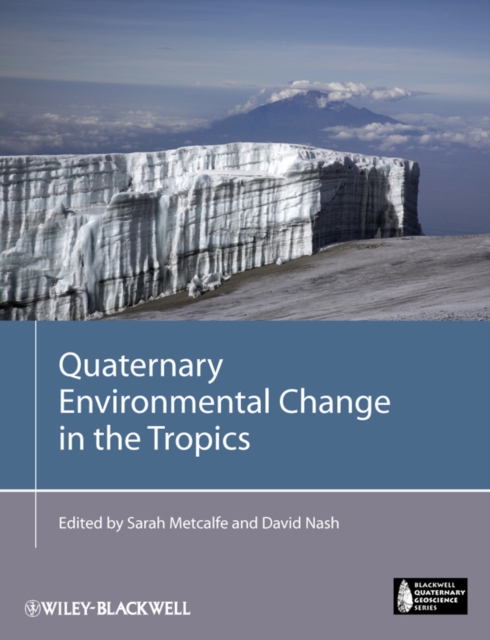
Quaternary environmental change in the tropics
The global climate changes that led to the expansion and contraction of high latitude ice sheets during the Quaternary period were associated with equally dramatic changes in tropical environments. These included shifts in vegetation zones, changes in the hydrology and ecology of lakes and rivers, and fluctuations in the size of mountain glaciers and sandy deserts. Until recently it was thought that such changes were triggered by fluctuations in the distribution of polar ice cover. Now there is increasing recognition that the tropics themselves have acted as drivers of global climate change over a range of timescales. The aim of Quaternary Environmental Change in the Tropics is to provide a synthesis of the changes that occurred in tropical terrestrial and marine systems during the Pleistocene and Holocene, complementing data-derived reconstructions with output from state-of-the-art climate models. It is targeted at final-year undergraduate students and research specialists, but will provide an introduction to tropical Quaternary research for a variety of other readers.
eBook

Why mountains matter for biodiversity
Mountains are arguably Earth's most striking features. They play a major role in determining global and regional climates, are the source of most rivers, act as cradles, barriers and bridges for species, and are crucial for the survival and sustainability of many human societies. The complexity of mountains is tightly associated with high biodiversity, but the processes underlying this association are poorly known. Solving this puzzle requires researchers to generate more primary data, and better integrate available geological and climatic data into biological models of diversity and evolution. In this perspective, we highlight emerging insights, which stress the importance of mountain building through time as a generator and reservoir of biodiversity. We also discuss recently proposed parallels between surface uplift, habitat formation and species diversification. We exemplify these links and discuss other factors, such as Quaternary climatic variations, which may have obscured some mountain-building evidence due to erosion and other processes. Biological evolution is complex and the build-up of mountains is certainly not the only explanation, but biological and geological processes are probably more intertwined than many of us realize. The overall conclusion is that geology sets the stage for speciation, where ecological interactions, adaptive and non-adaptive radiations and stochastic processes act together to increase biodiversity. Further integration of these fields may yield novel and robust insights.
Journal Article

Quaternary research in Britain and Ireland
During the later part of the last century there was rapid development of the study and understanding of the changing environments of the last 2 million years. This came to provide a firm background for todays knowledge of the significance and importance of climatic change. Interdisciplinary research has been a prominent, if not essential, contributor to the successes achieved. In illustration of this connection, this volume describes here such developments in the University of Cambridge. In 1948 the University established a Subdepartment of Quaternary Research, with teaching and research activities covering geological, biological and archaeological topics. An interdisciplinary approach was an essential ingredient, and the research covered both terrestrial and marine spheres. The book traces the history of Quaternary research in Britain and Ireland, particularly the continental influences which stimulated research and indeed led to the establishment of the Subdepartment.The early years of the Subdepartment were an exceptionally exciting time for Quaternary researchers. This period saw the development of radiocarbon dating and of marine geochemical studies, together with the improvement of interpretation of palaeobotanical data, and the consequent incorporation of a vast accession of new information relating to these subjects. Stratigraphy, the binding topic of Quaternary research, became much better understood: first, in the terrestrial sphere with the formulation of divisions of the Quaternary based on accepted geological principles and providing a measure of the passage of time to students of the several disciplines involved, including landscape history, ecosystem history and archaeology, and secondly in the marine sphere a formulation of units defined by isotope studies.The organisation of the Subdepartment and the problems of developing
interdisciplinary science are considered. An important aspect is the variety of staff and students involved in interdisciplinary research and teaching. In order to give a complete an account as possible of the activities of the Subdepartment, a listing of staff and students and their interests is compiled, which I think is necessary to give a rounded view of the Subdepartment as a whole.Research topics and their development are considered one-by-one, and the numbers of publications in each sphere are summarised over the life of the Subdepartment, giving a clear view of how research developed over the period of 45 years. These activities were brought to an end in 1994, with the dissolution of the Subdepartment, which is described, together with a discussion of achievements and the voicing of some reflections.In a final part, I take a wider view of the history of Quaternary research, with aspects of geology and biology considered, together with notes on the Quaternary community, research support and journals.
eBook

Persistent Quaternary climate refugia are hospices for biodiversity in the Anthropocene
Climate stability leads to high levels of speciation and reduced extinction rates, shaping species richness patterns1–3. Hotspots of species diversity often overlap with regions that experienced stable temperatures and, perhaps, variable rates of precipitation during the late Quaternary4,5. These hotspots potentially harbour many species with low vagility and small geographical ranges6, making them more vulnerable to future ecoclimatic change4,7,8. By comparing global and regional patterns of climate stability during short periods of unusually large and widespread climate changes since the Last Glacial Maximum with twenty-first-century patterns, we show that human-driven climate change will disproportionally affect biodiversity in late Quaternary climate refugia, ultimately affecting the species, communities and ecosystems that are most vulnerable to climate change. Moreover, future changes in absolute temperature will probably erode the mechanisms that are theorized to sustain biodiversity hotspots across time. These impending shifts from stable to unstable temperatures—projected for the majority of the world’s biodiversity regions—threaten to reduce the size and extent of important climatic safe havens for diversity. Where climate refugia are forecast to persist until the end of this century, temperatures in these refuges are likely to exceed the acclimation capacity of many species, making them short-term hospices for biodiversity at best7–9.The stability of climatic conditions since the Last Glacial Maximum has contributed to current global patterns of species richness. Changes in patterns of climate stability this century reveal areas where climate change could reduce biodiversity, with largest losses in past climatic safe havens.
Journal Article

Asian inland wildfires driven by glacial–interglacial climate change
Wildfire can influence climate directly and indirectly, but little is known about the relationships between wildfire and climate during the Quaternary, especially howwildfire patterns varied over glacial–interglacial cycles. Here, we present a high-resolution soot record from the Chinese Loess Plateau; this is a record of large-scale, high-intensity fires over the past 2.6 My. We observed a unique and distinct glacial–interglacial cyclicity of soot over the entire Quaternary Period synchronous with marine δ18O and dust records, which suggests that ice-volume-modulated aridity controlled wildfire occurrences, soot production, and dust fluxes in central Asia. The high-intensity fires were also found to be anticorrelated with global atmospheric CO₂ records over the past eight glacial–interglacial cycles, implying a possible connection between the fires, dust, and climate mediated through the iron cycle. The significance of this hypothetical connection remains to be determined, but the relationships revealed in this study hint at the potential importance of wildfire for the global climate system.
Journal Article
Phylogenetic age differences in tree assemblages across the Northern Hemisphere increase with long-term climate stability in unstable regions
Aims: Long-term climate stability is hypothesized to drive the emergence of species assemblages with large species age differences due to the accumulation of relict species and relatively newly arisen species via reduced extinction and increased speciation. Few studies have addressed these predictions and so far no study has done so for plants across the Northern Hemisphere. Here, we linked Quaternary-scale climate variability to phylogenetic age differences between the oldest and youngest group of species in tree assemblages in 100 km × 100 km grid cells across the Northern Hemisphere to test these predictions. Location: Northern Hemisphere. Methods: Last Glacial Maximum (LGM)-to-present shifts in temperature and precipitation were used as proxies for Quaternary-scale glacial–interglacial climate variability. Simultaneous autoregressive (SAR) models were used to assess the relationships between phylogenetic age differences and Quaternary-scale climate variability. Results: We found that phylogenetic age differences overall were largest in China and smallest in Europe, and they declined with increasing temperature instability as predicted, but only in Europe and North America. In China, the relatively mild Quaternary climate changes did not appear to have strongly affected phylogenetic age differences in tree assemblages. Main conclusions: Our results show that phylogenetically diverse assemblages with large phylogenetic age differences among species are associated with relatively high long-term climate stability, with intra-regional links between long-term climate variability and phylogenetic composition especially strong in the more unstable regions. These findings point to future climate change as a key risk to the preservation of the phylogenetically diverse assemblages in regions characterized by relatively high paleoclimate stability, with China as a key example.
Journal Article

Disentangling influences of climate variability and lake-system evolution on climate proxies derived from isoprenoid and branched glycerol dialkyl glycerol tetraethers (GDGTs): the 250 kyr Lake Chala record
High-resolution paleoclimate records from tropical continental settings are greatly needed to advance understanding of global climate dynamics. The International Continental Scientific Drilling Program (ICDP) project DeepCHALLA recovered a 214.8 m long sediment sequence from Lake Chala, a deep and permanently stratified (meromictic) crater lake in eastern equatorial Africa, covering the past ca. 250 000 years (250 kyr) of continuous lacustrine deposition since the earliest phase of lake-basin development. Lipid biomarker analyses on the sediments of Lake Chala can provide quantitative records of past variation in temperature and moisture balance from this poorly documented region. However, the degree to which climate proxies derived from aquatically produced biomarkers are affected by aspects of lake developmental history is rarely considered, even though it may critically influence their ability to consistently register a particular climate variable through time. Modern-system studies of Lake Chala revealed crucial information about the mechanisms underpinning relationships between proxies based on isoprenoid (iso-) and branched (br-) glycerol dialkyl glycerol tetraethers (GDGTs) and the targeted climate variables, but the persistence of these relationships in the past remains unclear. Here we assess the reliability of long-term climate signals registered in the sediments of Lake Chala by comparing downcore variations in GDGT distributions with major phases in lake-system evolution as reflected by independent proxies of lake depth, mixing regime and nutrient dynamics: seismic reflection data, lithology and fossil diatom assemblages. Together, these records suggest that during early lake history (before ca. 180–200 ka) the distinct mixing-related depth zones with which specific GDGT producers are associated in the modern-day lake were not yet formed, likely due to more open lake hydrology and absence of chemical water-column stratification. Consequently absolute GDGT concentrations dating to this period are relatively low, proxies sensitive to water-column stratification (e.g., branched versus isoprenoid tetraether (BIT) index) display highly irregular temporal variability, and correlations between proxies are dissimilar to expectations based on modern-system understanding. A sequence of lake-system changes between ca. 180–200 and ca. 80 ka first established and then strengthened the chemical density gradient, promoting meromictic conditions despite the overall decrease in lake depth due to the basin gradually being filled up with sediments. From ca. 180 ka onward some GDGTs and derived proxies (e.g., crenarchaeol concentration, BIT index and IR6Me) display strong ∼ 23 kyr periodicity, likely reflecting the predominantly precession-driven insolation forcing of Quaternary climate variability in low-latitude regions. Our results suggest that GDGT-based temperature and moisture-balance proxies in Lake Chala sediments reflect the climate history of eastern equatorial Africa from at least ca. 160 ka onwards, i.e., covering the complete last glacial–interglacial cycle and the penultimate glacial maximum. This work confirms the potential of lacustrine GDGTs for elucidating the climate history of tropical regions at Quaternary timescales, provided they are applied to suitably high-quality sediment archives. Additionally, their interpretation should incorporate a broader understanding of the extent to which lake-system evolution limits the extrapolation back in time of proxy-climate relationships established in the modern system.
Journal Article