
Catalogue Search | MBRL


Are you sure you want to remove the book from the shelf?

{{itemTitle}}
89
result(s) for
"Quietism (philosophy)"
Sort by:
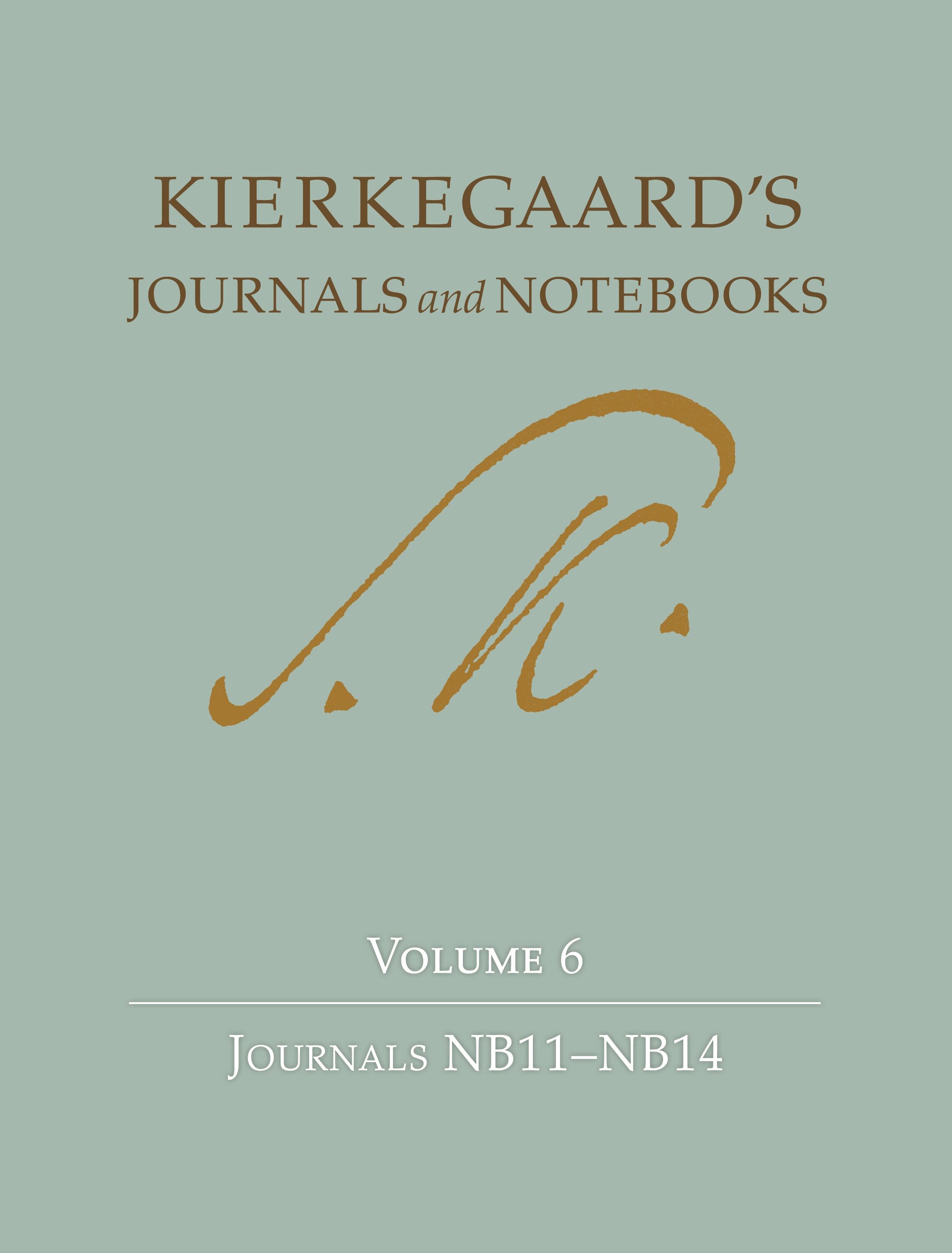
Kierkegaard's journals and notebooks
For over a century, the Danish thinker Søren Kierkegaard (1813-55) has been at the center of a number of important discussions, concerning not only philosophy and theology, but also, more recently, fields such as social thought, psychology, and contemporary aesthetics, especially literary theory.
Despite his relatively short life, Kierkegaard was an extraordinarily prolific writer, as attested to by the 26-volume Princeton University Press edition of all of his published writings. But Kierkegaard left behind nearly as much unpublished writing, most of which consists of what are called his \"journals and notebooks.\" Kierkegaard has long been recognized as one of history's great journal keepers, but only rather small portions of his journals and notebooks are what we usually understand by the term \"diaries.\" By far the greater part of Kierkegaard's journals and notebooks consists of reflections on a myriad of subjects--philosophical, religious, political, personal. Studying his journals and notebooks takes us into his workshop, where we can see his entire universe of thought. We can witness the genesis of his published works, to be sure--but we can also see whole galaxies of concepts, new insights, and fragments, large and small, of partially (or almost entirely) completed but unpublished works.Kierkegaard's Journals and Notebooksenables us to see the thinker in dialogue with his times and with himself.
Volume 6 of this 11-volume series includes four of Kierkegaard's important \"NB\" journals (Journals NB11 through NB14), covering the months from early May 1849 to the beginning of 1850. At this time Denmark was coming to terms with the 1848 revolution that had replaced absolutism with popular sovereignty, while the war with the German states continued, and the country pondered exactly what replacing the old State Church with the Danish People's Church would mean. In these journals Kierkegaard reflects at length on political and, especially, on ecclesiastical developments. His brooding over the ongoing effects of his fight with the satirical journalCorsaircontinues, and he also examines and re-examines the broader personal and religious significance of his broken engagement with Regine Olsen. These journals also contain reflections by Kierkegaard on a number of his most important works, including the two works written under his \"new\" pseudonym Anti-Climacus (The Sickness unto DeathandPractice in Christianity) and his various attempts at autobiographical explanations of his work. And, all the while, the drumbeat of his radical critique of \"Christendom\" continues and escalates.
Kierkegaard wrote his journals in a two-column format, one for his initial entries and the second for the extensive marginal comments that he added later. This edition of the journals reproduces this format, includes several photographs of original manuscript pages, and contains extensive scholarly commentary on the various entries and on the history of the manuscripts being reproduced.
eBook

Slavery and Methodism
The growing appeal of abolitionism and its increasing success in converting Americans to the antislavery cause, a generation before the Civil War, is clearly revealed in this book on the Methodist Episcopal Church in America. The moral character of the antislavery movement is stressed.
Originally published in 1965.
The Princeton Legacy Library uses the latest print-on-demand technology to again make available previously out-of-print books from the distinguished backlist of Princeton University Press. These editions preserve the original texts of these important books while presenting them in durable paperback and hardcover editions. The goal of the Princeton Legacy Library is to vastly increase access to the rich scholarly heritage found in the thousands of books published by Princeton University Press since its founding in 1905.
eBook

Public Freedom
The freedom to take part in civic life--whether in the exercise of one's right to vote or congregate and protest--has become increasingly less important to Americans than individual rights and liberties. InPublic Freedom, renowned political theorist Dana Villa argues that political freedom is essential to both the preservation of constitutional government and the very substance of American democracy itself.
Through intense close readings of theorists such as Hegel, Tocqueville, Mill, Adorno, Arendt, and Foucault, Villa diagnoses the key causes of our democratic discontent and offers solutions to preserve at least some of our democratic hopes. He demonstrates how Americans' preoccupation with a market-based conception of freedom--that is, the personal freedom to choose among different material, moral, and vocational goods--has led to the gradual erosion of meaningful public participation in politics as well as diminished interest in the health of the public realm itself. Villa critically examines, among other topics, the promise and limits of civil society and associational life as sources of democratic renewal; the effects of mass media on the public arena; and the problematic but still necessary ideas of civic competence and democratic maturity.
Public Freedomis a passionate and insightful defense of political liberties at a moment in America's history when such freedoms are very much at risk.
eBook

Philosophy in a Feminist Voice
In this book, Janet Kourany offers an antidote to the pervasive and pernicious strains in Western philosophy that discount women. Most areas of Western philosophy tend not only to ignore women, but also to perpetuate long-standing antifeminine biases of the society as a whole. It does not have to be this way. Rather than be part of the problem, philosophy can be a powerful force for much needed social change. In this collection of essays by some of the most noted feminist philosophers, Kourany showcases ideas on the newest work of Western philosophy that is benefiting women as well as men. Included here are articles by Eileen O'Neill, Louise Antony, Virginia Held, Susan Okin, Carolyn Korsmeyer, Nancy Frankenberry, Lorraine Code, Janet Kourany, Andrea Nye, and Susan Bordo, all of whom show further directions in which philosophy ought to proceed.
This book demonstrates that feminist philosophy is not a separate area of philosophy that can safely be ignored by philosophers not \"in\" it. Rather, it relates to at least most of the major areas of philosophy, and its gains will stand to benefit all philosophers, no matter what their field.
eBook

Contesting spirit
Challenging the dominant scholarly consensus that Nietzsche is simply an enemy of religion, Tyler Roberts examines the place of religion in Nietzsche's thought and Nietzsche's thought as a site of religion. Roberts argues that Nietzsche's conceptualization and cultivation of an affirmative self require that we interrogate the ambiguities that mark his criticisms of asceticism and mysticism. What emerges is a vision of Nietzsche's philosophy as the enactment of a spiritual quest informed by transfigured versions of religious tropes and practices.
Nietzsche criticizes the ascetic hatred of the body and this-worldly life, yet engages in rigorous practices of self-denial--he sees philosophy as such a practice--and affirms the need of imposing suffering on oneself in order to enhance the spirit. He dismisses the \"intoxication\" of mysticism, yet links mysticism, power, and creativity, and describes his own self-transcending experiences. The tensions in his relation to religion are closely related to that between negation and affirmation in his thinking in general. In Roberts's view, Nietzsche's transfigurations of religion offer resources for a postmodern religious imagination. Though as a \"master of suspicion,\" Nietzsche, with Freud and Marx, is an integral part of modern antireligion, he has the power to take us beyond the flat, modern distinction between the secular and the religious--a distinction that, at the end of modernity, begs to be reexamined.
eBook
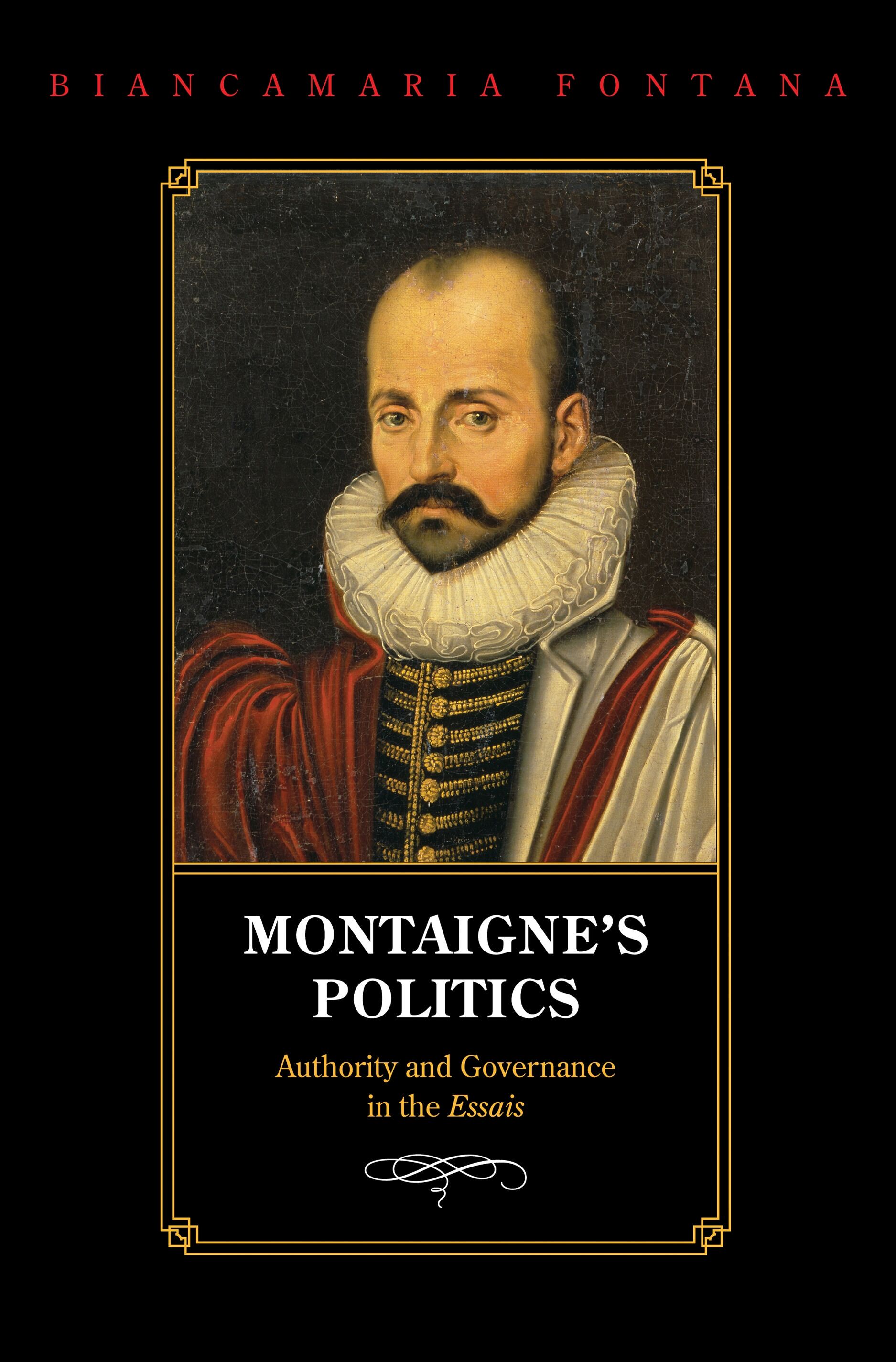
Montaigne's politics
Michel de Montaigne (1533-92) is principally known today as a literary figure--the inventor of the modern essay and the pioneer of autobiographical self-exploration who retired from politics in midlife to write his private, philosophical, and apolitical Essais. But, as Biancamaria Fontana argues in Montaigne's Politics, a novel, vivid account of the political meaning of the Essais in the context of Montaigne's life and times, his retirement from the Bordeaux parliament in 1570 \"could be said to have marked the beginning, rather than the end, of his public career.\" He later served as mayor of Bordeaux and advisor to King Henry of Navarre, and, as Fontana argues, Montaigne's Essais very much reflect his ongoing involvement and preoccupation with contemporary politics--particularly the politics of France's civil wars between Catholics and Protestants. Fontana shows that the Essais, although written as a record of Montaigne's personal experiences, do nothing less than set forth the first major critique of France's ancien rgime, anticipating the main themes of Enlightenment writers such as Voltaire and Diderot. Challenging the views that Montaigne was politically aloof or evasive, or that he was a conservative skeptic and supporter of absolute monarchy, Fontana explores many of the central political issues in Montaigne's work--the reform of legal institutions, the prospects of religious toleration, the role of public opinion, and the legitimacy of political regimes.
eBook

Impossible Individuality
Studying major writers and philosophers--Schlegel and Schleiermacher in Germany, Wordsworth in England, and Chateaubriand in France--Gerald Izenberg shows how a combination of political, social, and psychological developments resulted in the modern concept of selfhood. More than a study of one national culture influencing another, this work goes to the heart of kindred intellectual processes in three European countries. Izenberg makes two persuasive and related arguments. The first is that the Romantics developed a new idea of the self as characterized by fundamentally opposing impulses: a drive to assert the authority of the self and expand that authority to absorb the universe, and the contradictory impulse to surrender to a greater idealized entity as the condition of the self's infinity. The second argument seeks to explain these paradoxes historically, showing how romantic individuality emerged as a compromise. Izenberg demonstrates how the Romantics retreated, in part, from a preliminary, radically activist ideal of autonomy they had worked out under the impact of the French Revolution. They had begun by seeing the individual self as the sole source of meaning and authority, but the convergence of crises in their personal lives with the crises of the revolution revealed this ideal as dangerously aggressive and self-aggrandizing. In reaction, the Romantics shifted their absolute claims for the self to the realm of creativity and imagination, and made such claims less dangerous by attributing totality to nature, art, lover, or state, which in return gave that totality back to the self.
eBook

The red thread
Is there a Buddhist discourse on sex? In this innovative study, Bernard Faure reveals Buddhism's paradoxical attitudes toward sexuality. His remarkably broad range covers the entire geography of this religion, and its long evolution from the time of its founder, Xvkyamuni, to the premodern age. The author's anthropological approach uncovers the inherent discrepancies between the normative teachings of Buddhism and what its followers practice.
Framing his discussion on some of the most prominent Western thinkers of sexuality--Georges Bataille and Michel Foucault--Faure draws from different reservoirs of writings, such as the orthodox and heterodox \"doctrines\" of Buddhism, and its monastic codes. Virtually untapped mythological as well as legal sources are also used. The dialectics inherent in Mahvyvna Buddhism, in particular in the Tantric and Chan/Zen traditions, seemed to allow for greater laxity and even encouraged breaking of taboos.
Faure also offers a history of Buddhist monastic life, which has been buffeted by anticlerical attitudes, and by attempts to regulate sexual behavior from both within and beyond the monastery. In two chapters devoted to Buddhist homosexuality, he examines the way in which this sexual behavior was simultaneously condemned and idealized in medieval Japan.
This book will appeal especially to those interested in the cultural history of Buddhism and in premodern Japanese culture. But the story of how one of the world's oldest religions has faced one of life's greatest problems makes fascinating reading for all.
eBook

The best thing about the deflationary theory of truth
I argue that deflationary theories of truth reveal an important lesson for the broader theory of truth: although the notion of truthmaking has played an essential role in many traditional theories of truth, it can be separated from and survive the rejection of substantive theories of truth. I argue that many of the traditional substantive theories of truth (correspondence, coherence, pragmatic) are unified in defining truth in terms of the ontological grounds (or truthmakers) that are needed to account for truth. Deflationists reject the idea that a theory of truth needs such metaphysical implications, but in so doing they need not rule out the possibility of developing an independently motivated theory of truthmaking. I argue that deflationists can and should embrace truthmaker theory, once it is shorn from its connection to the traditional project of defining truth.
Journal Article
Against quietist normative realism
Recently, some philosophers have suggested that a form of robust realism about ethics, or normativity more generally, does not face a significant explanatory burden in metaphysics. I call this view metaphysically quietist normative realism. This paper argues that while this view can appear to constitute an attractive alternative to more traditional forms of normative realism, it cannot deliver on this promise. I examine Scanlon's attempt to defend such a quietist realism, and argue that rather than silencing metaphysical questions about normative reasons, his defense at best succeeds only in\\ shifting the focus of metaphysical enquiry. I then set aside the details of Scanlon's view, and argue on general grounds that that the quietist realist cannot finesse a crucial metanormative task: to explain the contrast between the correct normative system and alternative putatively normative standards.
Journal Article