
Catalogue Search | MBRL


Are you sure you want to remove the book from the shelf?

{{itemTitle}}
15
result(s) for
"Qurʼan Commentaries History and criticism."
Sort by:


Ibn Taymiyya as Exegete: Moses' Father-in-Law and the Messengers in \Sūrat Yā Sīn\
This article contends that Ibn Taymiyya was not only a theologian and jurist, but also a Qur'anic exegete (mufassir). As a mufassir, Ibn Taymiyya began an important exegetical shift away from the Ashʿarī philological tradition to one that was more ḥadīth-based and relied on the traditions of the early community (salaf). However, by examining exegetical writings composed after his Muqaddima fī uṣūl al-tafsīr ('Introduction to the Principles of tafsīr'), this article demonstrates that Ibn Taymiyya employs philology and Biblical material as hermeneutic tools. He draws on the Bible to argue that Moses' father-in-law could not have been the Arab prophet Shuʿayb, as many exegetes had claimed, but rather the Biblical Jethro (Yathrā). The Bible clearly states that Moses' father-in-law was Jethro which is in accordance with the authentic sayings of the companions and successors. Moreover, drawing on Biblical history, Ibn Taymiyya contends that the messengers of Sūrat Yā Sīn could not have been the Disciples of Jesus but rather prophets sent before the time of Christ. The messengers of Sūrat Yā Sīn were sent to a people who were destroyed because of their disbelief, while the Disciples were sent to Antioch which believed in their call. Thus, we see that Ibn Taymyya's exegetical engagements revolve around theology in seeking to better define prophecy.
Journal Article
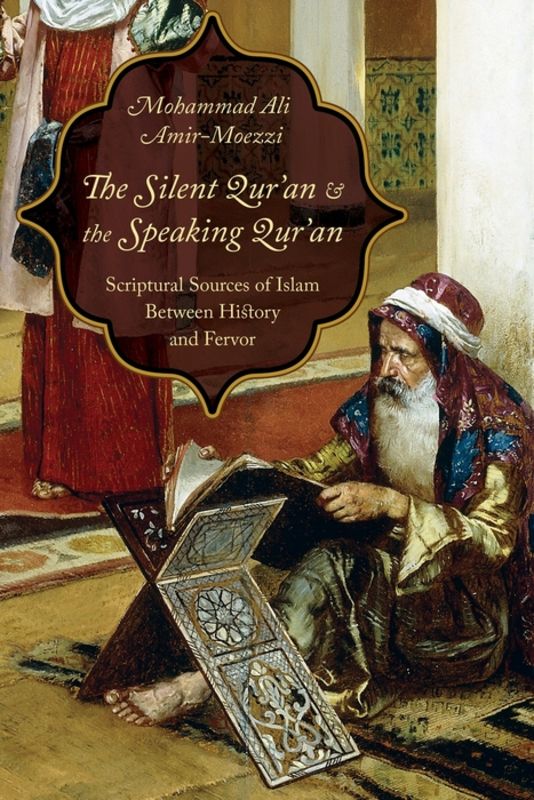
The silent Qurʼan & the speaking Qurʼan
Two major events occurred in the early centuries of Islam that determined its historical and spiritual development in the centuries that followed: the formation of the sacred scriptures, namely the Qur'an and the Hadith, and the chronic violence that surrounded the succession of the Prophet, manifesting in repression, revolution, massacre, and civil war.
This is the first book to evaluate the writing of Islam's major scriptural sources within the context of these bloody, brutal conflicts. Conducting a philological and historical study of little-known though significant ancient texts, Mohammad Ali Amir-Moezzi rebuilds a Shi'ite understanding of Islam's early history and the genesis of its holy scriptures. At the same time, he proposes a fresh interpretative framework and a new data set for theorizing the early history of Islam, isolating the contradictions between Shi'ite and Sunni sources and their contribution to the tensions that rile these groups today.
eBook

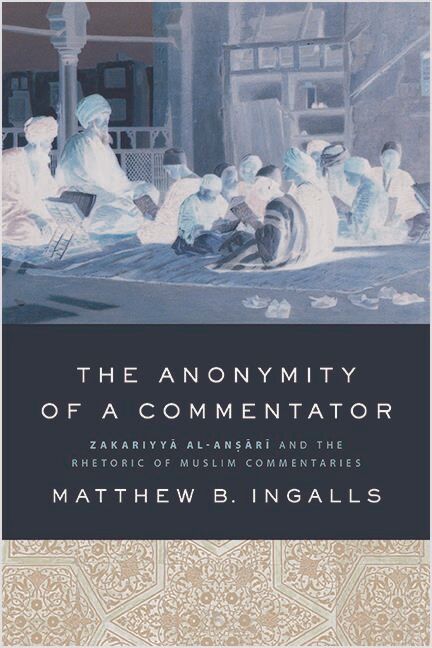
The Anonymity of a Commentator
The Anonymity of a Commentator examines the life and
writings of the Egyptian Sufi-scholar Zakariyyā al-Anṣārī (d.
926/1520), the longest-serving chief Shāfi'ī justice to the Mamlūk
sultanate during its final years. It analyzes al-Anṣārī's
commentaries in the disciplines of Sufism and Islamic law as a case
study to illustrate how and why Muslims produced commentaries in
the later Islamic Middle Period and how the form and rhetoric of
commentary writing furnished scholars like al-Anṣārī with a medium
in which to express their creativity and adapt the received
tradition to the needs of their time. Whereas twentieth-century
scholars tended to view Muslim commentary texts as symbols of
intellectual stagnation in and of themselves, contemporary scholars
recognize that these texts are often the repositories of profound
ideas, although they approach them with little guidance from their
academic predecessors. The Anonymity of a Commentator aims
to provide this guidance, through a close study of one of the most
prolific commentary writers in Islamic history.
eBook

The Qur'an and its Biblical Subtext
This book challenges the dominant scholarly notion that the Qur’ān must be interpreted through the medieval commentaries shaped by the biography of the prophet Muhammad, arguing instead that the text is best read in light of Christian and Jewish scripture. The Qur’ān, in its use of allusions, depends on the Biblical knowledge of its audience. However, medieval Muslim commentators, working in a context of religious rivalry, developed stories that separate Qur’ān and Bible, which this book brings back together.
In a series of studies involving the devil, Adam, Abraham, Jonah, Mary, and Muhammad among others, Reynolds shows how modern translators of the Qur’ān have followed medieval Muslim commentary and demonstrates how an appreciation of the Qur’ān’s Biblical subtext uncovers the richness of the Qur’ān’s discourse. Presenting unique interpretations of 13 different sections of the Qur’ān based on studies of earlier Jewish and Christian literature, the author substantially re-evaluates Muslim exegetical literature. Thus The Qur’ān and Its Biblical Subtext , a work based on a profound regard for the Qur’ān’s literary structure and rhetorical strategy, poses a substantial challenge to the standard scholarship of Qur’ānic Studies. With an approach that bridges early Christian history and Islamic origins, the book will appeal not only to students of the Qur’an but of the Bible, religious studies and Islamic history.
Introduction: Listening to the Text 1. The Crisis of Qur’anic Studies. Excursus: Regarding the Dates of Jewish and Christian Texts 2. Qur’anic Case Studies 3. Qur’an and Tafsir 4. Reading the Qur’an as Homily
\"This is a serious and well-argued book, it presents a powerful thesis which if it is true will have important implications for how we study the Qur'an. It is consistent throughout and the author's use of sources is invariably judicious and intelligent.\" - Oliver Leanman, Department of Philosophy, University of Kentucky, USA; Journal of Shi'a Islamic Studies Spring 2011: Vol. IV No.2
Gabriel Said Reynolds is Associate Professor of Islamic Studies and Theology at the University of Notre Dame (USA). He works on Qur’ānic Studies and Muslim-Christian Relations and is the author of A Muslim Theologian in the Sectarian Milieu , the translator of ‘Abd al-Jabbār’s A Critique of Christian Origins , and the editor of The Qur’ān in Its Historical Context.
eBook

Marked Word Order in the Qurān and its English Translations
The literature on Balaghah (the art of Arabic eloquence) and commentaries on the Quran stress that the style of the Quran is beautiful, eloquent and inimitable. This literature identifies word order as one of the most distinctive aspects of Quranic style. One of the main reasons for this is that, compared to English, Arabic has fewer restrictions on word order, thanks to its elaborate verb inflection system and case marking. This flexibility allows for the foregrounding of some elements withi.
eBook
The Qurʾan seminar commentary : a collaborative study of 50 Qurʾanic passages
The Qur'an Seminar Commentary is an unprecedented work of collaboration in the field of Qur'anic Studies, involving the insights of 25 scholars on 50 Qur'anic passages. These scholars represent a diverse range of disciplinary backgrounds and provide readers with unique insights into the latest trends of research in the Qur'an. This Commentary is a useful and illuminating reference work for students and scholars in the field of Qur'anic Studies.
eBook
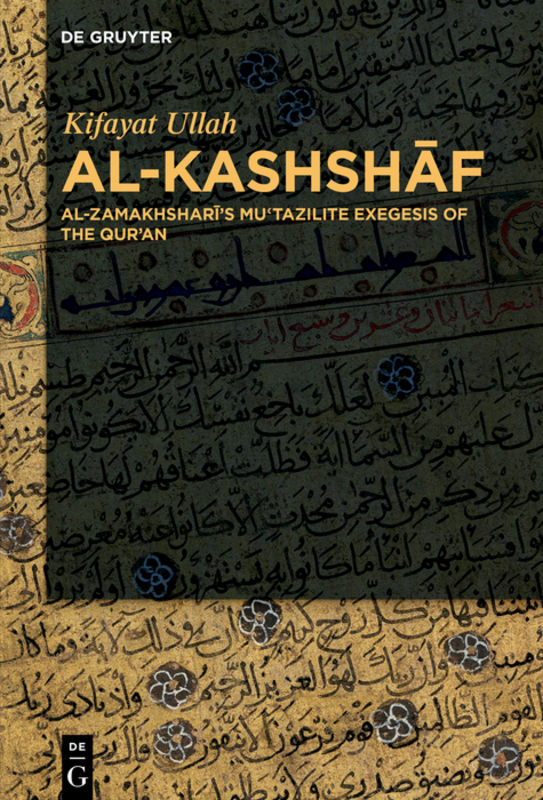
Al-Kashshāf : al-Zamakhsharī's Muʿtazilite exegesis of the Qurʾān
The book analyzes extensively al-ZamakhsharÄ«'s tafsÄ«r al KashshÄf within the framework of the Mu'tazilites' five principles: (usÅ«l al-khamsa) of their theology.Andrew Lane in his book entitled \"A Traditional Mu'tazilite Qur'Än Commentary: The KashshÄf of JÄr AllÄh al-ZamakhsharÄ«\" states that al-KashshÄf is not a Mu'tazilite tafsÄ«r of the Qur'Än.
eBook
