
Catalogue Search | MBRL


Are you sure you want to remove the book from the shelf?

{{itemTitle}}
17
result(s) for
"Rédaction juridique"
Sort by:

Introduction to Legal Research Method and Legal Writing
The book is written in a conversational style, and the language is accessible and simple, with flowing examples that users can relate with. Practical legal questions are raised and application of individual research methods, strategies, approaches and philosophies are demonstrated. The book starts with a clear definition of legal research method to justification and importance. It spans the research process, theoretical positions and justification for research, the writing up process and the defence of research output either in seminars, conferences or for PhD defence. It also prepares researchers and academicians for discussion and interaction with peers at conferences and seminars.
eBook

Point Taken
In Point Taken, Ross Guberman delves into the work of the best judicial opinion-writers and offers a step-by-step method with practical and provocative examples to assist anyone involved in drafting opinions to improve his or her writing skills.
eBook

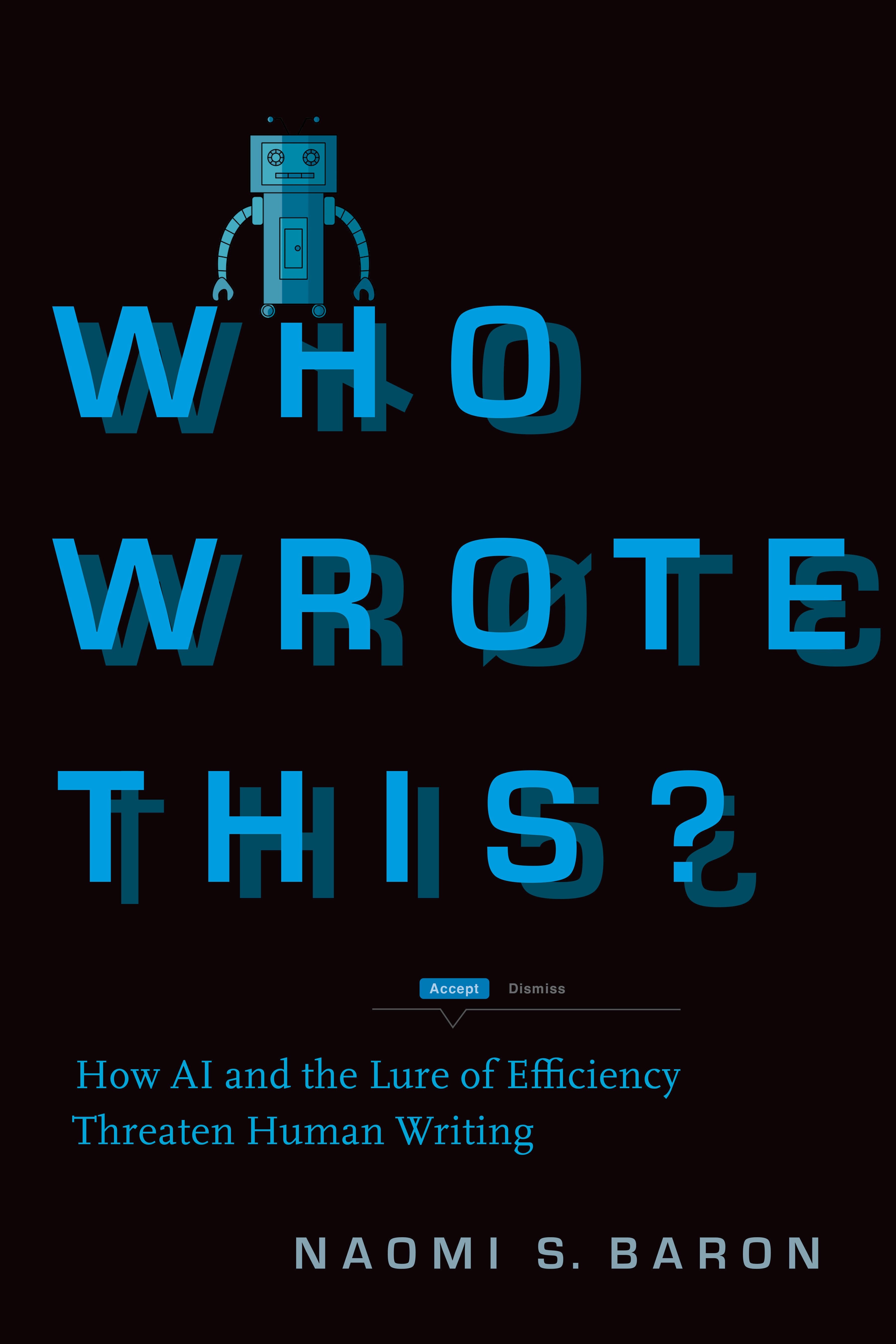
Who Wrote This?
Would you read this book if a computer wrote it? Would you even know? And why would it matter?
Today's eerily impressive artificial intelligence writing tools present us with a crucial challenge: As writers, do we unthinkingly adopt AI's time-saving advantages or do we stop to weigh what we gain and lose when heeding its siren call? To understand how AI is redefining what it means to write and think, linguist and educator Naomi S. Baron leads us on a journey connecting the dots between human literacy and today's technology. From nineteenth-century lessons in composition, to mathematician Alan Turing's work creating a machine for deciphering war-time messages, to contemporary engines like ChatGPT, Baron gives readers a spirited overview of the emergence of both literacy and AI, and a glimpse of their possible future. As the technology becomes increasingly sophisticated and fluent, it's tempting to take the easy way out and let AI do the work for us. Baron cautions that such efficiency isn't always in our interest. As AI plies us with suggestions or full-blown text, we risk losing not just our technical skills but the power of writing as a springboard for personal reflection and unique expression.
Funny, informed, and conversational, Who Wrote This? urges us as individuals and as communities to make conscious choices about the extent to which we collaborate with AI. The technology is here to stay. Baron shows us how to work with AI and how to spot where it risks diminishing the valuable cognitive and social benefits of being literate.
eBook
Point Made
In Point Made, Ross Guberman uses the work of great advocates as the basis of a valuable, step-by-step brief-writing and motion-writing strategy for practitioners. The author takes an empirical approach, drawing heavily on the writings of the nation's 50 most influential lawyers, including Barack Obama, John Roberts, Elena Kagan, Ted Olson, and David Boies. Their strategies, demystified and broken down into specific, learnable techniques, become a detailed writing guide full of practical models.
eBook
The Lawyer's Guide to Writing Well
In this critically acclaimed book, Tom Goldstein and Jethro K. Lieberman demystify legal writing, outline the causes and consequences of poor writing, and prescribe easy-to-apply remedies to improve it. Reflecting changes in law practice over the past decade, this revised edition includes new sections around communicating digitally, getting to the point, and writing persuasively. It also provides an editing checklist, editing exercises with a suggested revision key, usage notes that address common errors, and reference works to further aid your writing. This straightforward guide is an invaluable tool for practicing lawyers and law students.
eBook

The Lawyer's Guide to Writing Well
This eminently practical volume demystifies legal writing, outlines the causes and consequences of bad writing, and prescribes straightforward, easy-to-apply remedies that will make your writing readable. Complete with usage notes that address lawyers' most common errors, this well-organized book is both an invaluable tool for practicing lawyers and a sensible grounding for law students. This much-revised second edition contains a set of editing exercises (and a suggested revision key with explanations) to test your skill. This book is a definitive guide to becoming a better writer—and a better lawyer.
eBook

Law School Basics
Law school has the reputation of being one of the hardest academic programs. It is a reputation well earned. However, Law School Basics is chock-full of insights and strategies that will prepare you well and give you a head start on the competition. Law School Basics presents a thorough overview of law school, legal reasoning, and legal writing. It was written for those who are considering law school; for those who are about to start law school; and for those who are interested in knowing more about lawyering and the legal process. Law School Basics was written with one overriding goal: to enlighten you about everything the author wishes he had known before starting law school.
eBook

The winning brief : 100 tips for persuasive briefing in trial and appellate courts
Good legal writing wins court cases. It its first edition, The Winning Brief proved that the key to writing well is understanding the judicial readership. Now, in a revised and updated version of this modern classic, Bryan A. Garner explains the art of effective writing in 100 concise, practical, and easy-to-use sections. Covering everything from the rules for planning and organizing a brief to openers that can capture a judge's attention from the first few words, these tips add up to the most compelling, orderly, and visually appealing brief that an advocate can present. In Garner's view, good writing is good thinking put to paper. \"Never write a sentence that you couldn't easily speak,\" he warns-and demonstrates how to do just that. Beginning each tip with a set of quotable quotes from experts, he then gives masterly advice on building sound paragraphs, drafting crisp sentences, choosing the best words (\"Strike pursuant to from your vocabulary.\"), quoting authority, citing sources, and designing a document that looks as impressive as it reads. Throughout, he shows how to edit for maximal impact, using vivid before-and-after examples that apply the basics of rhetoric to persuasive writing. Filled with examples of good and bad writing from actual briefs filed in courts of all types, The Winning Brief also covers the new appellate rules for preparing federal briefs. Constantly collecting material from his seminars and polling judges for their preferences, the second edition delivers the same solid guidelines with even more supporting evidence. Including for the first time sections on the ever-changing rules of acceptable legal writing, Garner's new edition keeps even the most seasoned lawyers on their toes and writing briefs that win cases. An invaluable resource for attorneys, law clerks, judges, paralegals, law students and their teachers, The
Winning Brief has the qualities that make all of Garner's books so popular: authority, accessibility, and page after page of techniques that work. If you're writing to win a case, this book shouldn't merely be on your shelf--it should be open on your desk.
eBook
Strategic Legal Writing
Many legal writing texts emphasize how one writes; this book is unique because it also focuses on why one writes. Every chapter challenges the reader to write to achieve a strategic objective. Each assignment has been carefully considered by the authors, and fully vetted to simulate the decision-making involved in the preparation of important legal writing, whether in a general counsel's office, a law office, a government attorney's office, or a judge's chambers. Simply put, the authors' approach is that effective legal writing does not exist in a vacuum. This book provides practical assignments that teach the student that the best legal writing is not an end in itself, but a means to a larger strategic objective.
eBook