
Catalogue Search | MBRL


Are you sure you want to remove the book from the shelf?

{{itemTitle}}
2,051,919
result(s) for
"RATE OF GROWTH"
Sort by:

All roads lead to growth
Plant growth is a highly complex biological process that involves innumerable interconnected biochemical and signalling pathways. Many different techniques have been developed to measure growth, unravel the various processes that contribute to plant growth, and understand how a complex interaction between genotype and environment determines the growth phenotype. Despite this complexity, the term ‘growth’ is often simplified by researchers; depending on the method used for quantification, growth is viewed as an increase in plant or organ size, a change in cell architecture, or an increase in structural biomass. In this review, we summarise the cellular and molecular mechanisms underlying plant growth, highlight state-of-the-art imaging and non-imaging-based techniques to quantitatively measure growth, including a discussion of their advantages and drawbacks, and suggest a terminology for growth rates depending on the type of technique used.
Journal Article

The endogeneity of the natural rate of growth
The aim of this paper is to estimate the sensitivity of the natural rate of growth to the actual rate of growth for 15 OECD countries over the period 1961–95, on the hypothesis that the natural rate of growth is not exogenously given. To do this, we estimate the natural rate of growth and, then, how it changes when the actual growth rate is different from the natural rate. As a side test of the endogeneity hypothesis, we also test for the direction of causality between national output and factor inputs for the same set of countries. Our results support the idea that the natural rate of growth is not independent of the actual rate of growth and bring to the fore the importance of focusing on demand as well as supply for an understanding of long‐run growthrate differences between countries.
Journal Article

ON THE INTERACTION BETWEEN ECONOMIC GROWTH AND BUSINESS CYCLES
The present paper studies the interaction between short-run business cycle fluctuations and economic growth at the empirical level. We identify a measure of potential output with that rate of growth consistent with a constant unemployment rate, and we estimate the effects of GDP growth rates on the latter in 13 Latin American and 18 OECD countries during the period 1981–2011. The results of both parametric (OLS/IV and a panel estimator that allows for parameter heterogeneity and cross-section dependence) and nonparametric (a penalized regression spline estimator) econometric techniques show that the measure of potential output experiences positive (negative) changes in periods of high (low) growth in the majority of countries. However, in contrast to the sample of OECD countries, we find that less than half of the sample of Latin American countries experience statistically significant changes in this measure of potential output in periods of low growth.
Journal Article

An observational study regarding the rate of growth in vertical and radial growth phase superficial spreading melanomas
The natural history of superficial spreading melanomas (SSMs) involves the progression from a radial growth phase (RGP) to a vertical growth phase (VGP). Currently, a patient's history represents the only method to estimate the rate of tumor growth. The present study aimed to verify whether the estimated rate of growth (ROG) of SSMs with a RGP or VGP exhibited any differences, and to evaluate the possible implications for the most important prognostic determinants. ROG was quantified as the ratio between Breslow's thickness in millimeters (mm) and the time of tumor growth in months, defined as the time between the date that the patient had first noticed the lesion in which melanoma subsequently developed and the date on which the patient first felt this lesion changed. A total of 105 patients (58 male and 47 female) were studied. Of these, 66 had VGP-SSMs, whilst 39 had RGP-only SSMs (RGP-SSMs). No significant differences in age and gender were observed between these groups. The mean Breslow's thickness in patients with VGP-SSMs was significantly greater than in patients with RGP-SSMs (0.78±0.68 vs. 0.48±0.22 mm, P=0.0096). Similarly, the ROG was observed to be higher in VGP-SSM vs. RGP-SSM patients (0.13±0.16 vs. 0.065±0.09 mm/month, P=0.0244). In patients with VGP-SSMs, Breslow's thickness and ROG were significantly higher for tumors with a mitotic rate of ≥1 mitosis/mm2 compared with those with <1 mitosis/mm2 (1.15±0.96 vs. 0.56±0.30 mm, P=0.0005; and 0.188±0.20 vs. 0.09±0.12 mm/month, P=0.0228, respectively). According to these results, two subsets of SSMs exist: The first is characterized by the presence of mitosis and a higher ROG, while the second exhibits a more indolent behavior and is characterized by an RGP only. Given the differences in the Breslow's thickness and ROG, clinicians must be aware of the possible diagnostic delay in these subsets of melanoma that, differently from true nodular melanomas, generally fulfill the classical ABCD clinical criteria.
Journal Article
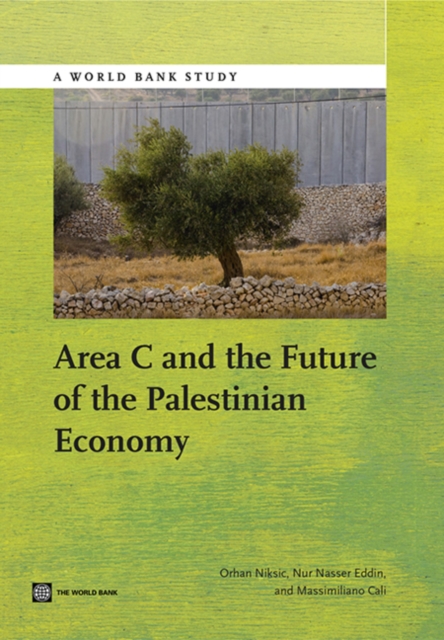
Area C and the future of the Palestinian economy
Restrictions on economic activity in area C of the West Bank have been particularly detrimental to the Palestinian economy. Area C constitutes about 61 percent of the West Bank territory. Area C is richly endowed with natural resources and it is contiguous, whereas areas A and B are smaller territorial islands. Mobilizing the area C potential will help a faltering Palestinian economy. Since area C is where the majority of the West Bank's natural resources laid, the impact of these restrictions on the Palestinian economy has been considerable. Thus, the key to Palestinian prosperity continues to lie in the removal of these restrictions with due regard for Israel's security. This report shows that rolling back the restrictions will bring substantial benefits to the Palestinian economy and can usher in a new period of increasing Palestinian gross domestic product (GDP) and substantially improve prospects for sustained growth. This report examines the economic benefits of lifting the restrictions on movement and access as well as other administrative obstacles to Palestinian investment and economic activity in area C. It focuses on the economic potential of area C and does not prejudge the status of any territory which may be subject to negotiations between Palestinians and Israelis. The authors examine potential direct, sector-specific benefits, but also indirect benefits related to improvements in physical and institutional infrastructure, as well as spillover effects to other sectors of the Palestinian economy. Realizing the full potential of such investments requires other changes as well - first, the rolling back of the movement and access restrictions in force outside area C, which prevent the easy export of Palestinian products and inhibit tourists and investors from accessing area C; and second, further reforms by the Palestinian authority to better enable potential investors to register businesses, enforce contracts, and acquire finance.
eBook
Aggregate demand and the endogeneity of the natural rate of growth: evidence from Latin American economies
This paper aims to explore the Keynesian idea that aggregate demand matters for economic activity, both in the short and long run. To that extent, it discusses the endogeneity of the natural rate of growth, and presents two empirical exercises: the first one tests for unit roots in output for 12 Latin American countries using panel data. The results suggest that gross domestic product series are non-stationary and therefore shocks (both from supply and demand) have persistent effects in the economy. The second exercise tests the hypothesis of an endogenous natural rate of growth, and suggests that potential output has been influenced by the actual level of economic activity in Latin American countries. This result corroborates the hypothesis that aggregate demand has long-run effects in the economy.
Journal Article

Delivering on the promise of pro-poor growth : insights and lessons from country experiences
Broad-based growth is critical for accelerating poverty reduction. But income inequality also affects the pace at which growth translates into gains for the poor. Despite the attention researchers have given to the relative roles of growth and inqequality in reducing poverty, little is known about how the microunderpinnings of growth strategies affect poor households' ability to participate in and profit from growth. Delivering on the Promise of Pro-Poor Growth contributes to the debate on how to accelerate poverty reduction by providing insights from eight countries that have been relatively successful in delivering pro-poor growth: Bangladesh, Brazil, Ghana, India, Indonesia, Tunisia, Uganda, and Vietnam. It integrates growth analytics with the microanalysis of household data to determine how country policies and conditions interact to reduce poverty and to spread the benefits of growth across different income groups. This title is a useful resource for policy makers, donor agencies, academics, think tanks, and government officials seeking a practical framework to improve country level diagnostics of growth-poverty linkages.
eBook

Host preference, population growth and injuries assessment of Polyphagotarsonemus latus (banks) (ACARI: Tarsonemidae) on Capsicum annuum L. Genotypes
Despite the continued efforts on the search for different genotypes, Capsicum annuum (L.) is quite susceptible to attack by pest arthropods, especially the broad mite Polyphagotarsonemus latus Banks. Thus, the host preference, population growth and the injuries assessment of P. latus was studied on six C. annuum genotypes used in Brazil (Atlantis, California Wonder, Impact, Palloma, Rubia and Tendence). Host preference was accessed in choice tests, pairing the several genotypes, and the population growth was observed through non-choice tests in laboratory. The injuries assessments were evaluated in the greenhouse, comparing the injury level among the six genotypes. The results indicate that California Wonder and Palloma genotypes were more preferred by P. latus, and Impact and Tendence were less preferred. P. latus presented positive population growth rates (ri) on all the genotypes, however, Palloma and California Wonder showed the highest values of population growth rate (ri = 0.344 and ri = 0.340, respectively), while Impact had the lowest value (ri = 0.281). All the evaluated C. annuum genotypes showed low tolerance to P. latus and exhibited several injuries, but there was no statistical difference between them. California Wonder had the highest average number of mites/leaf (57.15), while Impact and Tendence obtained the lowest values (36.67 and 35.12, respectively) at the end of the evaluation period. The total average of injuries notes at the end of the bioassay did not differ between the genotypes. The number of mites/leaf was growing for the injury scale to the note 3.0, but when the injury scale approached the note 4.0, there was observed a decrease in the number of mites/leaf for all the genotypes.
Journal Article

The remarkable durability of Thirlwall's Law
This paper contemplates the robustness of Thirlwall's Law, a parsimonious expression that relates long run equilibrium growth in any one region to the product of world income growth and the ratio of the income elasticities of demand for exports and imports. Various extensions of the balance-of-payments-constrained growth model from which Thirlwall's Law is derived are contemplated. In each case, Thirlwall's Law is shown to reassert itself as a good approximation of the equilibrium growth rate. It is hypothesized that this robustness helps explain the widespread empirical success of Thirlwall's Law. JEL codes: O41, E12. Keywords: Thirlwall's law, balance-of-payments-constrained growth, export-led growth, demand-led growth, natural rate of growth
Journal Article