
Catalogue Search | MBRL


Are you sure you want to remove the book from the shelf?

{{itemTitle}}
244
result(s) for
"REFORME AGRAIRE"
Sort by:
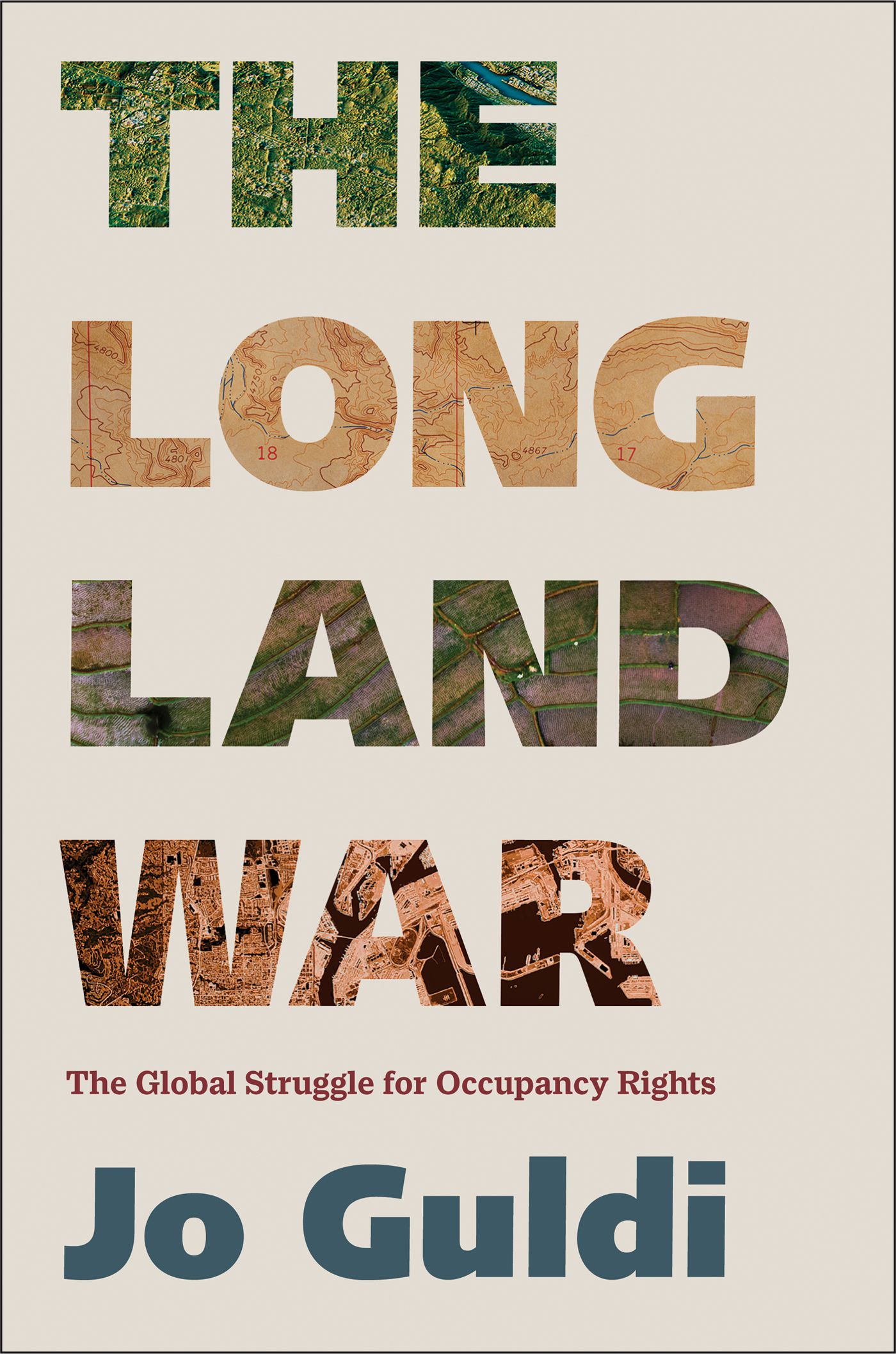
The Long Land War
A definitive history of ideas about land redistribution, allied political movements, and their varied consequences around the world \"An epic work of breathtaking scope and moral power, The Long Land War offers the definitive account of the rise and fall of land rights around the world over the last 150 years.\" -Matthew Desmond, Pulitzer Prize-winning author of Evicted: Poverty and Profit in the American City Jo Guldi tells the story of a global struggle to bring food, water, and shelter to all. Land is shown to be a central motor of politics in the twentieth century: the basis of movements for giving reparations to formerly colonized people, protests to limit the rent paid by urban tenants, intellectual battles among development analysts, and the capture of land by squatters taking matters into their own hands. The book describes the results of state-engineered \"land reform\" policies beginning in Ireland in 1881 until U.S.-led interests and the World Bank effectively killed them off in 1974. The Long Land War provides a definitive narrative of land redistribution alongside an unflinching critique of its failures, set against the background of the rise and fall of nationalism, communism, internationalism, information technology, and free-market economics. In considering how we could make the earth livable for all, she works out the important relationship between property ownership and justice on a changing planet.
eBook
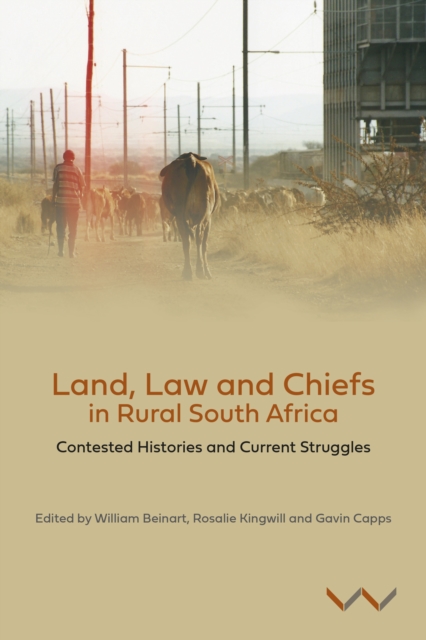
Land, Law and Chiefs in Rural South Africa
Who controls the land and minerals in the former Bantustans of South Africa - chiefs, the state or landholders? Disputes are taking place around the ownership of resources, decisions about their exploitation and who should benefit. With respect to all of these issues, the courts have become increasingly important. The contributors to Land, Law and Chiefs in Rural South Africa capture some of these intense contestations over land, law and political authority, focussing on threats to the rights of ordinary people. History and customary law feature strongly in most disputes and succession to chieftaincy is also frequently disputed. Judges have to make decisions in a context where rival claimants to property or office assert their own versions of history and custom. The South African constitution recognises customary law and the courts are attempting to incorporate and develop this branch of jurisprudence as 'living customary law'. Lawyers, community leaders and academics are called on to assist in researching cases around restitution, land rights and customary law. The chapters in this collection discuss legal cases and policy directions that have evolved since 1994. Some chapters analyse the increasing power of chiefs in the South African rural areas, while others suggest that the courts are giving support to popular rights over land and supporting local democratic processes. Contributors record significant pushback from groups that reject traditional authority. These political tensions are a central theme of the collection and thus serve as vital case studies in furthering our understanding of rights and restitution in South Africa. Who controls the land and minerals in the former Bantustans of South Africa - chiefs, the state or landholders? Disputes are taking place around the ownership of resources, decisions about their exploitation and who should benefit. With respect to all of these issues, the courts have become increasingly important. The contributors to Land, Law and Chiefs in Rural South Africa capture some of these intense contestations over land, law and political authority, focussing on threats to the rights of ordinary people. Judges have to make decisions in a context where rival claimants to property or office assert their own versions of history and custom. The South African constitution recognises customary law and the courts are attempting to incorporate and develop this branch of jurisprudence as 'living customary law'. Lawyers, community leaders and academics are called on to assist in researching cases around restitution, land rights and customary law. The chapters in this collection discuss legal cases and policy directions that have evolved since 1994. Some analyse the increasing power of chiefs in the South African rural areas. Others suggest that the courts are giving support to popular rights over land and supporting local democratic processes. These political tensions are a central theme of the collection.
eBook

Fields of Revolution
Fields of Revolution examines the second largest case of
peasant land redistribution in Latin America and agrarian
reform-arguably the most important policy to arise out of Bolivia's
1952 revolution. Competing understandings of agrarian reform shaped
ideas of property, productivity, welfare, and justice. Peasants
embraced the nationalist slogan of \"land for those who work it\" and
rehabilitated national union structures. Indigenous communities
proclaimed instead \"land to its original owners\" and sought to link
the ruling party discourse on nationalism with their own
long-standing demands for restitution. Landowners, for their part,
embraced the principle of \"land for those who improve it\" to
protect at least portions of their former properties from
expropriation. Carmen Soliz combines analysis of governmental
policies and national discourse with everyday local actors'
struggles and interactions with the state to draw out the deep
connections between land and people as a material reality and as
the object of political contention in the period surrounding the
revolution.
eBook
Land Reform and Politics
This title is part of UC Press's Voices Revived program, which commemorates University of California Press's mission to seek out and cultivate the brightest minds and give them voice, reach, and impact. Drawing on a backlist dating to 1893, Voices Revived makes high-quality, peer-reviewed scholarship accessible once again using print-on-demand technology. This title was originally published in 1974.
eBook

Mobilizing Bolivia's Displaced
The election of Evo Morales as Bolivia's president in 2005 made him the first indigenous head of state in the Americas, a watershed victory for social activists and Native peoples.El Movimiento Sin Tierra(MST), or the Landless Peasant Movement, played a significant role in bringing Morales to power. Following in the tradition of the well-known Brazilian Landless movement, Bolivia's MST activists seized unproductive land and built farming collectives as a means of resistance to large-scale export-oriented agriculture. InMobilizing Bolivia's Displaced, Nicole Fabricant illustrates how landless peasants politicized indigeneity to shape grassroots land politics, reform the state, and secure human and cultural rights for Native peoples.Fabricant takes readers into the personal spaces of home and work, on long bus rides, and into meetings and newly built MST settlements to show how, in response to displacement, Indigenous identity is becoming ever more dynamic and adaptive. In addition to advancing this rich definition of indigeneity, she explores the ways in which Morales has found himself at odds with Indigenous activists and, in so doing, shows that Indigenous people have a far more complex relationship to Morales than is generally understood.
eBook

Rural Protest on Prince Edward Island
Who has the more legitimate claim to land, settlers who occupy and improve it with their labour, or landlords who claim ownership on the basis of imperial grants? This question of property rights, and their construction, was at the heart of rural protest on Prince Edward Island for a century. Tenants resisted landlord claims by squatting and refusing to pay rent. They fought for their vision of a just rural order through petitions, meetings, rallies, electoral campaigns, and direct action. Landlords responded with their own collective action to protect their interests. In Rural Protest on Prince Edward Island Rusty Bittermann examines this conflict and the dynamic of rural protest on the Island from its establishment as a British colony in the 1760s to the early 1840s.
The focus of Bittermann's study is the remarkable mass movement known as the Escheat movement, which emerged in the 1830s in the context of growing popular challenges elsewhere in the Atlantic World. The Escheat movement aimed at resolving the land question in favour of tenants by having the state resume (escheat) the large grants of land that created landlordism on the Island. Although it ultimately gained control of the assembly in the late 1830s, the Escheat movement did not produce the land policies that tenants and their allies advocated. The movement did, however, synthesize years of rural protest and produce a persistent legacy of language and ideas concerning land, justice, and the rights of small producers that helped to make landlordism on the Island unsustainable in the long term. Rural Protest on Prince Edward Island is a comprehensive and fascinating examination of an important, but often overlooked, period in the history of Canada's smallest province.
eBook

A New Model Society
Globalised neoliberal capitalism continues to entrench inequality, environmental degradation, and social division. The Movimento dos Trabalhadores Rurais Sem Terra (MST), or Brazilian Landless Movement, offer us a route beyond any theoretical impasse or reluctant acquiescence to the enduring social and economic status quo. Through time spent working and living among the MST many of their defining features and activities are mapped. These include land occupations; the organisation of work co-operatively; the practising of agro-ecology; implementation of gender quotas for community leadership positions; and the application of principles based upon the 'common good'. These represent just some of the experiences, challenges, and lessons we as a global community can learn from MST communities as we think about alternative futures.
eBook

Gender and Land Reform
Goebel examines the social forces and effects of the resettlement process, including state policy and legislation, customary norms and practices, local institutions, and ideologies and cosmologies. Her study emphasizes the strategic choices women make in new institutional and household contexts and considers the interests of poor women who have been marginalized within the land reform process.
eBook

Land for the People
Half of Indonesia's massive population still lives on farms, and for these tens of millions of people the revolutionary promise of land reform remains largely unfulfilled. The Basic Agrarian Law, enacted in the wake of the Indonesian Revolution, was supposed to provide access to land and equitable returns for peasant farmers. But fifty years later, the law's objectives of social justice have not been achieved. Land for the People provides a comprehensive look at land conflict and agrarian reform throughout Indonesia's recent history, from the roots of land conflicts in the prerevolutionary period, and the Sukarno and Suharto regimes, to the present day, in which democratization is creating new contexts for peoples' claims to the land. Drawing on studies from across Indonesia's diverse landscape, the contributors examine some of the most significant issues and events affecting land rights, including shifts in policy from the early postrevolutionary period to the New Order; the Land Administration Project that formed the core of land policy during the late New Order period; a long-running and representative dispute over a golf course in West Java that pitted numerous indigenous farmers in Kalimantan against the urban elite; Suharto's notorious \"million hectare\" project that resulted in loss of access to land and resources for numerous farmers; and the struggle by Bandung's urban poor to be treated equitably in the context of commercial land development. Together, these essays provide a critical resource for understanding one of Indonesia's most pressing and most influential issues. Contributors: Afrizal, Dianto Bachriadi, Anton Lucas, John McCarthy, John Mansford Prior, Gustaaf Reerink, Carol Warren, and Gunawan Wiradi.
eBook

Gender and Land Reform
Goebel examines the social forces and effects of the resettlement process, including state policy and legislation, customary norms and practices, local institutions, and ideologies and cosmologies. Her study emphasizes the strategic choices women make in new institutional and household contexts and considers the interests of poor women who have been marginalized within the land reform process.
eBook