
Catalogue Search | MBRL


Are you sure you want to remove the book from the shelf?

{{itemTitle}}
1,608
result(s) for
"REGIME ALIMENTAIRE"
Sort by:

Food politics
We all witness, in advertising and on supermarket shelves, the fierce competition for our food dollars. In this engrossing exposé, Marion Nestle goes behind the scenes to reveal how the competition really works and how it affects our health. The abundance of food in the United States--enough calories to meet the needs of every man, woman, and child twice over--has a downside. Our over-efficient food industry must do everything possible to persuade people to eat more--more food, more often, and in larger portions--no matter what it does to waistlines or well-being. Like manufacturing cigarettes or building weapons, making food is big business. Food companies in 2000 generated nearly
eBook

Celiac sprue
This review article examines the studies implicating genetic, immunologic and environmental factors in the pathogenesis of celiac sprue, its diverse clinical features and the long-term prognostic implications. Included among the specific topics addressed are the enzyme-deficiency and lectin hypotheses of celiac sprue disease pathogenesis and the benefits of a gluten-free diet
Journal Article

The calorically restricted low-fat nutrient-dense diet in Biosphere 2 significantly lowers blood glucose, total leukocyte count, cholesterol, and blood pressure in humans
Biosphere 2 is a 3.15-acre space containing an ecosystem that is energetically open (sunlight, electric power, and heat) but materially closed, with air, water, and organic material being recycled. Since September 1991, eight subjects (four women and four men) have been sealed inside, living on food crops grown within. Their diet, low in calories (average, 1780 kcal/day; 1 kcal = 4.184 kJ), low in fat (10% of calories), and nutrient-dense, conforms to that which in numerous animal experiments has promoted health, retarded aging, and extended maximum life span. We report here medical data on the eight subjects, comparing preclosure data with data through 6 months of closure. Significant changes included: (i) weight, 74 to 62 kg (men) and 61 to 54 kg (women); (ii) mean systolic/diastolic blood pressure (eight subjects), 109/74 to 89/58 mmHg (1 mmHg = 133 Pa); (iii) total serum cholesterol, from 191 +/- 11 to 123 +/- 9 mg/dl (mean +/- SD; 36% mean reduction), and high density lipoprotein, from 62 +/- 8 to 38 +/- 5 (risk ratio unchanged); (iv) triglyceride, 139 to 96 mg/dl (men) and 78 to 114 mg/dl (women); (v) fasting glucose, 92 to 74 mg/dl; (vi) leukocyte count, 6.7 to 4.7 X 10(9) cells per liter. We conclude that drastic reductions in cholesterol and blood pressure may be instituted in normal individuals in Western countries by application of a carefully chosen diet and that a low-calorie nutrient-dense regime shows physiologic features in humans similar to those in other animal species.
Journal Article

Nutritional and functional properties of certain gluten-free raw materials
Since the adherence to the gluten-free diet in celiac patients affects the consumption from the grain food group, questions have been raised about the effects of such diet on calcium, iron, and fiber intake, as well as total carbohydrate and grain food consumption. Therefore, in the framework of this research, eleven types of nutritionally valuable gluten-free raw materials were proposed for consumption in gluten-free diet. They were investigated considering their macronutritive composition, different starch classes, the contents of essential minerals, dietary fiber, and polyphenols, as well as their antioxidant activity. The results were compared to the values obtained with wheat flour that was used as the reference raw material indicating that, in many aspects, the gluten-free raw materials mentioned can be considered as nutritionally more valuable in comparison with wheat flour. Especially satisfying results were obtained regarding the contents of proteins, dietary fiber, polyphenols, iron, and calcium. Therefore, the raw materials investigated can be recommended as desirable components that may contribute to the diversity, functionality, and nutritional quality of gluten-free diet.
Journal Article

Food marketing to children and youth
Creating an environment in which children in the United States grow up healthy should be a high priority for the nation. Yet the prevailing pattern of food and beverage marketing to children in America represents, at best, a missed opportunity, and at worst, a direct threat to the health prospects of the next generation. Children's dietary and related health patterns are shaped by the interplay of many factors-their biologic affinities, their culture and values, their economic status, their physical and social environments, and their commercial media environments-all of which, apart from their genetic predispositions, have undergone significant transformations during the past three decades. Among these environments, none have more rapidly assumed central socializing roles among children and youth than the media. With the growth in the variety and the penetration of the media have come a parallel growth with their use for marketing, including the marketing of food and beverage products.
What impact has food and beverage marketing had on the dietary patterns and health status of American children? The answer to this question has the potential to shape a generation and is the focus of Food Marketing to Children and Youth . This book will be of interest to parents, federal and state government agencies, educators and schools, health care professionals, industry companies, industry trade groups, media, and those involved in community and consumer advocacy.
eBook
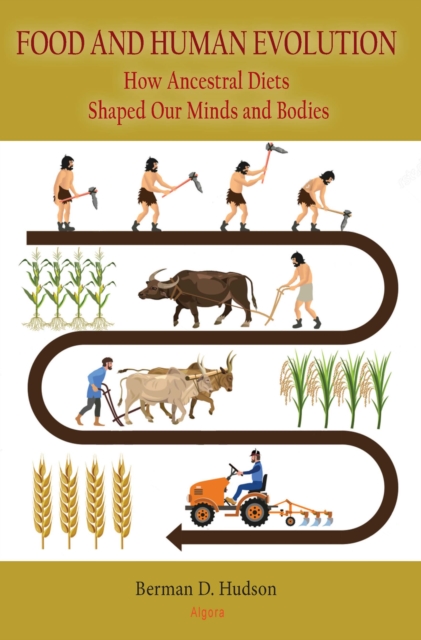
Food and Human Evolution
In Food and Human Evolution, author Berman D. Hudson develops a rich and multifaceted picture of why we eat what we do, and what effects that has on our minds and bodies, exploring how ancestral diets shaped the physical and mental development of humans throughout history. The book argues that the foods our ancestors consumed and how they acquired them played crucial roles in our evolution, influencing traits such as brain size, social behavior, and health. It also addresses the modern food-related crisis, linking the rise of industrial food production in the 20th century to an epidemic of metabolic diseases that threaten human health today. The author emphasizes the need to understand our dietary history to address contemporary health issues. The Evolutionary Impact of Ancestral Diets: Hudson explores how the dietary habits of our hominid ancestors played a fundamental role in shaping who we are today. The transition to a meat-based diet-enabled by the development of stone tools and hunting techniques-significantly contributed to the growth of our brains and the development of \"Machiavellian intelligence.\" This intelligence refers to the ability to navigate complex social relationships and cooperate for mutual benefits, both crucial elements in early human societies. The act of sharing meat among groups also fostered traits like altruism and fairness, building the foundations of modern social behavior. Modern Food and the Rise of Health Crises: Hudson contrasts our evolutionary relationship with food to the crisis we face today due to industrialized food production. People began shifting away from traditional diets roughly 100 years ago, and processed, refined, and pre-packaged foods became the norm. This shift has led to the rise of metabolic diseases, including obesity, diabetes, and heart disease. The Divided Population - The Health
Crisis of Modern Diets: Hudson paints a stark picture of the current health crisis by showing how America is becoming divided into two distinct populations. The majority suffers from diet-induced diseases, while a minority remains relatively healthy. Conclusion - Understanding Food for a Better Future: Food and Human Evolution provides crucial insights for those interested in nutrition, anthropology, and health sciences. the deep connections between food, health, and human evolution provides a key to the alarming health crises we now face and the evolutionary roots of these issues. Hudson encourages readers to rethink modern diets and consider returning to the nutritional wisdom of our ancestors for a healthier, more sustainable future.
eBook
Effect of a low-fat diet on the incidence of actinic keratosis
Background. Actinic keratoses are premalignant lesions and are a sensitive and important manifestation of sun-induced skin damage. Studies in animals have shown that dietary fat influences the incidence of sun-induced skin cancer, but the effect of diet on the incidence of actinic keratosis in humans is not known. Methods. We randomly assigned 76 patients with nonmelanoma skin cancer either to continue their usual diet (control group) or to eat a diet with 20 percent of total caloric intake as fat (dietary-intervention group). For 24 months, the patients were examined for the presence of new actinic keratoses by physicians unaware of their assigned diets. Results. At base line, the mean (+/- SD) percentage of caloric intake as fat was 40 +/- 4 percent in the control group and 39 +/- 3 percent in the dietary-intervention group. After 4 months of dietary therapy the percentage of calories as fat had decreased to 21 percent in the dietary-intervention group, and it remained below this level throughout the 24-month study period. The percentage of calories as fat in the control group did not fall below 36 percent at any time. The cumulative number of new actinic keratoses per patient from months 4 through 24 was 10 +/- 13 in the control group and 3 +/- 7 in the dietary-intervention group (P = 0.001). Conclusions. In patients with a history of nonmelanoma skin cancer, a low-fat diet reduces the incidence of actinic keratosis
Journal Article

Dietary fiber, glycemic load, and risk of NIDDM in men
Intake of carbohydrates that provide a large glycemic response has been hypothesized to increase the risk of NIDDM, whereas dietary fiber is suspected to reduce incidence. These hypotheses have not been evaluated prospectively. We examined the relationship between diet and risk of NIDDM in a cohort of 42,759 men without NIDDM or cardiovascular disease, who were 40-75 years of age in 1986. Diet was assessed at baseline by a validated semiquantitative food frequency questionnaire. During years of follow-up, 523 incident cases of NIDDM were documented. The dietary glycemic index (an indicator of carbohydrate's ability to raise blood glucose levels) was positively associated with risk of NIDDM after adjustment for age, BMI, smoking, physical activity family history of diabetes, alcohol consumption, cereal fiber, and total energy intake. Comparing the highest and lowest quintiles, the relative risk (RR) of NIDDM was 1.37 (95% CI, 1.02-1.83, P trend = 0.03). Cereal fiber was inversely associated with risk of NIDDM (RR= 0.70; 95% CI, 0.51-0.96, P trend =0.007; for 8.1 g/day vs. 3.2 g/day). The combination of a high glycemic load and a low cereal fiber intake further increased the risk of NIDDM (RR
Journal Article
A clinical trial of the effects of dietary patterns on blood pressure
Background It is known that obesity, sodium intake, and alcohol consumption influence blood pressure. In this clinical trial, Dietary Approaches to Stop Hypertension, we assessed the effects of dietary patterns on blood pressure. Methods We enrolled 459 adults with systolic blood pressures of less than 160 mm Hg and diastolic blood pressures of 80 to 95 mm Hg. For three weeks, the subjects were fed a control diet that was low in fruits, vegetables, and dairy products, with a fat content typical of the average diet in the United States. They were then randomly assigned to receive for eight weeks the control diet, a diet rich in fruits and vegetables, or a \"combination\" diet rich in fruits, vegetables, and low-fat dairy products and with reduced saturated and total fat. Sodium intake and body weight were maintained at constant levels. Results At base line, the mean (+/- SD) systolic and diastolic blood pressures were 131.3 +/- 10.8 mm Hg and 84.7 +/- 4.7 mm Hg, respectively. The combination diet reduced systolic and diastolic blood pressure by 5.5 and 3.0 mm Hg more, respectively, than the control diet (P0.001 for each); the fruits-and-vegetables diet reduced systolic blood pressure by 2.8 mm Hg more (P0.001) and diastolic blood pressure by 1.1 mm Hg more (P
Journal Article
