
Catalogue Search | MBRL


Are you sure you want to remove the book from the shelf?

{{itemTitle}}
12
result(s) for
"RELIC, PETER"
Sort by:

VOUCH FOR VOUCHERS WITH NO STRINGS
Project Concern, the voluntary busing program intended to help some of Hartford's kids escape from their miserable schools, was still in its prime during the [Peter Relic] years -- and West Hartford was one of the more enthusiastic suburban players. By 1986, 430 Hartford students attended classes in West Hartford and 15 West Hartford students attended specialized foreign language and arts programs in Hartford. Relic left West Hartford for the top school job in Charlotte, N.C., the largest school district in the state, with 73,000 students - - about 40 percent of them minority. The Charlotte-Mecklenburg district was operating under a court-ordered desegregation plan, but Relic arrived after the battle was over -- and was forced out over issues having more to do with style (a snobby Northeastern style) than substance. Even in Charlotte, vouchers were never a public issue. Only about 12,000 students were being bused, and most of them ended up where they wanted to go. He suggests that there are serious impediments to voucher systems, beyond the traditional obstructionism of the teacher unions and existing public school bureaucracy. Even among his own members, Relic admits to some fears that a voucher could come with strings attached - - especially dangerous strings that would limit the ability of the schools to admit students they think would be most appropriate. \"`Independent' means independent from government,\" he says. \"If government restricts admissions policies, it would be the beginning of the end for independent schools.\"
Newspaper Article
Cutting edge of ancient tradition
This year's Biennale, selected by five distinguished judges, consists of 96 pieces by 62 artists, chosen from an open submission of 446 submitted by 202. \"This is the fourth festival, and it's building on the success of the previous three,\" says festival organiser Natasha George. \"It's very difficult to describe because it appeals to so many different groups - professionals, amateurs, members of the public, galleries and, very importantly, the local community. \"We've got a fantastic range of talks, including one on the archives of Chance Brothers, who made things like lighthouse lenses in Smethwick. We have international artists leading masterclasses and tons of have-a-go sessions for children.\" \"We're definitely seeing certain techniques emerging this year,\" says [Michelle Keeling]. \"There have been four artists selected who use waterjet cutting, and they are using it in quite diverse ways. \"There's also quite an increase in artists using neon. You can see from previous exhibitions how techniques have moved on and they are being used in imaginative ways.\"
Newspaper Article

CONNECTICUT OPINION; THE VISION OF CHESTER BOWLES
''You in the West see yourselves as 'the Free World,' but it was [Chester Bowles] who knew that we in emerging Asia and Africa see you as 'the Rich Nations.' '' ''Bowles had a world view; he compared Gandhi in southern Africa, then Natal and Transvaal, to Washington at Valley Forge and Bolivar at Boyaca. No American, before or since, has had that kind of intellect or sensitivity.'' They recalled pictures of the man, the lean, smiling face, the close-cropped hair, and they wondered aloud what would have happened had American policy after Indian independence from England been predicated on Mr. Bowles's understanding rather than that of former Secretary of State John Foster Dulles and others who little appreciated Gandhi and Nehru - better if Mr. Bowles had been the architect for Indian-American relations (they reminded me that he was one of the craftsmen of the 1960 Democratic platform). They dissected the United States alliance with Pakistan's military dictatorship and the pact that India, the world's largest democracy, has with the Soviet Union. And the students mentioned with pride that Mr. Bowles told President Truman that he preferred an ambassadorship to India, rather than to Europe, citing his belief that ''the history of our time will be written largely in Asia.''
Newspaper Article
CONNECTICUT OPINION; STOP THE PARENT WHO OFFERS ALCOHOL
One of the most absurd excuses we hear is from parents who say: ''It's better to have the kids drink in our home than to do it all around the community.'' Once we have sanctioned drinking at home, we have given license to do it anywhere. Rather than limiting drinking to the home, we are only providing a start for the rest of the evening's activities. The most selfish excuse, which should become a rallying point for other parents to voice open opposition, is offered by the parent who says, ''I'd rather have my son drink at home so that he doesn't have to drive after the party.'' What about all the other sons and daughters who do get into cars after parties to go home? Some parents beg off by saying that they did not know drinking was going on in their home while they were away. ''I didn't chaperone the party, so I can't be blamed,'' they say. We can't let parents get away with that excuse. They must accept the responsibility of what goes on in their homes, whether they are chaperoning or whether their children have an open house without adults present.
Newspaper Article

Rocky Road
Filmmakers [Michael Gramaglia] and [Jim Fields] begin with the group's 2OO2 induction into the Rock & Roll Hall of Fame, a moment of acceptance and industry acknowledgment utterly contradicted by the preceding decades of scabrous infighting and commercial disappointment.
Magazine Article
CONNECTICUT OPINION; BAD DRIVING IS A WAY OF LIFE ON STATE'S ROADS
''I never feel safe at an intersection,'' a neighbor said soon after arriving from Iowa. ''Even after the light has turned green for a couple seconds, I still expect someone to speed through the red light.'' Maybe driving habits aren't any worse than anywhere else; perhaps it is my imagination. What about Massachusetts and passing on the right? Or New York City's infamous crazed driving. No, I'm convinced that there is no driving like Connecticut driving. How timorous of us to think that good models can't spread throughout the populous. (Just look at the cleanliness of Canadian cities: When you visit Montreal, Toronto, or Vancouver you don't litter because nobody does; the streets are clean, and you are so taken up by the positive environment that you support it and enhance it.) So why won't we improve in Connecticut? Maybe we can't because the problem is irrational, not susceptible to logical analysis. Perhaps the problem and our actions are mysteriously beyond our control.
Newspaper Article
CONNECTICUT OPINION; FALL IS THE SEASON FOR SUMMER'S READING
You remember - vaguely - years ago, when you read Lawrence Durrell's ''Alexandria Quarter,'' Emile Zola's ''Germinal'' and all those Graham Greene novels, and all you need now is a nudge to return to their brilliant writing. Try Durrell's ''Dark Labyrinth,'' Zola's ''Therese Raquin'' and Greene's ''Tenth Man'' or ''Shades on Greene,'' a splendid volume of 18 short stories, from hilarious to macabre. You'll find Greene's ''This Gun for Hire'' which you might like better than thrillers by John LeCarre, or even Dashiell Hammett. You admire Benjamin Disraeli as Prime Minister of England? Remember he wrote political fiction, too, ''Coningsby'' and ''Sybil,'' novels of mystery and romance as well as social conditions and Tory politics. Read Russell Hoban's ''Turtle Diary'' before you see the movie, and I'll bet that, for 50 cents each, you can find Golda Meir's ''My Life,'' Barbara Ward's ''Nationalism and Ideology'' and Barbara Tuchman's '' Zimmerman Telegram.'' Of course, you've always intended to read Turgenev's ''Fathers and Sons,'' Fielding's ''Tom Jones,'' Hardy's ''Jude the Obscure,'' Hugo's ''Miserables''and Eliot's ''Adam Bede,'' and you won't pay more than a quarter for any of them at a sale.
Newspaper Article

Saints and Their Miracles in Late Antique Gaul
Saints' cults, with their focus on miraculous healings and pilgrimages, were not only a distinctive feature of Christian religion in fifth-and sixth-century Gaul but also a vital force in political and social life. Here Raymond Van Dam uses accounts of miracles performed by SS. Martin, Julian, and Hilary to provide a vivid and comprehensive depiction of some of the most influential saints' cults. Viewed within the context of ongoing tensions between paganism and Christianity and between Frankish kings and bishops, these cults tell much about the struggle for authority, the forming of communities, and the concept of sin and redemption in late Roman Gaul.
Van Dam begins by describing the origins of the three cults, and discusses the career of Bishop Gregory of Tours, who benefited from the support of various patron saints and in turn promoted their cults. He then treats the political and religious dimensions of healing miracles--including their relation to Catholic theology and their use by bishops to challenge royal authority--and of pilgrimages to saints' shrines. The miracle stories, collected mainly by Gregory of Tours, appear in their first complete English translations.
eBook

Mothers and the Martyr: The Unlikely Patronage of a Medieval Dominican Preacher
Peter later attended the University of Bologna, fell under the influence of Saint Dominic, and received the habit of the Friars Preachers probably in 1221.4 Peter was probably attracted to the Dominican order because of its clear emphasis on the intellectual life.5 The Dominicans were dedicated to university study and preaching, unlike the Franciscans, a similar religious order founded in the same era who emphasized poverty and holy simplicity as the fundamental path to holiness. Because she seemed dead, they called upon Saint Peter with tears and cries in the depths of the night, vowing to him that if she might be delivered from death, they would visit his relics with all of their servants barefoot immediately after he fulfilled the terms of the vow.
Journal Article
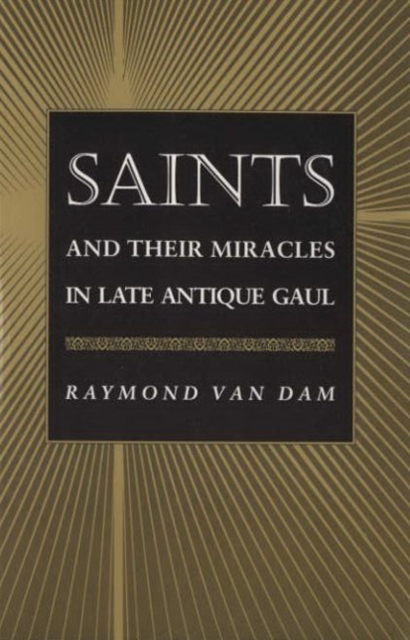
Saints and their miracles in late antique Gaul
Saints' cults, with their focus on miraculous healings and pilgrimages, were not only a distinctive feature of Christian religion in fifth-and sixth-century Gaul but also a vital force in political and social life. Here Raymond Van Dam uses accounts of miracles performed by SS. Martin, Julian, and Hilary to provide a vivid and comprehensive depiction of some of the most influential saints' cults. Viewed within the context of ongoing tensions between paganism and Christianity and between Frankish kings and bishops, these cults tell much about the struggle for authority, the forming of communities, and the concept of sin and redemption in late Roman Gaul.Van Dam begins by describing the origins of the three cults, and discusses the career of Bishop Gregory of Tours, who benefited from the support of various patron saints and in turn promoted their cults. He then treats the political and religious dimensions of healing miracles--including their relation to Catholic theology and their use by bishops to challenge royal authority--and of pilgrimages to saints' shrines. The miracle stories, collected mainly by Gregory of Tours, appear in their first complete English translations.
eBook