
Catalogue Search | MBRL


Are you sure you want to remove the book from the shelf?

{{itemTitle}}
5,470
result(s) for
"RELIGION / Christian Theology / Anthropology"
Sort by:
Cyborg Selves
What is the 'posthuman'? Is becoming posthuman inevitable-something which will happen to us, or something we will do to ourselves? Why do some long for it, while others fearfully reject it? These questions underscore the fact that the posthuman is a name for the unknown future, and therefore, not a single idea but a jumble of competing visions - some of which may be exciting, some of which may be frightening, and which is which depends on who you are, and what you desire to be. This book aims to clarify current theological and philosophical dialogue on the posthuman by arguing that theologians must pay attention to which form of the posthuman they are engaging, and to demonstrate that a 'posthuman theology' is not only possible, but desirable, when the vision of the posthuman is one which coincides with a theological vision of the human.
eBook
Saving souls, serving society : understanding the faith factor in church-based social ministry
The political controversy surrounding the role of religion in public life calls for more objective attention to the faith factor in social activism. What does it mean for a community-serving program to be “faith-based”? How do churches and other religious organizations express their religious identity or convey a religious message in the context of social services? Drawing on case studies of fifteen Philadelphia-area Protestant churches with active community outreach, Saving Souls, Serving Society introduces a new vocabulary for describing the religious components and spiritual meanings embedded in social action, and provides a typology of faith-based organizations and programs. This analysis yields a framework for Protestant mission orientations that makes room for the diverse ways that churches interrelate spiritual witness and social compassion. In particular, the debate over faith-based initiatives has highlighted a small but growing segment of churches committed to both saving souls and serving society. The book illuminates the public engagement of these “;conversionist” churches, exploring how they navigate the tension between their spiritual mission and the constraints on evangelism in the context of social services. The closing chapters explicate the potential contribution of religious dynamics to social outcomes, assess the relationship between mission orientations and social capital, present recommendations for research on faith-based social services, and draw implications for a constructive approach to church-state relations. Openness to a fresh perspective can equip policy makers, scholars and practitioners to respond wisely to the evolving complexities of the religious contours of social ministry.
eBook

Kimbanguism
From the early days of Christianity in Sub-Saharan Africa, a Eurocentric view of Christian teaching was a primary tool in the subjugation and domination of native populations. Since 1921 Kimbanguism, an African Initiated Church, has advocated a reconstruction of Blackness by appropriating the parameters of Christian identity. The prophet Simon Kimbangu, the founder of the movement, has inspired 17 million followers with Pan-African messages of political and spiritual liberation. The Spurned Race is the first comprehensive study of Kimbanguism since the pioneering books of the 1980s. The son of a Kimbanguist pastor, Gampiot uses his inside resources to offer new sociological and theological analyses of the church’s interpretation of and signification on the Christian bible. The Spurned Race provides a unique and important look at the independent nature of early African Christian prophetic movements.
eBook
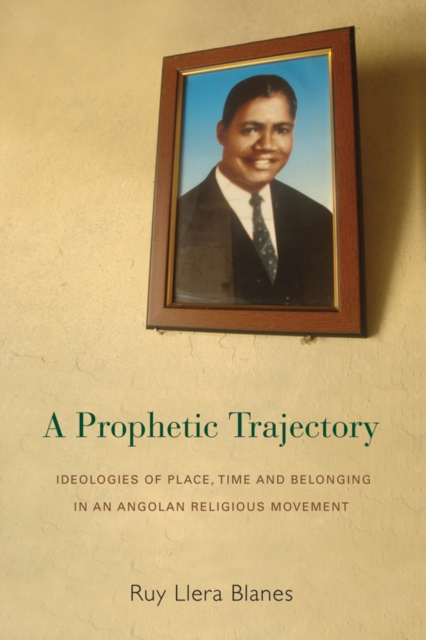
A prophetic trajectory
Combining ethnographic and historical research conducted in Angola, Portugal, and the United Kingdom,A Prophetic Trajectorytells the story of Simão Toko, the founder and leader of one of the most important contemporary Angolan religious movements. The book explains the historical, ethnic, spiritual, and identity transformations observed within the movement, and debates the politics of remembrance and heritage left behind after Toko's passing in 1984. Ultimately, it questions the categories of prophetism and charisma, as well as the intersections between mobility, memory, and belonging in the Atlantic Lusophone sphere.
eBook
Religion and Human Rights
Current processes of globalization are challenging Human Rights and the attempts to institutionalize them in many ways.The question of the connection between religion and human rights is a crucial point here.The genealogy of the Human Rights is still a point of controversies in the academic discussion.
eBook
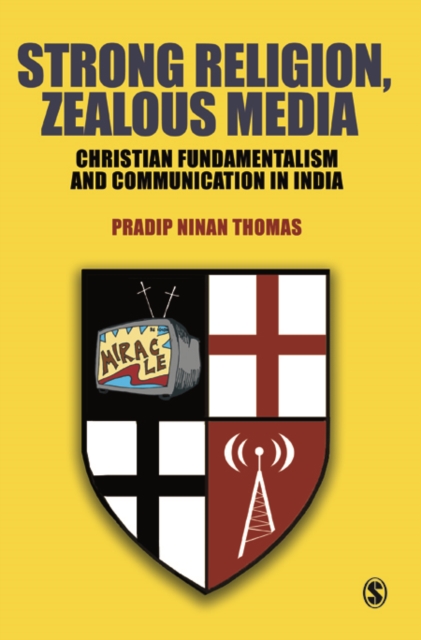
Strong religion, zealous media : Christian fundamentalism and communication in India
Strong Religion, Zealous Media: Christian Fundamentalism and Communication in Indiais the first in-depth cultural and social analysis of the growth of conservative forms of Christianity within the Protestant tradition in India and the many ways in which these new churches use the media. Arguing that Christian broadcasting needs to be seen as an essential aspect of a `muscular` Christianity that has increasingly colonised globalising cities such as Chennai, the book concludes with a strong validation of multi-religious India and the need for a robust inter-faith media response to combat religious fundamentalism. This is a highly recommended reading for students, researchers and social scientists involved in religion and media issues, religion departments, seminaries, civil society involved in inter-faith issues and all those who are interested in exploring the politics of religion in the subcontinent.
eBook
Verkörperung Als Paradigma Theologischer Anthropologie
Menschliches Bewusstein findet sich immer schon als verkörpertes vor.Diese Einsicht steht im Zentrum des kognitionswissenschaftlichen Paradigmas der embodied cognition: Der Geist ist ,,innig an einen Körper gebunden und innig in seine Welt eingebettet\" (John Haugeland).
eBook

Living with Tiny Aliens
Living with Tiny Aliens imagines in theological terms how an individuals' meaningful existence persists within a cosmos pregnant with living-possibilities. In doing so, it works to articulate an astrobiological humanities.
eBook

The Imago Dei As Human Identity
Theologians and Old Testament scholars have been at odds with respect to the best interpretation of the imago Dei. Theologians have preferred substantialistic (e.g., image as soul or mind) or relational interpretations (e.g., image as relational personhood) and Old Testament scholars have preferred functional interpretations (e.g., image as kingly dominion). The disagreements revolve around a number of exegetical questions. How do we best read Genesis 1 in its literary, historical, and cultural contexts? How should it be read theologically? How should we read Genesis 1 as a canonical text? This book charts a path through these disagreements by offering a dogmatically coherent and exegetically sound canonical interpretation of the image of God. Peterson argues that the fundamental claim of Genesis 1:26–28 is that humanity is created to image God actively in the world. “Made in the image of God” is an identity claim. As such, it tells us about humanity’s relationship with God and the rest of creation, what humanity does in the world, and what humanity is to become. Understanding the imago Dei as human identity has the further advantage of illuminating humanity’s ontology.Canonically, knowledge of the contours and purpose of human existence develops alongside God’s self-revelation. Tracing this development, Peterson demonstrates the coherence of the OT and NT texts that refer to the image of God. In the NT, Jesus Christ is understood as the realization of God’s image in the world and therefore the fulfillment of the description of humanity’s identity in Genesis 1. In addition to its specific focus on resolving interdisciplinary tensions for Christian interpretation of the imago Dei, the argument of the book has important implications for ethics, the doctrine of sin, and the doctrine of revelation.
eBook

Kimbanguism
From the early days of Christianity in Sub-Saharan Africa, a Eurocentric view of Christian teaching was a primary tool in the subjugation and domination of native populations. Since 1921 Kimbanguism, an African Initiated Church, has advocated a reconstruction of Blackness by appropriating the parameters of Christian identity. The prophet Simon Kimbangu, the founder of the movement, has inspired 17 million followers with Pan-African messages of political and spiritual liberation. The Spurned Race is the first comprehensive study of Kimbanguism since the pioneering books of the 1980s. The son of a Kimbanguist pastor, Gampiot uses his inside resources to offer new sociological and theological analyses of the church’s interpretation of and signification on the Christian bible. The Spurned Race provides a unique and important look at the independent nature of early African Christian prophetic movements.
eBook