
Catalogue Search | MBRL


Are you sure you want to remove the book from the shelf?

{{itemTitle}}
14,740
result(s) for
"RELIGION / Christianity / General"
Sort by:
Methodist Church on the Prairies, 1896-1914
The Methodist Church met the challenge with a centralized polity and a cross-class, gender-variegated, evolving religious culture. It relied on wealthy laymen to raise special funds, while small gifts fed its regular funds. Young bachelors from Ontario and Britain filled the pastorate, although low pay, inexperience, and poor supervision caused many to quit. Membership growth was slow due to low population density and church-resistant elements in the Methodist population (bachelors, immigrant co-religionists, and transients), and missions to non-Anglo-Saxon immigrants in Winnipeg, Edmonton, and rural Alberta spread Methodist values but gained few members. In The Methodist Church on the Prairies, 1896-1914, the first scholarly study of church history in the prairie region, George Emery uses quantitative methods and social interpretation to show that the Methodist Church was a cross-class institution with a dynamic evangelical culture, not a middle-class institution whose culture was undergoing secularization. He demonstrates that the Methodist's achievement on the prairies was impressive and compared favourably with what Presbyterians and Anglicans achieved.
eBook
History of Canadian Catholics
In A History of Canadian Catholics Terence Fay relates the long story of the Catholic Church and its followers, beginning with how the church and its adherents came to Canada, how the church established itself, and how Catholic spirituality played a part in shaping Canadian society. He also describes how recent social forces have influenced the church. Using an abundance of sources, Fay discusses Gallicanism (French spirituality), Romanism (Roman spirituality), and Canadianism - the indigenisation of Catholic spirituality in the Canadian lifestyle. Fay begins with a detailed look at the struggle of French Catholics to settle a new land, including their encounters with the Amerindians. He analyses the conflict caused by the arrival of the Scottish and Irish Catholics, which threatened Gallican church control. Under Bishops Bourget and Lynch, the church promoted a romantic vision of Catholic unity in Canada. By the end of the century, however, German, Ukrainian, Polish, and Hungarian immigrants had begun to challenge the French and Irish dominance of Catholic life and provide the foundation of a multicultural church. With the creation of the Canadian Catholic Conference in the postwar period these disparate groups were finally drawn into a more unified Canadian church. A History of Canadian Catholics is especially timely for students of religion and history and will also be of interest to the general reader who would like an understanding the development of Catholic roots in Canadian soil.
eBook
Modernity and the Dilemma of North American Anglican Identities, 1880-1950
He describes the life and work of five leaders in the Anglican Church in Canada and the Episcopal Church in the United States who came of age in the late nineteenth century and served their religious communities until the mid-twentieth century. As clergy and educators they hoped to root the faith of modern Anglicans/Episcopalians in past traditions to provide a compelling spiritual purpose and identity for the present and the future. Their attempts to articulate a historical basis for Anglican unity and Christian ecumenism often had contradictory and even sectarian results. Modernity and the Dilemma of North American Anglican Identities, 1880-1950 offers historians and scholars of religion and culture in North America a comparative perspective and a new way to understand how a previous generation looked to the past to address the dilemmas of an uncertain present and future.
eBook
Contemplation and Incarnation
Relying on both Chenu's previously unpublished materials and his many publications, Christophe Potworowski examines the role of faith and contemplation in the Dominican life and in theology as well as considering the historical and social dimensions of the human situation in terms of individual and ecclesial existence. He discusses the prophetic role of the theologian and some of the problems this involves. Potworowski raises the question of how incarnation as an overall structure is related to the particularities of Christology and provides insights into the development of Catholic theology in the crucial period leading to Vatican II. The accompanying bibliography of Chenu's complete writings, unavailable elsewhere, is a valuable instrument of theological research.
eBook
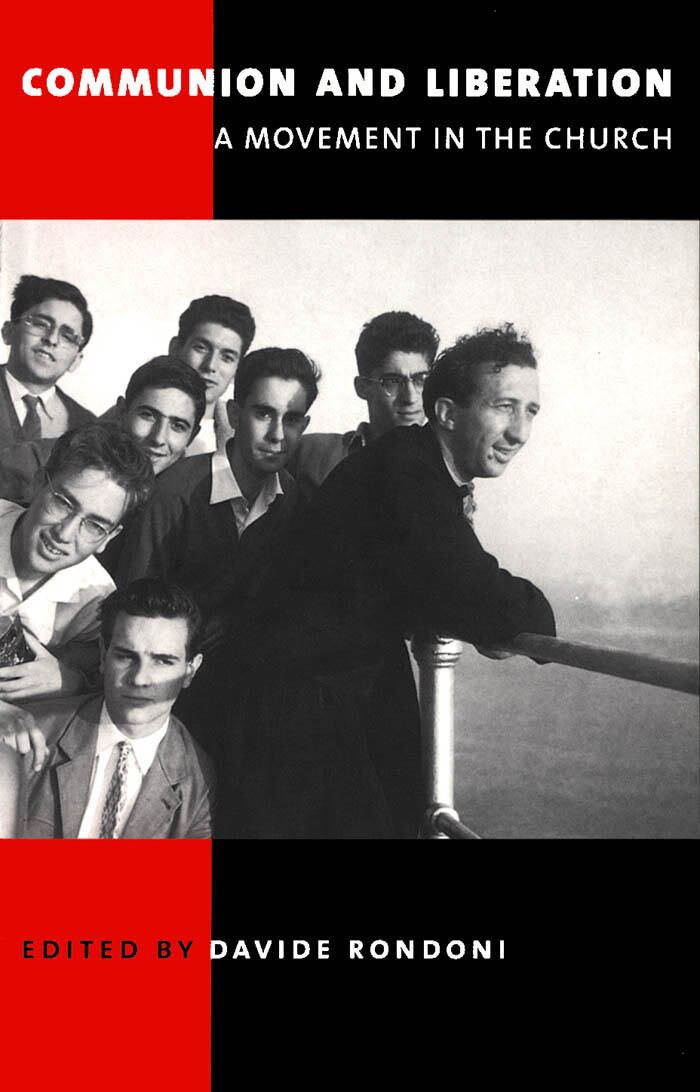
Communion and Liberation Movement
The Communion and Liberation movement began in Milan, Italy, in the 1950s as an attempt to communicate the awareness that Christ is the one true response to the deepest needs of people at every moment of history. The person who encounters and welcomes the presence of Christ undergoes a conversion that affects not only the individual but also the surrounding environment. The movement spread rapidly throughout Italy and is now present in some seventy countries around the world, including people of all ages and in every occupation at every level of society. Communion and Liberation traces the history of the movement, illuminating the main characteristics of its structure and the experiences of its members. The introduction by Monsignor Luigi Giussani is a testament to his devotion to the Church and to his followers. The appendices include Pope John Paul II's moving address to the ecclesiastic movements and the new communities within the Church and Monsignor Giussani's description of his meeting with the pope in Rome, 30 May, 1998. An inspiration to all, Communion and Liberation will be of interest to scholars of religious movements as well as to all those interested in reassessing their lives.
eBook
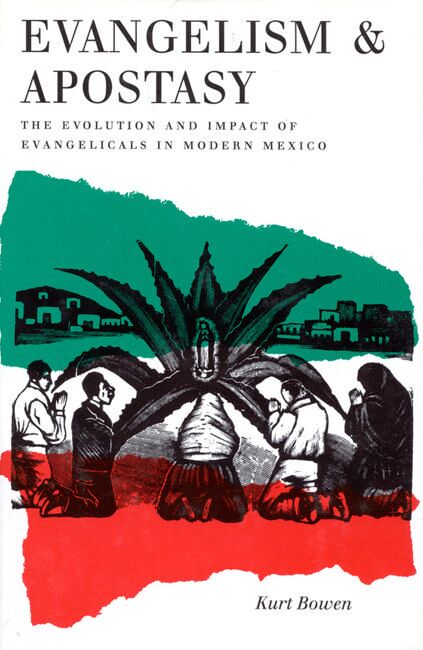
Evangelism and Apostasy
Highlighting the demographic, social, and political character of the Evangelical movement in the 1980s and 1990s, Bowen pays particular attention to conversion processes, commitment mechanisms, schisms, and distinctive beliefs. He also considers the controversial issues of religious persecution and American missionary influence. Bowen reveals that Evangelicalism's appeal is so pervasive in Mexico that if Evangelical converts all remained faithful it could become Mexico's dominant religion by 2006. This projection, however, is improbable due to high drop-out rates. Bowen argues that Evangelical apostasy is rooted in the most basic beliefs and practices of its followers.
eBook

The Secrets of a Vatican Cardinal
On 19 April 1940 Celso Costantini prophetically wrote in his diary that if Italy followed Hitler into war, it would be allying itself with the \"Anti-Christ.\" Within weeks, Mussolini's fascist regime plunged Italy into the destructive maelstrom of global military conflict. The ensuing years brought world war, the fall of fascism, occupation, liberation, and the emergence of a new political order.The Secrets of a Vatican Cardinal is an extraordinary and detailed behind-the-scenes account of crucial episodes in Europe's wartime history from a unique vantage point: the Vatican and the Eternal City. Costantini, a close advisor to Pope Pius XII, possessed a perspective few of his contemporaries could match. His diaries offer new insights into the great issues of the time - the Nazi occupation, the fall of Mussolini, the tumultuous end of the Italian monarchy, the birth of republican democracy in Italy, and the emergence of a new international order - while also recounting heartbreaking stories of the suffering, perseverance, and heroism of ordinary people.Less than a century later, with the world's attention gripped by the first papal resignation in six hundred years, The Secrets of a Vatican Cardinal presents a clear-eyed, fascinating, and complex portrait of the Roman Catholic Church's recent history.
eBook
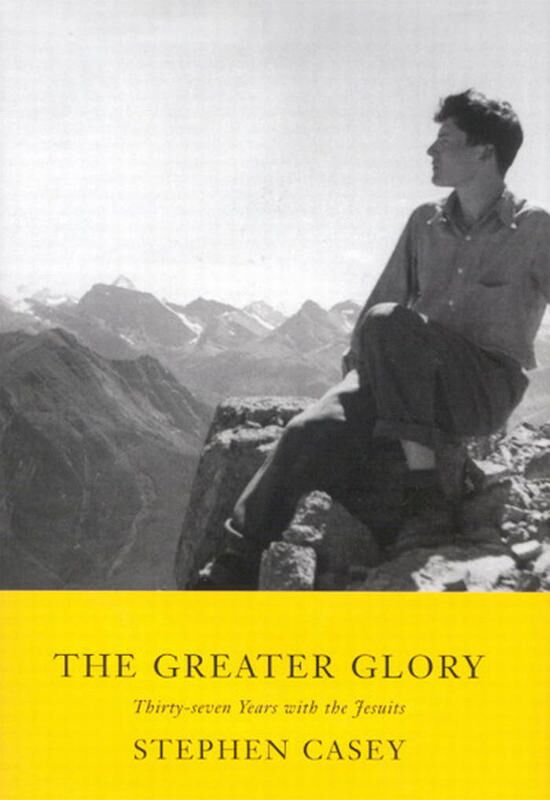
The Greater Glory
The Greater Glory is a candid memoir about a way of life that, after fifteen hundred years, is disappearing. Casey offers a vivid and incisive portrayal of the seminary, especially the training for novices - the physical and spiritual discipline, the asceticism, the anxieties that surrounded the socialization of young seminarians, the struggles that their chosen careers held for them.
eBook
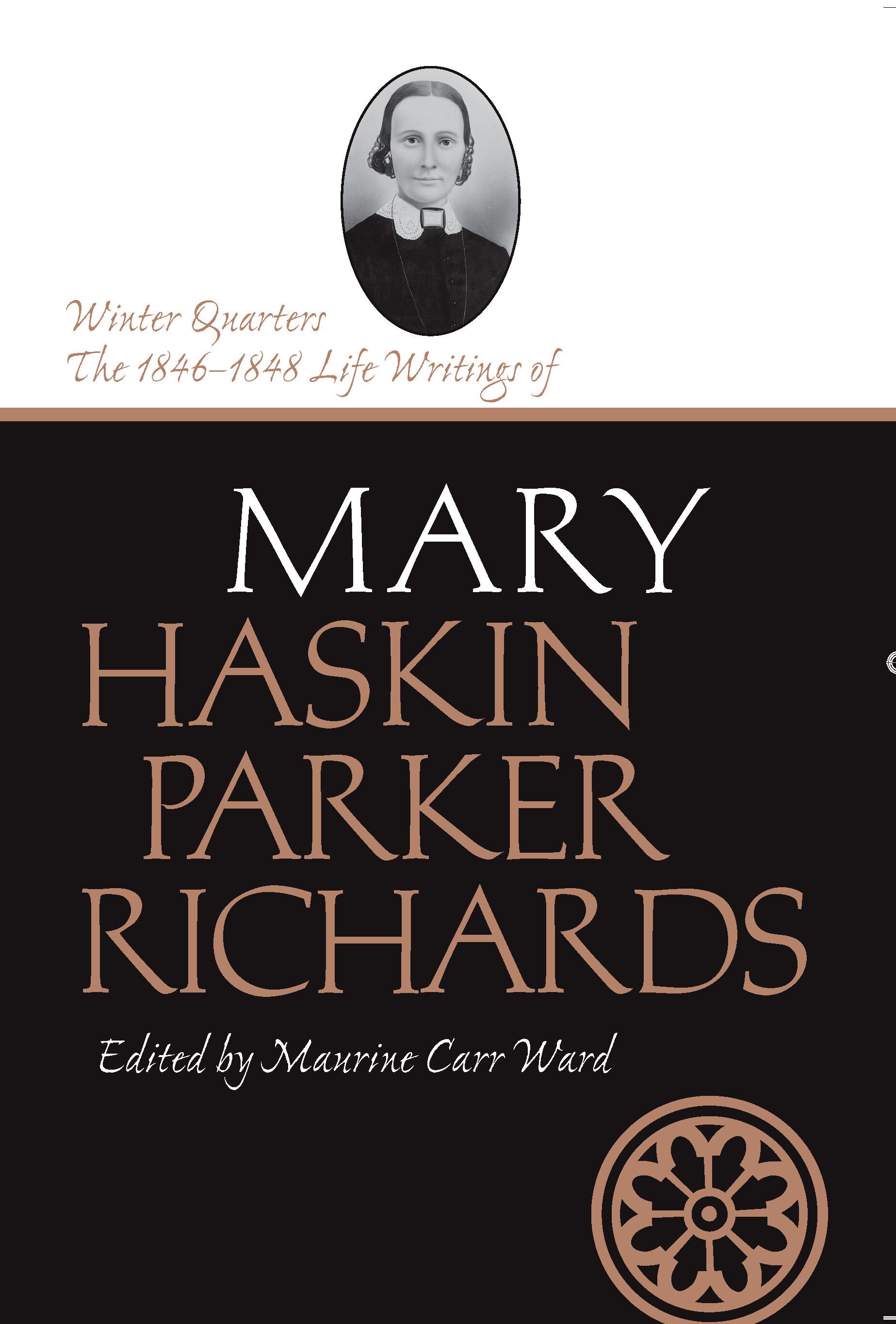
Winter Quarters
Volume 1, Life Writings of Frontier Women series, edited by Maureen Ursenbach Beecher Mary Richard's journals and letters record a young woman's rare, but richly detailed view of life in the temporary Mormon pioneer communities in Iowa.
eBook