
Catalogue Search | MBRL


Are you sure you want to remove the book from the shelf?

{{itemTitle}}
96,313
result(s) for
"RELIGION / Education."
Sort by:

'Jensen's scientific approach' to religion education
Following an initial programmatic summary of 'fundamentals', the author puts forward (with reference to other programmatic 'minimum presuppositions' for the scientific study of religion(s)) his basic presuppositions and principles for a scientific study-of-religion(s)-based religion education as a time-tabled, compulsory, and totally normal school subject, taught by teachers educated at study-of-religion(s) departments of public universities. The article, thus, reflects what Cathy Byrne named 'Jensen's scientific approach' to religion education. (DIPF/Orig.).
Journal Article

Intergenerational Occupational Mobility in Great Britain and the United States Since 1850
The US tolerates more inequality than Europe and believes its economic mobility is greater than Europe's, though they had roughly equal rates of intergenerational occupational mobility in the late twentieth century. We extend this comparison into the nineteenth century using 10,000 nationally-representative British and US fathers and sons. The US was more mobile than Britain through 1900, so in the experience of those who created the US welfare state in the 1930s, the US had indeed been \"exceptional.\" The US mobility lead over Britain was erased by the 1950s, as US mobility fell from its nineteenth century levels.
Journal Article

Education for Religion: An Islamic Perspective
This essay proposes a novel approach to religious education, one that stands in stark contrast to the often rigid and dogmatic nature of traditional religious instruction. The proposed approach seeks to cultivate deep awareness within students regarding their inherent limitations and their role as entrusted stewards in the grand design of God. It encourages students to move away from the temptation of godlike aspirations, such as the pursuit of boundless power and knowledge, instead positioning life on Earth as a divine destiny offering opportunities for growth, learning, and realizing one’s God-given potential. This form of religious education embraces doubt, uncertainty, and ambiguity, recognizing them as sources of motivation and meaning in a profound journey of faith. Inspired by John Hick’s and Abdolkarim Soroush’s works, this approach transcends traditional religious literacy, focusing on an encounter with the transcendent noumenal Real, and it is characterized by a sense of speechless awe, wonder, and astonishment before the riddles of existence and the beauty of the world. Ultimately, this essay underscores the importance of approaching religion as a system of relationships rather than as an ideology with all-encompassing answers.
Journal Article
Commitment, Character, and Citizenship
As liberal democracies include increasingly diverse and multifaceted populations, the longstanding debate about the role of the state in religious education and the place of religion in public life seems imperative now more than ever. The maintenance of religious schools and the planning of religious education curricula raise a profound challenge. Too much state supervision can be conceived as interference in religious freedom and as a confinement of the right to cultural liberty. Too little supervision can be seen as neglecting the development of the liberal values required to live and work in a democratic society and as abandoning those who within their communities wish to attain a more rigorous education for citizenship and democracy. This book draws together leading educationalists, philosophers, theologians, and social scientists to explore issues, problems, and tensions concerning religious education in a variety of international settings. The contributors explore the possibilities and limitations of religious education in preparing citizens in multicultural and multi-religious democratic societies.
eBook
The Routledge International Handbook of Religious Education
How and what to teach about religion is controversial in every country. The Routledge International Handbook of Religious Education is the first book to comprehensively address the range of ways that major countries around the world teach religion in public and private educational institutions.
It discusses how three models in particular seem to dominate the landscape. Countries with strong cultural traditions focused on a majority religion tend to adopt an \"identification model,\" where instruction is provided only in the tenets of the majority religion, often to the detriment of other religions and their adherents. Countries with traditions that differentiate church and state tend to adopt a \"separation model,\" thus either offering instruction in a wide range of religions, or in some cases teaching very little about religion, intentionally leaving it to religious institutions and the home setting to provide religious instruction. Still other countries attempt \"managed pluralism,\" in which neither one, nor many, but rather a limited handful of major religious traditions are taught. Inevitably, there are countries which do not fit any of these dominant models and the range of methods touched upon in this book will surprise even the most enlightened reader.
Religious instruction by educational institutions in 53 countries and regions of the world are explored by experts native to each country. These chapters discuss:
Legal parameters in terms of subjective versus objective instruction in religion
Constitutional, statutory, social and political contexts to religious approaches
Distinctions between the kinds of instruction permitted in elementary and secondary schools versus what is allowed in institutions of higher learning.
Regional assessments which provide a welcome overview and comparison.
This comprehensive and authorit
eBook
The Discipline of Religion
The Discipline of Religion is a lively critical journey through religious studies today, looking at its recent growth as an academic discipline, and its contemporary political and social meanings. Focusing on the differences between religious belief and academic religious discourse, Russell T. McCutcheon argues that the invention of religion as a discipline blurs the distinction between criticism and doctrine in its assertion of the relevance of faith as a credible object of study. In the leap from disciplinary criticism to avowal of actual cosmic and moral meaning, schools of religious studies extend their powers far beyond universities and into the everyday lives of those outside, managing and curtailing specific types of speech and dissent.
RUSSELL T. MCCUTCHEON is Chair of the Department of Religious Studies at the University of Alabama. He is author of Manufacturing Religion (1997) and Critics Not Caretakers: Redescribing the Public Study of Religion (2001), editor of The Insider/Outsider Problem in the Study of Religion (1999), and co-editor with Willi Braun of Guide to the Study of Religion (2000).
eBook

Women's liberation: what's in it for men?
The nineteenth century witnessed dramatic improvements in the legal rights of married women. Given that they took place long before women gained the right to vote, these changes amounted to a voluntary renunciation of power by men. In this paper, we investigate men's incentives for sharing power with women. In our model, women's legal rights set the marital bargaining power of husbands and wives. We show that men face a trade-off between the rights they want for their own wives (namely none) and the rights of other women in the economy. Men prefer other men's wives to have rights because men care about their own daughters and because an expansion of women's rights increases educational investments in children. We show that men may agree to relinquish some of their power once technological change increases the importance of human capital. We corroborate our argument with historical evidence on the expansion of women's rights in England and the United States.
Journal Article
International Perspectives on Education, Religion and Law
This volume examines the legal status of religion in education, both public and non-public, in the United States and seven other nations. It will stimulate further interest, research, and debate on comparative analyses on the role of religion in schools at a time when the place of religion is of vital interest in most parts of the world. This interdisciplinary volume includes chapters by leading academicians and is designed to serve as a resource for researchers and educational practitioners, providing readers with an enhanced awareness of strategies for addressing the role of religion in rapidly diversifying educational settings. There is currently a paucity of books devoted solely to the topic written for interdisciplinary and international audiences involving educators and lawyers, and this book will clarify the legal complexities and technical language among the law, education, and religion.
eBook

Socio-economic status and fertility decline: Insights from historical transitions in Europe and North America
The timings of historical fertility transitions in different regions are well understood by demographers, but much less is known regarding their specific features and causes. In the study reported in this paper, we used longitudinal micro-level data for five local populations in Europe and North America to analyse the relationship between socio-economic status and fertility during the fertility transition. Using comparable analytical models and class schemes for each population, we examined the changing socio-economic differences in marital fertility and related these to common theories on fertility behaviour. Our results do not provide support for the hypothesis of universally high fertility among the upper classes in pre-transitional society, but do support the idea that the upper classes acted as forerunners by reducing their fertility before other groups. Farmers and unskilled workers were the latest to start limiting their fertility. Apart from these similarities, patterns of class differences in fertility varied significantly between populations.
Journal Article
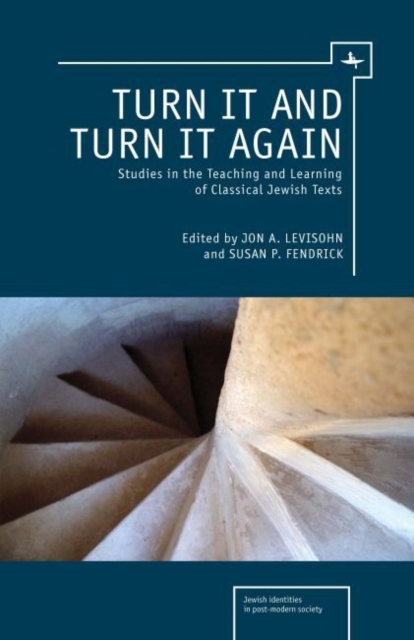
Turn it and Turn it Again
The study of classical Jewish texts is flourishing in day schools and adult education, synagogues and summer camps, universities and yeshivot. But serious inquiry into the practices and purposes of such study is far rarer. In this book, a diverse collection of empirical and conceptual studies illuminates particular aspects of the teaching of Bible and rabbinic literature to, and the learning of, children and adults. In addition to providing specific insights into the pedagogy of Jewish texts, these studies serve as models of what the disciplined study of pedagogy can look like. This book will be of interest to teachers of Jewish texts in all contexts, and will be particularly valuable for the professional development of Jewish educators.
eBook